

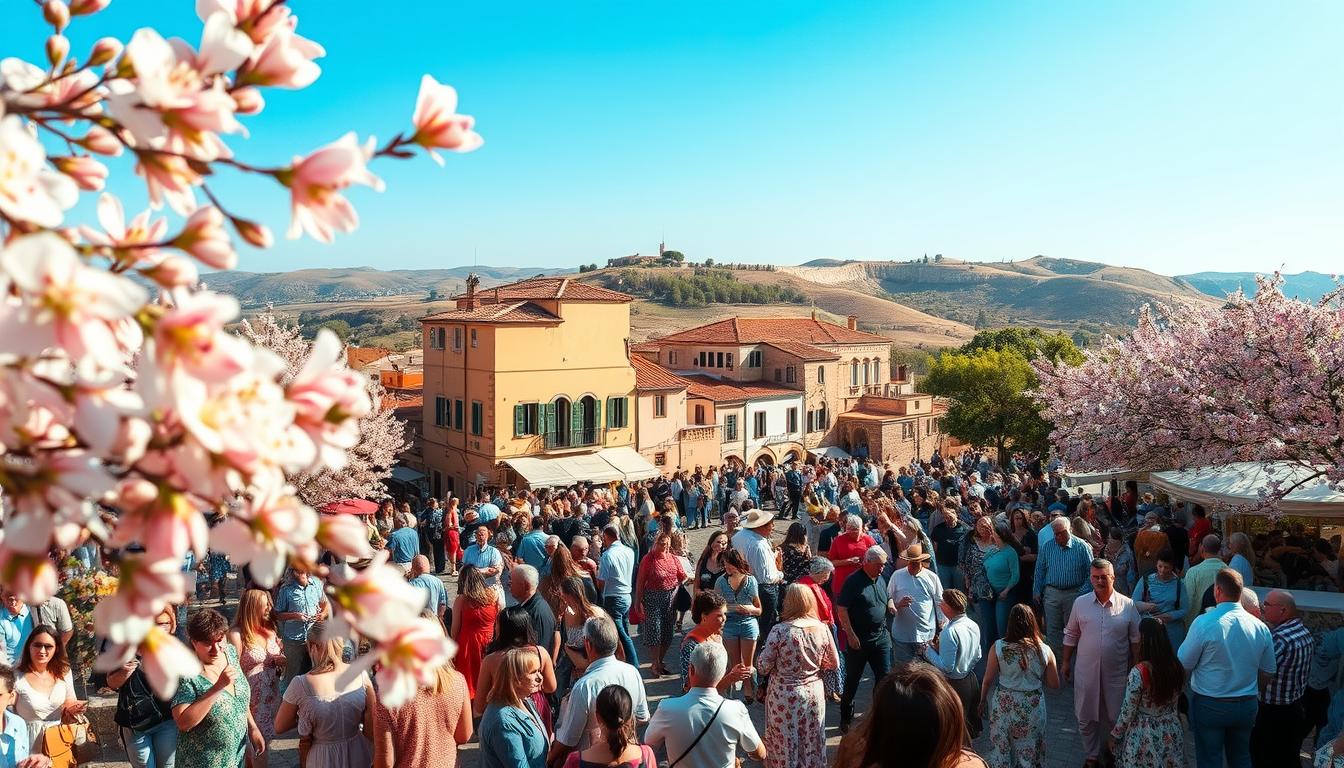
I first encountered the Almond Blossom Festival during an early spring journey through Sicily. The landscape transformed before my eyes into a breathtaking canvas of white and pink petals. This created an almost dreamlike atmosphere that remains largely unknown beyond the island’s shores.
This celebration stands as one of those remarkable hidden italian festivals that embodies the authentic spirit of Sicilian spring. It remains untouched by mass tourism yet rich in culture and community participation. While Italy’s major festivals draw international crowds, Agrigento’s almond blossom event offers an intimate experience where traditions are preserved in their most genuine form.
The festival represents a beautiful intersection of agricultural heritage, religious devotion, and seasonal renewal. These themes resonate throughout Sicily’s cultural landscape. Understanding such events requires moving beyond superficial tourism to engage with local life’s rhythms.
This article explores not only Agrigento’s celebration but also Italy’s broader tapestry of lesser-known festivals. It appeals to travelers seeking authentic experiences rather than tourist spectacles.
Key Takeaways
- The Almond Blossom Festival is an intimate spring celebration in Sicily
- It represents authentic cultural traditions beyond mainstream tourism
- The event connects agricultural heritage with seasonal renewal
- Agrigento’s festival offers deeper cultural immersion opportunities
- Understanding local rhythms enhances the travel experience
- Italy contains numerous lesser-known festivals worth discovering
Introduction to Italy’s Vibrant Festival Scene
My journeys have taught me that Italy’s true soul is not confined to its galleries but thrives in the public squares during its countless local festivals. These events form a living calendar that marks the passage of time with joy and reverence.
Understanding Italy’s Rich Festival Heritage
This heritage stretches back centuries, often to medieval or even Roman traditions. They are not mere relics. These celebrations are dynamic, adapting to the modern year while preserving their core character.
I’ve observed how these gatherings serve multiple purposes. They are acts of religious observance, engines of community cohesion, and celebrations of agricultural cycles. They also play a growing role in sustainable cultural tourism.
The Role of Tradition in Modern Celebrations
A key distinction lies between the sagre, festivals centered on local food and harvests, and the feste, which are religious or historical commemorations. Both types are vital. They forge a powerful sense of identity and belonging for towns across the country.
This deep commitment to continuity, even amidst globalization, reveals a profound aspect of the national culture. It shows a society that actively chooses to honor its collective memory.
Exploring Hidden Italian Festivals
Each Italian region guards its own calendar of celebrations, from alpine valleys to Mediterranean shores. This creates a mosaic of cultural expressions that reflects local identities shaped by geography and history.
Diverse Events Across Regions
The variation in festival culture reveals Italy’s historical fragmentation. Each area maintains celebrations tied to specific agricultural products or patron saints.
These gatherings serve as living museums where traditional crafts and customs are actively practiced. Community members maintain skills across generations with remarkable continuity.
Lesser-known events often provide more authentic experiences than famous counterparts. Visitors witness traditions in their organic social context rather than staged performances.
Discovering these celebrations requires venturing beyond tourist circuits into smaller towns. The reward is direct connection to local rhythms and seasonal cycles.
Agrigento’s Almond Blossom Festival: A Sicilian Spring Spectacle
There is a particular magic when agricultural necessity transforms into cultural celebration, as I discovered at Agrigento’s almond blossom event. This gathering represents Sicily’s deep connection to its land and seasons.
History and Cultural Significance
The festival’s roots trace to ancient agricultural cycles. Almond trees burst into bloom during late January and February. This signals the coming spring.
Arab rulers introduced almonds to Sicily centuries ago. The nuts became integral to local culture. They appear in religious ceremonies and wedding customs.
This event takes place against the stunning Valley of the Temples. Ancient Greek ruins stand amidst blooming orchards. The scene creates a profound dialogue between human history and natural cycles.
Culinary and Community Traditions
Almond-based food forms the heart of the celebration. Local families prepare marzipan and pasta di mandorla. These sweets showcase Arab-Norman culinary heritage.
The community collaborates intensely during this brief window. Neighborhoods organize events and welcome visitors together. This reinforces social bonds through shared traditions.
I tasted incredible almond food prepared with generations-old recipes. The festival embodies Sicilian resilience, celebrating renewal during winter’s coldest days. The blossoms promise that warmth will return.
Ancient Traditions and Modern Festivities
Walking through Trapani during Holy Week, I felt the weight of centuries in the slow, rhythmic steps of the hooded procession. These ancient celebrations maintain an extraordinary continuity that bridges past and present.
Historic Processions and Ceremonies
The Procession of the Mysteries in Trapani exemplifies this living history. For over 400 years, the same wooden sculptures have been carried through narrow streets. Participants wear traditional costumes that connect them directly to their ancestors.
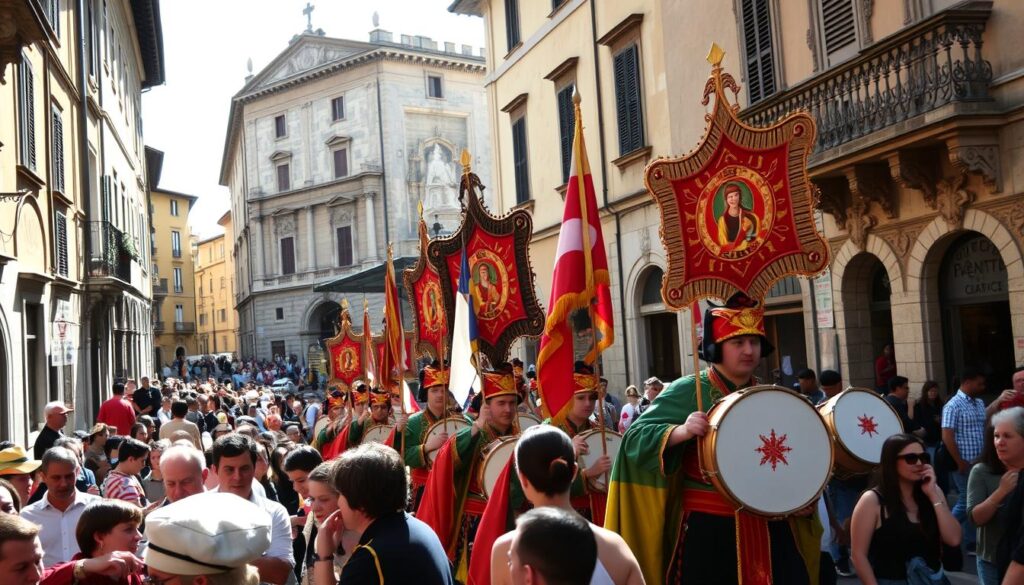
In Siena, the Palio’s medieval parades are not mere reenactments. They embody neighborhood identities that have persisted since the 17th century. The elaborate costumes represent an unbroken chain of community pride.
“True tradition is not the worship of ashes, but the preservation of fire.”
Evolution of Celebratory Practices
While maintaining core traditions, these events have adapted over time. Modern sound systems and lighting enhance ancient rituals without diminishing their sacred character. Social media now shares local celebrations with global audiences.
| Ancient Element | Modern Adaptation | Cultural Significance |
|---|---|---|
| Wooden processional sculptures | Professional conservation techniques | Physical connection to ancestors |
| Medieval costumes | Historical textile research | Embodied neighborhood identity |
| Oral tradition transmission | Digital archives & social media | Intergenerational knowledge preservation |
This delicate balance between preservation and innovation allows traditions to remain relevant. Younger generations engage with their heritage while honoring its authentic character.
Seasonal Celebrations: From Winter Chills to Spring Blooms
Watching Sicilians prepare for Santa Lucia’s day, I understood how winter festivals transform darkness into warmth. The year’s coldest months become a season of intimate gatherings and symbolic light.
Winter Festivals & Cozy Traditions
From December’s Festa di Santa Lucia through Carnevale, these celebrations create community warmth. Families share elaborate meals featuring panettone and pandoro.
The tradition extends through Epiphany, with La Befana adding distinctive character. This prolonged festive period emphasizes family bonds against the winter landscape.
Spring Renewal and Blooming Festivals
As winter recedes, celebrations shift to renewal themes. Easter processions and floral events like Infiorata di Noto mark nature’s rebirth.
These gatherings occur every year at precise moments, connecting communities to agricultural cycles. The Almond Blossom Festival stands as an early herald of this transformation.
| Winter Celebration | Spring Celebration | Seasonal Significance |
|---|---|---|
| Carnevale (Jan-Mar) | Easter Processions | Transition from restraint to renewal |
| Christmas feasts | Infiorata flower carpets | From indoor warmth to outdoor abundance |
| Santa Lucia’s light | Almond blossoms | Symbolic hope against seasonal challenges |
This annual cycle of events helps communities navigate temporal rhythms. Each celebration takes place at its appointed time, creating predictable joy throughout the year.
Culinary and Wine Festivals: A Feast for the Senses
The earthy scent of white truffles rising from a porcelain bowl first revealed to me how deeply Italian celebrations intertwine with gastronomy. These gatherings transform seasonal abundance into communal joy, where every harvest becomes an occasion for shared food and tradition.
Local Food Specialties and Wine Tastings
Autumn brings a concentration of gastronomic events celebrating the year’s bounty. The Festa dell’Uva in Marino features grape stomping and new wine sampling. Meanwhile, the Sagra della Castagne sees villages filled with the sweet smoke of roasting chestnuts.
I’ve tasted incredible regional specialties at these gatherings. From Umbria’s Porchetta Festival to Apulia’s Meatball Festival, each place showcases ancestral recipes. These events welcome everyone to participate in shared abundance.
Gastronomic Events and White Truffle Fairs
The International White Truffle Fair in Alba elevates a humble fungus to cultural treasure. This October truffle fair features auctions and tastings that attract global connoisseurs. Similar white truffle celebrations occur in San Miniato and Norcia.
These gatherings maintain traditional knowledge of truffle hunting. Skills pass through generations involving trained dogs and secret locations. The white truffle fair creates economic opportunities while preserving heritage.
| Autumn Festival | Featured Delicacy | Regional Character |
|---|---|---|
| Festa dell’Uva | New Wine & Grapes | Celebrating vinification |
| Sagra della Castagne | Roasted Chestnuts | Mountain harvest traditions |
| Fiera del Tartufo | White Truffle | Forest-to-table experience |
Music, Parades, and Fireworks: The Heartbeat of Italian Festivals
As evening descended on Pisa during the Luminara, I witnessed how light and music conspire to create unforgettable festival atmospheres. These elements transform ordinary spaces into realms of shared emotion and cultural expression.
Live Performances and Local Rhythms
During Umbria Jazz Festival, I felt how music animates historic squares. The blend of international artists and local audiences creates a unique energy. Similar summer gatherings like Stresa Festival showcase classical music against Lake Maggiore’s stunning backdrop.
Maggio Fiorentino demonstrates how opera and ballet become community events. The streets fill with anticipation before each performance. These shows connect modern audiences to Renaissance artistic heritage.
Enchanting Light Displays and Night Celebrations
Florence’s Scoppio del Carro features spectacular fireworks that symbolize divine light. The explosive display follows ancient traditions while thrilling modern crowds. Processional parades through narrow streets often precede these nocturnal spectacles.
Pisa’s Luminara di San Ranieri transforms monuments with thousands of candles. The effect creates dreamlike visions that linger in memory. Ferragosto celebrations across the country culminate in fireworks that unite communities under starry summer skies.
These sensory experiences—music filling piazzas, parades moving through ancient streets, fireworks painting the night—form the essential rhythm of Italian celebration. They create connections that transcend language through pure emotional engagement.
Community, Tradition, and Local Pride in Italy
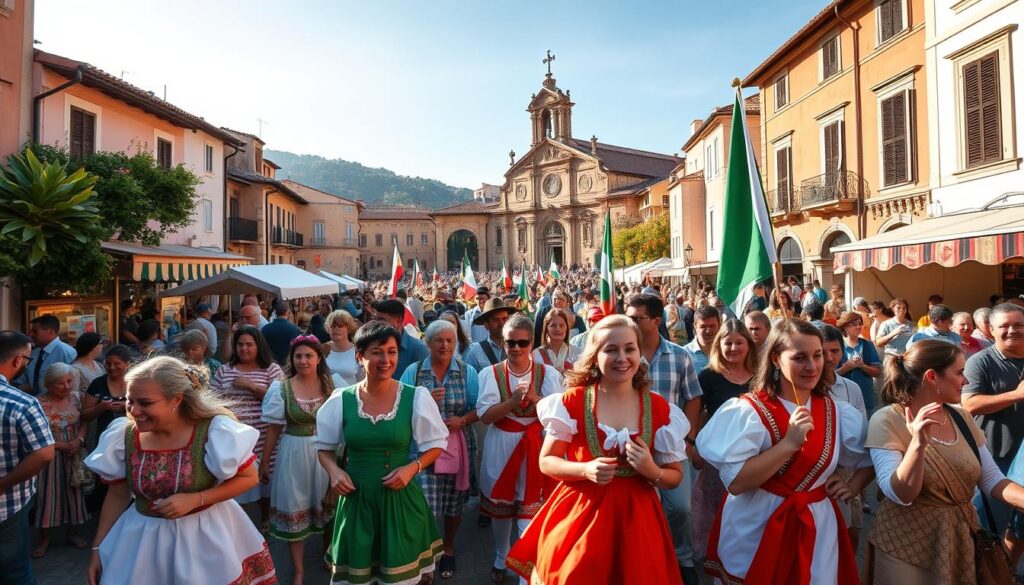
The paradox of Italian celebrations became clear to me when I observed how fierce competition between neighborhoods ultimately strengthens the bonds of an entire city. These gatherings reveal a complex social fabric where rivalry and unity coexist in delicate balance.
Neighborhood Rivalries and Unity
In Siena, the Palio’s seventeen contrade compete with medieval intensity. Each district maintains distinct identities through emblems like the eagle or snail. Yet this competition defines what it means to be Sienese.
Florence’s Calcio Storico requires players to be born in their represented neighborhoods. This authenticity ensures traditions remain genuine expressions of local pride. The entire city participates in these ancient rivalries.
These festivals create profound social cohesion. Preparing for celebrations requires cooperation across generations and social classes. Individual interests temporarily subordinate to collective goals.
Victory dinners like the cena della vittoria reinforce community bonds through shared meals and storytelling. These moments become neighborhood lore for years.
While visitors can witness these festivals, the experience differs fundamentally for participants. For locals, they represent identity and belonging that outsiders cannot fully penetrate.
This hyperlocal pride represents resistance to globalization’s homogenizing forces. Across the country, communities assert the relevance of their distinct identities through these vibrant experiences.
Notable Festival Stories: From Palio di Siena to the Battle of the Oranges
Standing in Piazza del Campo during Palio preparations, I understood how ninety seconds can contain a year’s worth of emotion. These celebrated gatherings represent extremes of Italian cultural expression—from meticulously choreographed tradition to cathartic chaos.
Thrilling Horse Races and Historical Rivalries
The Palio di Siena transcends sport. This horse race takes place every year in July and August within the medieval Piazza del Campo. Jockeys ride bareback around the tight oval, completing three laps in about ninety seconds.
What astonished me was the community’s dedication. Spectators arrive at 10 AM to secure standing space in the center of del Campo. They endure nine hours without water fountains or bathrooms. The horses receive blessings in district churches before the competition.
Victory brings the drappellone, a hand-painted silk banner. A horse can win even without its rider. This possibility adds to the drama of the race.
Chaotic Food Fights and Unique Customs
Ivrea’s Battle of the Oranges transforms the city into a citrus battlefield every year. Nine teams of aranceri throw oranges at masked figures on carriages. The battle commemorates a 12th-century rebellion against tyranny.
Participants emerge bruised and stained with orange pulp. Visitors wear red hats for protection. This visceral battle creates powerful bonds through shared intensity.
Both events demonstrate how communities preserve identity through extreme traditions. The Palio Siena and orange battle show that some experiences are worth enduring discomfort.
Exploring Italy on Foot: Walking Holidays and Festival Experiences
Discovering Italy’s festivals on foot transforms the journey into an intimate dialogue with the landscape and its cultural traditions. Walking holidays create a natural rhythm that aligns perfectly with the country’s celebration calendar.
Scenic Routes and Cultural Trails
The slow pace of walking allows for spontaneous encounters with local events. Rushed itineraries often miss these authentic experiences. Foot travel reveals celebrations happening in small villages and along country paths.
Routes like the Path of the Gods on the Amalfi Coast or Cinque Terre trails offer stunning backdrops. These paths connect travelers to the terrain that festivals celebrate. Walking through blooming almond groves in Sicily during spring creates embodied connections.
Small group tours with companies like Ramble Worldwide provide expert timing for festival access. Guides facilitate meaningful interactions with local communities. They enrich the festival experience with cultural context.
Self-guided walking itineraries offer flexibility to linger at unexpected celebrations. Discovering a village saint’s day in a Tuscan hilltop town becomes a serendipitous cultural encounter. This approach rewards patience and curiosity.
The physical challenge of reaching a city on foot after traversing its countryside deepens appreciation. Festival participation feels like a well-earned reward. This combination attracts travelers seeking authentic experiences beyond surface tourism.
Insider Tips for Festival Visitors in Italy
The art of experiencing Italy’s authentic celebrations lies in balancing advance planning with spontaneous discovery. Mastering this approach transforms casual tourism into meaningful cultural immersion.
Best Times to Experience Local Traditions
Strategic timing is essential for meaningful festival participation. Many celebrations occur on fixed dates every year, while others follow movable religious calendars.
Summer offers the densest concentration of events across the country. This season showcases the vibrant energy of Italian communities at their most expressive.
Each town honors its patron saint with unique traditions. Researching these local saint days reveals celebrations untouched by mass tourism.
| Season | Festival Type | Key Dates |
|---|---|---|
| Spring | Renewal & Flower Festivals | Easter processions, May events |
| Summer | Patron Saint Celebrations | June-August saint days |
| Autumn | Gastronomic Events | September-November harvests |
| Winter | Traditional Holidays | December-March festivities |
Travel Advice and Must-See Events
Book accommodations months ahead for major events. Consider staying in nearby towns for both availability and peaceful respite.
Learn basic Italian phrases to show respect. Dress appropriately for religious processions and ask permission before photography.
Local tourism offices provide invaluable insider knowledge about lesser-known celebrations. Building relationships with agriturismo owners often reveals the most authentic experiences.
Embrace flexibility—some of my most memorable moments came from unexpected village discoveries. This openness transforms planned itineraries into personal adventures.
Conclusion
The journey through Italy’s festival landscape is ultimately a pilgrimage to the heart of its living culture. The Almond Blossom Festival of Agrigento embodies this perfectly. It connects land, community, and traditions in a way that feels both ancient and immediate.
These celebrations offer a portal into a world where participation replaces observation. The true value lies not in a checklist, but in the spontaneous moments of human connection.
To discover this one italy, you must venture beyond the well-trodden paths. Seek out the celebrations in smaller towns and rural areas. There, traditions breathe with an authenticity that mass tourism rarely touches.
Approach these festivals italy with respect and curiosity. They are precious repositories of local identity in an increasingly homogenized world. Your reward will be an understanding that lingers long after you return home.