

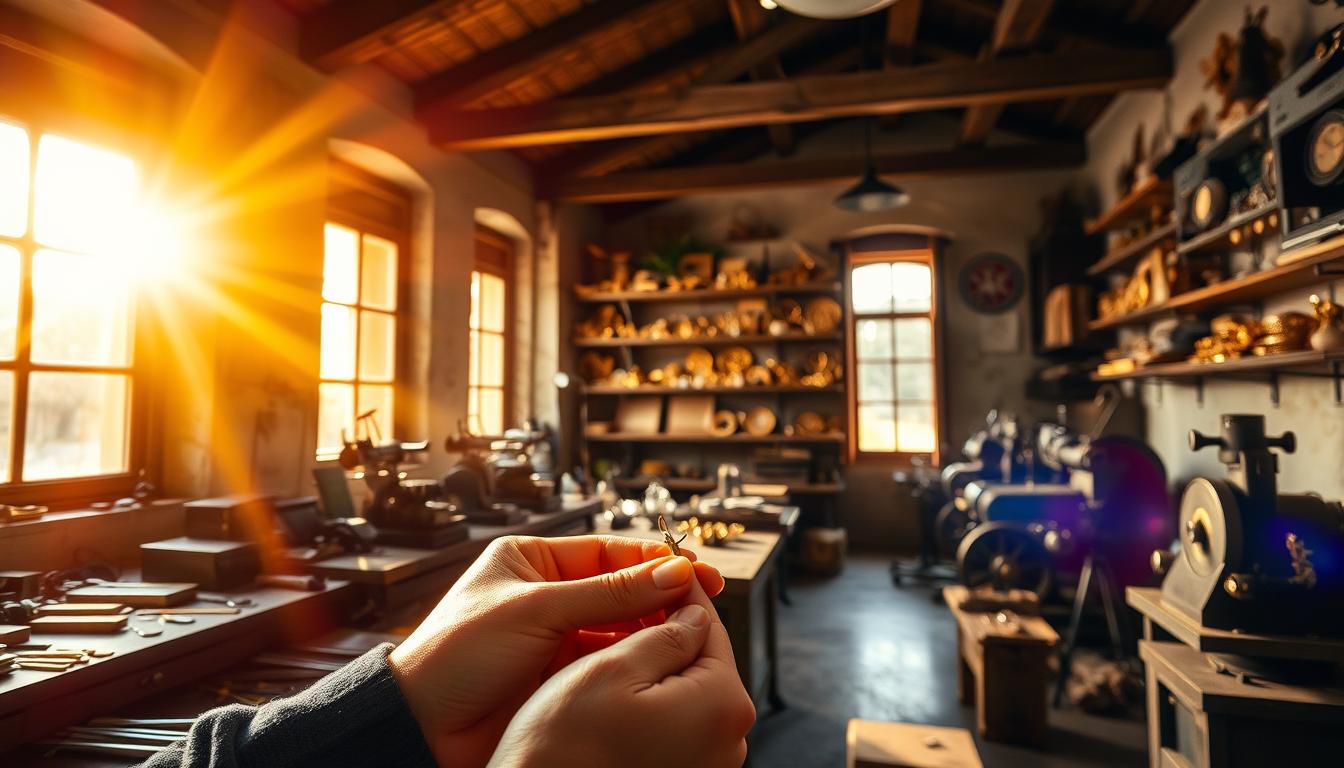
My journeys through Italy’s lesser-known artisan quarters have revealed many treasures. Arezzo stands out as a compelling destination for those seeking authentic encounters. The hands of its craftspeople carry wisdom accumulated over centuries.
The unique, secret italian craftsmanship defining Arezzo’s goldsmithing exists beyond common tourist paths. Hidden in quiet workshops, the rhythm of hammers on precious metals creates a symphony echoing through generations.
This is not the Italy of hurried souvenir shopping. Here, italian craftsmanship reveals itself as a living tradition. Each piece emerges from a dialogue between material, maker, and centuries of knowledge.
The goldsmiths represent more than skilled technicians. They embody a philosophy where beauty becomes a meaningful pattern of consumption. Investing in durable objects replaces the disposable culture of recent decades.
Exploring these hidden ateliers shows how Italy’s artisan tradition thrives. It is a dynamic tension between honoring ancestral techniques and responding to contemporary sensibilities.
The world may know Italian luxury through famous fashion houses. Yet, the true heart of Made in Italy beats in workshops like these. Individual craftspeople determine quality through touch, sight, and an intuitive understanding of their materials.
Key Takeaways
- Arezzo offers an authentic encounter with generations of artisan wisdom.
- The town’s goldsmithing tradition thrives in workshops away from main tourist areas.
- This craft represents a philosophy focused on creating durable, meaningful objects.
- The tradition remains vital by balancing historical techniques with modern influences.
- The essence of Italian luxury is found in the skill of individual artisans.
Introduction: The Legacy of Italian Artisans
In an era dominated by fleeting trends and mass production, the pursuit of authentic craftsmanship has taken on a new urgency. For much of history, handcrafting was the only way to create. The rise of industrialization shifted this paradigm, prioritizing volume over value.
Yet, a remarkable tradition endured. It found refuge not in large-scale operations but in dedicated niches. These spaces are sustained by those for whom beauty is a conscious lifestyle, not a passing fancy.
Discovering Authentic Italian Craftsmanship
My search for true artisans led me away from picturesque main squares. I ventured into the unassuming workshops where the work happens. Here, the distinction between genuine creation and commercial imitation becomes starkly clear.
True artisans uphold time-honored methods for a simple reason: they yield superior results. This is not about nostalgia. It is a practical commitment to quality that industrial processes cannot match.
The most profound knowledge is often found where the work is quietest.
The Enduring Influence of Tradition
This legacy is not a static museum piece. It is a vibrant foundation. Contemporary masters build upon centuries of accumulated knowledge, adapting and innovating while honoring core principles of integrity.
The unique style that emerges is a dialogue. It reflects both regional identity and the individual maker’s touch. Each piece tells a story of its origin, carrying an irreplaceable human signature.
The Timeless Art of Secret Italian Craftsmanship
What makes these creations endure lies in the maker’s profound understanding of material limitations. I’ve spent hours observing how true master artisans work within specific constraints of tools and techniques. This focused approach paradoxically fuels their creativity rather than restricting it.
The concept of “secret” here doesn’t imply deliberate hiding. It describes knowledge preserved outside mainstream channels. These workshops maintain methods proven across generations, creating objects that improve with age rather than becoming obsolete.
Their relationship with time differs dramatically from contemporary expectations. A single piece might require weeks of careful attention. Each stage demands specific conditions and patient waiting for processes to unfold naturally.
The distinctive style emerging from these spaces combines technical excellence with remarkable restraint. Virtuosity serves the piece’s purpose rather than showcasing the maker’s ego. This creates works where beauty emerges from integrity of craftsmanship.
These artisans thrive in the tension between visibility and obscurity. They rarely advertise, yet maintain relationships with discerning clients who understand their value. The enduring quality of their work speaks louder than any marketing could.
Historical Origins of Italy’s Craft Traditions
Exploring the roots of Italian handcraft traditions leads to unexpected connections spanning geography and time. I discovered that what appears uniquely regional often has cosmopolitan origins.
Tracing Centuries-Old Techniques
Venice’s silk weaving offers a perfect example. The craft arrived via Byzantium from China along ancient trade routes. In the early 14th century, weavers from Lucca brought new innovations to the city.
Mariano Fortuny’s story illustrates this beautifully. Born in Granada in 1871, he moved to Venice at eighteen. He shifted from painting to textiles, creating revolutionary fabrics.
Between the 19th and 20th centuries, Fortuny printed with wooden blocks. He reproduced damask designs previously made with traditional weaving methods. His pleats referenced ancient Greece, while his lamps echoed Moroccan lanterns.
Lessons from the Past
These historical techniques survived because they proved superior. They represent tested solutions to specific challenges. Contemporary makers draw upon this accumulated wisdom.
The real lesson isn’t about slavish replication. It’s about understanding why certain methods endured. Years of apprenticeship teach what written instructions cannot convey.
| Craft Tradition | Origin Influence | Key Innovation | Current Expression |
|---|---|---|---|
| Venetian Silk | Chinese/Byzantine | Luccan weaving techniques | Fortuny textile prints |
| Glassblowing | Middle Eastern | Murano innovations | Contemporary art glass |
| Goldworking | Etruscan methods | Renaissance refinement | Modern jewelry design |
| Ceramics | Islamic patterns | Local clay adaptation | Regional pottery styles |
This rich history shows how cultural exchange enriched rather than diluted local practices. Each wave of influence added depth to Italy’s craft traditions.
The Evolution of Italian Goldsmithing
What distinguishes enduring craft traditions is their remarkable ability to evolve while preserving essential qualities across centuries. In Arezzo’s workshops, I witnessed this dynamic interplay firsthand.
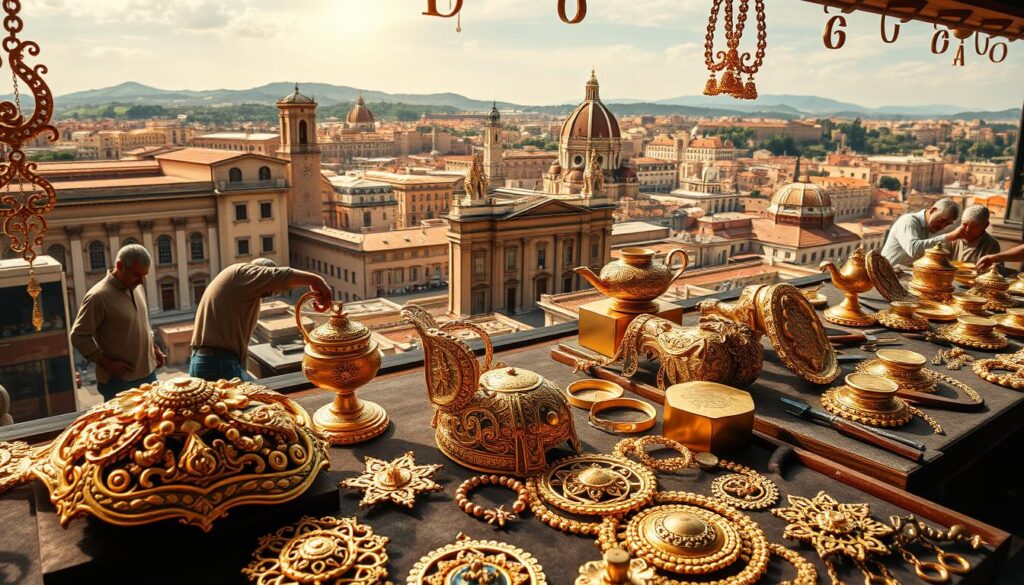
Family enterprises like Vitale Barberis Canonico demonstrate how knowledge passes through fifteen generations. This continuity creates a living dialogue between past and present.
Each new generation of master artisans reinterprets inherited techniques through contemporary eyes. They introduce thoughtful innovation precisely because they understand materials so deeply.
The years required for true mastery develop more than technical skill. They cultivate aesthetic judgment and material sensitivity that distinguish exceptional work.
Contemporary goldsmiths incorporate new alloys and tools while maintaining meticulous standards. Their approach values quality over speed, ensuring each piece carries lasting value.
This evolution across generations keeps the tradition vital rather than static. The fundamental principles of excellent craftsmanship remain constant even as expressions change.
The second wave of generations now faces the challenge of making ancient knowledge relevant today. They ensure goldsmithing remains a living practice, not a museum relic.
The Intersection of Art, Design, and Mastery
The most compelling objects I’ve encountered exist at the precise intersection where functional design meets artistic expression. In Arezzo’s workshops, I witnessed this synthesis firsthand. Each piece balances aesthetic ambition with practical intelligence.
A true master approaches their work with both an artist’s sensibility and a designer’s discipline. They consider composition and proportion while ensuring creations serve daily life beautifully. This dual perspective creates objects that feel both inspired and intentional.
What distinguishes this approach is how traditional techniques complement modern technology. Artisan hands provide finishing touches that machines cannot replicate. The subtle variations in each piece reveal the maker’s presence rather than concealing it.
In interior design contexts, these handcrafted objects introduce warmth and character. They transform spaces from generic to personal. Each piece carries the imprint of human attention that mass production eliminates.
| Approach | Primary Focus | Value Proposition | Resulting Object |
|---|---|---|---|
| Pure Art | Expression & Concept | Emotional Impact | Often Non-Functional |
| Pure Design | Function & Usability | Practical Efficiency | Standardized Production |
| Master Craftsmanship | Synthesis of Both | Beauty with Purpose | Unique & Functional |
This level of mastery involves countless small decisions throughout creation. Each choice contributes to the piece’s overall coherence. The final object transcends simple utility to become a meaningful part of daily life.
The best design emerges from this respectful dialogue between tradition and innovation. It represents a philosophy where beauty serves purpose gracefully. This approach creates objects that improve with use and time.
Venetian Splendor: Murano Glass Innovations
The story of Murano glass begins not with artistic ambition but with practical necessity—a city’s decision to protect itself from fire. In 1291, Venice relocated its furnaces to the island, creating an accidental hub where master artisans could collaborate freely.
The Birth of Murano Glass
This geographic concentration fueled remarkable innovation. By the 15th century, Murano glassmakers developed cristallo—an exceptionally clear glass considered the finest in the world. They also created lattimo, a milky white variant mimicking porcelain.
Venetian glass’s history reflects cultural exchange. Through Mediterranean trade, local artisans learned Syrian and Egyptian techniques. They synthesized this knowledge into distinctly Venetian expressions.
Revolutionary Glassblowing Techniques
Family workshops like Seguso, operating since 1397, preserved specialized knowledge across 23 generations. Each contributed to the tradition while maintaining core principles.
In the 1950s, Venini transformed glass from decorative objects to functional tableware. Their stemless designs demonstrated how traditional skills find contemporary relevance.
Today, the island balances historic factories with individual studios. Both draw upon centuries of technical knowledge while pursuing distinct aesthetic visions.
Porcelain and Ceramic Excellence in Italian Craft
While Venetian glassblowing enjoys centuries of fame, the story of Venetian porcelain is a brief, brilliant flash in the 18th century. This period marked the dawn of Western production, a race inspired by European courts’ fascination with Chinese Ming porcelain.
Renaissance Influences on Porcelain
In Venice, the Geminiamo Cozzi factory employed the maîtrisée technique during this short flowering. Their work produced pieces that balanced technical ambition with remarkable aesthetic refinement.
I was struck by the modernity of their Striche pattern. This 18th-century dish set, with bold yellow stripes resembling gold, looks like it was conceived in the 1940s. Its enduring appeal shows how innovative design truly transcends its historical moment.
This specific porcelain tradition lasted less than a century. Yet, it demonstrates a core principle of Italian craftsmanship: absorbing influences to create distinct expressions.
The excellence of these ceramics lies in integrating skill with a clear aesthetic vision. They function as both useful vessels and expressions of cultural identity.
| Aspect | Venetian Porcelain (18th Century) | Continuous Ceramic Traditions (e.g., Vietri sul Mare) |
|---|---|---|
| Historical Duration | Brief, less than a century | Long-standing, multi-generational |
| Primary Influence | Chinese porcelain, technical replication | Regional patterns, local identity |
| Characteristic Output | Refined tableware like Cozzi’s Striche | Distinctively patterned, emblematic pieces |
Southern Italy’s Craftsmanship: Campania’s Elegance
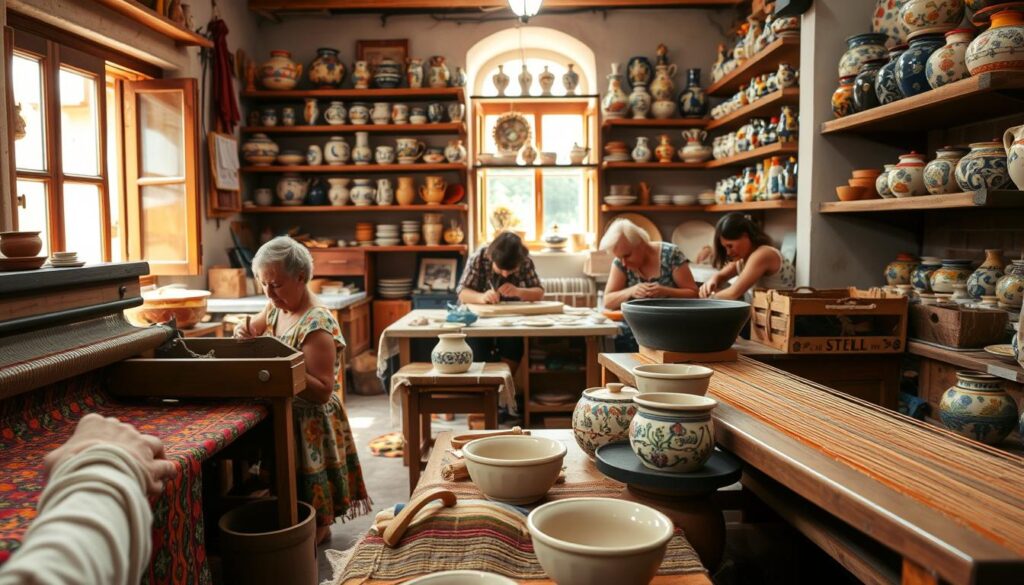
Journeying south from Arezzo, the landscape of Italian artistry transforms dramatically as one reaches Campania. Here, the aesthetic sensibility embraces warmer tones and more expressive patterns, reflecting the Mediterranean light and cultural influences. The region’s output feels distinctly different from northern production, with a vibrant energy that permeates both traditional textiles and contemporary ceramics.
Traditional Textiles and Fashion
In Capri, I discovered remarkable refinement in textile work. Artisans like Farella continue weaving cashmere shawls by hand within spaces that once served as convent workshops. This connection to history gives their products profound resonance.
The island’s fashion legacy includes Canfora, where sandals were created for icons like Jackie Kennedy. This represents a moment when artisans worked directly with sophisticated clients, influencing broader trends rather than following them. Unfortunately, the tailors who once crafted custom Capri pants in hours have largely disappeared, showing the economic pressures facing personalized work.
Ceramic Revival in Vietri sul Mare
Vietri sul Mare demonstrates how traditional crafts can achieve contemporary relevance. While main street stores offer ceramic souvenirs, the true heart of production beats at Solimene’s remarkable factory. Designed by architect Paolo Soleri, the tile-covered building itself makes a statement about the value of the products created within.
Solimene’s approach brings ancient iconography into modern contexts. Their plates featuring small animals draw from historical patterns but execute them with fresh sensibility. What began as niche items for Hollywood stars now grace restaurants and homes worldwide.
| Aspect | Textile Tradition | Ceramic Revival |
|---|---|---|
| Primary Materials | Cashmere, linen, cotton | Local clay, glazes |
| Contemporary Expression | Hand-woven shawls, limited production | Modernized classic patterns, wider distribution |
| Architectural Context | Converted convent workshops | Soleri-designed factory landmark |
| Design Evolution | Preserving meticulous hand techniques | Adapting historical motifs to current style |
Both traditions showcase Campania’s distinctive approach to quality. They balance deep respect for history with thoughtful adaptation to contemporary life. This creates objects that carry cultural meaning while serving practical beauty in daily use.
Sicilian Inspirations: Cultural and Artistic Blend
Sicily’s artistic identity emerges from a remarkable fusion of civilizations that have crossed its shores over millennia. This island has absorbed Byzantine, Arab, and Norman influences, creating a visual language distinct from mainland Italy. The resulting style carries centuries of layered history in every piece.
Enduring Traditions vs. Modern Adaptations
While Caltagirone ceramics receive much attention, Santo Stefano’s workshops practice lesser-known but fascinating production. They maintain medieval designs that recall Marrakech more than stereotypical Sicilian imagery. This reflects the island’s position as a Mediterranean crossroads.
The traditions here endure longer than in northern regions. In Palermo, Marcello Meli continues his family’s cabinetmaking practice using his great-great-grandfather’s methods. He represents the last tortoiseshell specialist, preserving knowledge through restoration work.
Fashion houses like Dolce & Gabbana have brought Sicilian motifs to global audiences. Their popular Moors’ heads demonstrate how traditional elements can find contemporary relevance. Yet many equally worthy artisans remain in relative obscurity.
| Aspect | Ceramic Traditions | Textile Traditions |
|---|---|---|
| Cultural Influences | Arab, Norman, Byzantine designs | Mediterranean weaving techniques |
| Contemporary Practice | Santo Stefano medieval patterns | La Tela di Penelope hand-weaving |
| Intergenerational Transfer | Family workshop knowledge | Older women teaching young weavers |
| Modern Recognition | Dolce & Gabbana global exposure | Specialized trousseau customs |
These objects represent more than aesthetic beauty. They embody sustainable values in a disposable age. The people creating them preserve knowledge accumulated over centuries, offering meaningful alternatives to mass production.
Modern Innovations in Traditional Craftsmanship
Observing contemporary artisans at work reveals how true innovation emerges from deep tradition. The most compelling advances occur when makers understand their heritage so completely that they can thoughtfully introduce change rather than impose it.
I’ve watched masters distinguish between essential principles that must endure and specific practices that might evolve. This discernment comes from years of working with traditional materials and techniques. They adopt new tools only when they enhance rather than compromise fundamental quality.
The integration of contemporary design sensibilities creates objects that feel both familiar and fresh. These pieces honor heritage while speaking to current aesthetic preferences. They achieve what historical reproductions cannot—authentic relevance to modern life.
New materials developed through modern science offer expanded possibilities. Yet master artisans approach these innovations critically. They adopt only those that genuinely improve their work, avoiding mere novelty.
The most fruitful collaborations occur when traditional makers partner with designers who respect artisan processes. These partnerships combine material knowledge with conceptual vision. The resulting work represents a synthesis neither could achieve independently.
Digital technologies have paradoxically enabled better preservation of traditional knowledge. Detailed recordings of complex processes now supplement direct apprenticeship. This documentation ensures vital techniques survive for future generations.
When contemporary design ideas emerge from deep technical understanding, they honor tradition while advancing it. The most meaningful innovation respects the past while thoughtfully engaging the present.
Influence of Renowned Italian Designers
Meeting Gaetano Pesce’s work for the first time felt like discovering a new language for interpreting the modern world. These visionary designers occupy a unique space where deep respect for artisan traditions meets radical innovation.
Gaetano Pesce’s Bold Vision
Pesce’s four-decade career demonstrates how design can honor heritage while pushing boundaries. His guiding principle—that modernism is a method for interpreting the present—allows tradition and innovation to coexist productively.
His teaching across international institutions and museum presence worldwide spread Italian design thinking globally. Pesce reframed creative hierarchies, viewing art as our response to contemporary needs rather than something placed on a pedestal.
Patriсia Urquiola’s Contemporary Aesthetics
The age at which Urquiola began working with masters like Achille Castiglioni illustrates Italian design’s continuity through generational transmission. Her collaborations with manufacturers demonstrate how designers can work across scales from objects to complete interior design schemes.
These influential designers introduce ideas emerging from material engagement rather than pure concept. Their contemporary design maintains dialogue with craft processes while creating work that feels both grounded and visionary.
Global Perspectives: Italian Craftsmanship in the U.S. Market
In American luxury markets, few designations carry the weight and promise of the Made in Italy label. This phrase represents more than geographic origin—it signifies an entire philosophy of quality that American consumers have come to trust deeply.
The saying “Love French. Drive German. Dress Italian” captures how American shoppers perceive national design strengths. This recognition led to significant legal protection in 2009, when Italy prohibited using Made in Italy unless products are entirely produced within the country.
Traditional methods continue to outperform modern alternatives. Italian leather tanners using natural techniques create materials that last longer than chemically-treated alternatives. Northern fabric mills benefit from pure Alpine water, producing superior textiles.
| Production Aspect | Italian Method | Standard Industrial Method | Resulting Quality |
|---|---|---|---|
| Leather Tanning | Natural liming & dyeing | Chemical processes | More durable material |
| Fabric Production | Pure Alpine water | Mineral-rich water | Better color absorption |
| Production Time | Handcrafted patience | Rapid manufacturing | Superior finish quality |
American appreciation for these products reflects a desire for objects with cultural meaning. The time required for genuine handwork creates inherent production limits that support luxury positioning. This ensures each piece maintains the qualities that make Made in Italy products desirable worldwide.
Preserving a Legacy: Education and Future Generations
Standing before a master artisan in their seventies, I felt the weight of a pressing question: who will inherit this profound knowledge? The continuity of these traditions faces its greatest challenge not in technique, but in transmission to new generations.
Training the Next Generation of Artisans
The real obstacle today isn’t lack of interest but structural barriers. Young people face years of apprenticeship with modest income. They then compete in markets flooded with cheaper, mass-produced alternatives.
True mastery develops through embodied experience that resists fast-track education. This knowledge lives in the hands, cultivated through thousands of hours working alongside a master. Digital resources cannot replace this tactile learning.
When specialized crafts disappear, we lose irreplaceable cultural DNA. The solution requires making these trades economically viable for a new age. We must demonstrate their contemporary relevance beyond nostalgic preservation.
The artisans choosing this path today often do so from deep passion. Their commitment across years of practice represents hope for sustaining what might otherwise be lost to time.
Conclusion
The true measure of exceptional craftsmanship reveals itself not in immediate impact but in how objects mature with time. These carefully made pieces transform our relationship with the material world, offering an alternative to disposable culture that enriches daily life.
In our contemporary age, the persistence of these traditions reminds us that certain human values endure. The growing interest visible at events like Milan’s design week suggests handmade objects are regaining cultural relevance after decades of marginalization.
Thanks to artisans who maintained traditional methods, we now have access to contemporary design that embodies centuries of wisdom. Perhaps one best lesson is that quality demands patience—values our culture needs to relearn for sustainable living.
As interior design increasingly incorporates handcrafted elements, spaces become personally meaningful rather than generically styled. The future of this legacy depends on adapting knowledge to contemporary needs while honoring timeless principles of making.