

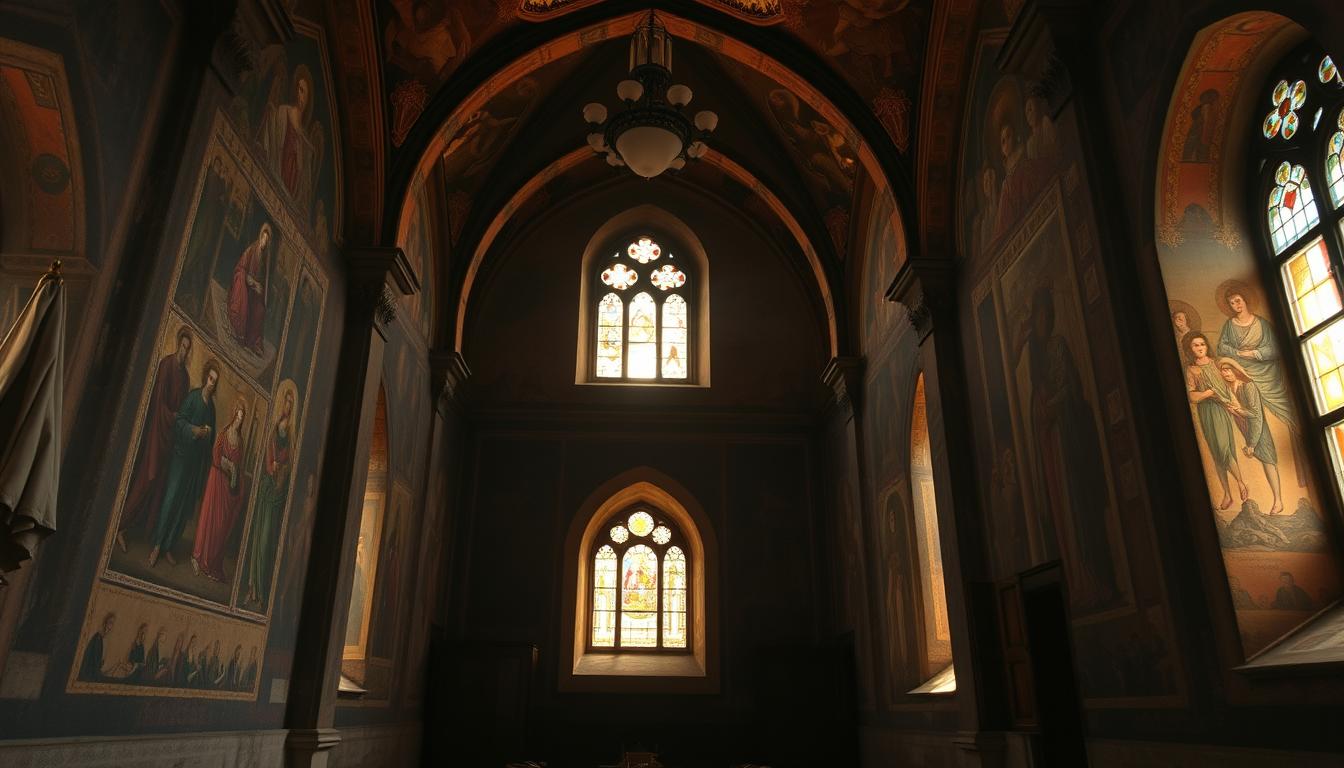
I travel to narrow chapels and quiet halls to stand inches from paintings that shaped a city. In Padua’s historic core, painted programs by Giotto and his followers transformed eight building complexes into a unified visual story. These works blend religious and civic art across buildings, chapels, and halls.
The intimacy of these small churches makes each brushstroke feel immediate. Light filters softly over worn plaster, and the narrative of each scene unfolds room by room. For a traveler from the United States, the quiet allows personal encounters with 14th-century color and detail.
I wrote this guide to help you see how the cycles connect to architecture and history. I preview the masters and patrons who created a new visual language that still reads clearly today. Use the itinerary and tips here to view the best-preserved programs with minimal crowds.
Key Takeaways
- Padua’s painted programs span eight complexes grouped into four parts.
- Giotto and other 14th-century masters created a consistent visual language.
- The art and buildings act as a single historical narrative.
- Small churches offer intimate viewing with preserved color and detail.
- The guide helps U.S. travelers see top sites with limited time and crowds.
Why I seek out secret fresco cycles in overlooked small churches
I follow narrow naveways to small chapels because their painted walls speak like neighbors, not icons. In these rooms the figures sit close to the viewer. Their gestures and gazes feel direct.
I take my time in quiet spaces to catch style shifts on the plaster. Watching a scene unfold lets me see how the visual world changed over decades. That slow way of looking reveals subtle changes in color and form.
I noticed that families, guilds, and confraternities placed donors inside scenes to mark devotion and status. Those personal insertions make the cycles intimate and civic at once. In a small chapel I can study a painter’s hand, pigments, and later retouches.
How I read a cycle:
- Stand still and trace the sequence from left to right.
- Note repeated gestures and costume as clues to the artist’s style.
- Look for donor portraits to learn who paid and why the family mattered.
| Aspect | What I look for | Why it matters |
|---|---|---|
| Scale | Small panels, close viewing | Reveals brushwork and corrections |
| Patronage | Donor portraits, coats of arms | Shows social and civic ties |
| Narrative | Sequence and gaze | Maps how stories were told to a local audience |
Padua’s fourteenth-century fresco cycles at a glance
I view Padua’s painted programs as four chapters, each hosted in a cluster of buildings. That arrangement makes the art easier to read and the routes simpler to plan.
Eight building complexes are grouped into four component parts that guide a full visit. Part 1 pairs Scrovegni and the Eremitani. Part 2 joins Palazzo della Ragione, the Carraresi Palace, the Baptistery, and the surrounding piazzas.
Part 3 covers the complex of buildings tied to the Basilica of St. Anthony. Part 4 centers on San Michele. Taken together, these eight building complexes form a coherent program across civic and sacred sites.
Unity across different buildings
Although different artists and patrons worked in each place, the programs maintain unity of style and content. You will notice similar approaches to narrative, optics, and human expression across rooms.
UNESCO recognition and the Painted City
The inscription on the World Heritage List highlighted innovations in perspective and emotion. The listing also helped coordinate protection and made quieter complexes easier to find.
| Component Part | Main Sites | Visit Focus |
|---|---|---|
| Part 1 | Scrovegni; Eremitani | Early innovation; intimate chapels |
| Part 2 | Palazzo della Ragione; Carraresi Palace; Baptistery; piazzas | Civic narratives; public display |
| Part 3 | Buildings at Basilica of St. Anthony | Religious programs; patronage |
| Part 4 | San Michele | Local parish cycle; quieter viewing |
- I use this four-part map to balance marquee sites and lesser chapels.
- Exploring all parts lets you sense the shared vision that links the city’s painting programs.
Anchors of the era: from Giotto’s Scrovegni Chapel to quiet side chapels
Stepping into Padua’s oldest painted rooms, I felt the city’s visual language arrive all at once. The main examples act as anchors: a landmark chapel that rewrote how images tell a story, and quieter chapels that let you study details without the rush.
Scrovegni Chapel: the blue heaven that changed painting
Scrovegni Chapel (unveiled in 1305) stops you mid‑step. I look up at a vault of deep blue studded with golden stars and then turn to the walls to follow a vivid narrative of Mary and Jesus.
The artist’s use of costly lapis lazuli gives the ceiling an otherworldly glow that has held through the centuries. Those painted scenes set new rules for composition, and the chapel’s fresco program pulled painters to Padua for decades.
Beyond the crowds: Eremitani, San Michele, and piazzas that frame the cycles
After the anchor visit, I move toward the quieter rooms at Eremitani and San Michele. In these chapels I can study faces and register brushwork on the walls at a slower pace.
I also walk the piazzas that link these sites toward the Palazzo della Ragione. The civic buildings and open squares frame the religious programs, reminding you that these paintings belong to the city and its daily life.
- I find that seeing the works in their original buildings clarifies how architecture and image were made as one.
- Start with the Scrovegni Chapel to build a visual vocabulary, then let quieter chapels deepen your reading.
Meeting the masters behind the frescoes
In Padua I traced the hands that shaped a new visual language, one commission at a time. The city drew a circle of painters whose projects tied public halls, chapels, and private chapels together.
Giotto and the spark that drew artists to Padua
Giotto arrived and his bold clarity changed expectations. His approach to volume and gesture prompted patrons to hire local and visiting artists.
Giusto de’ Menabuoi, Altichiero da Zevio, Jacopo Avanzi, and Jacopo da Verona
Giusto de’ Menabuoi set a calm order in domes and sanctuaries. His saints and architectural frames complemented Giotto’s innovations.
Altichiero da Zevio brought dramatic narration and courtly detail. His scenes deepen spatial logic and human feeling.
Jacopo Avanzi and Jacopo da Verona developed complex groupings. Their choreography of figures advanced the shared image-language across the city.
Guariento di Arpo and the city’s noble patrons
Guariento di Arpo worked often for noble patrons and civic clients. His commissions show how patronage shaped subject choice and placement.
Together these artists formed a visible network. Their combined work for family chapels and communal halls helped make Padua a model for the wider world.
- I study individual hands to spot workshop practices and local tastes.
- Noting patrons reveals why certain scenes appear where they do.
How the fresco cycles illustrate a new way of seeing
Close reading of the walls revealed how optics and human feeling reworked medieval picture-making. I found artists testing tools from lens work to measured sightlines to make painted space feel built.
Perspective, optics, and trompe-l’oeil in the early 14th century
In the early 14th century painters used perspective hints and trompe-l’oeil frames to suggest real architecture. These devices make a scene read as an extension of the chapel rather than a flat image.
Human feeling: patrons enter the picture, emotions take center stage
I watched faces and gestures that act like modern character study. Donors appear within scenes, sometimes replacing secondary holy figures to assert civic presence.
- Innovations tied optical experiments to narrative clarity.
- Style fused emotional realism with civic display.
- The result shaped later art and Padua’s place in world heritage history.
| Feature | What artists did | Why it matters |
|---|---|---|
| Optics & perspective | Measured sightlines and painted architecture | Makes space believable and guides viewer attention |
| Trompe-l’oeil frames | Simulated moldings and openings | Organizes narrative and extends the chapel |
| Patron presence | Donors kneel or stand within scenes | Merges sacred story and civic prestige |
The secret fresco cycles I love to revisit
Some sites call me back not for fame but because their painted programs change with the light. I return to a few places in Padua to follow how narrative and atmosphere grow clearer over multiple visits.
Baptistery and associated piazzas: a meditative narrative in vivid color
I return to the Baptistery for its enveloping program and the calm piazzas that lead me into a meditative mood. The padua fresco cycles here feel cohesive; the surrounding buildings, including the Palazzo della Ragione and Carraresi Palace, frame the visit.
Why linger: the frescoes reveal compositional shifts as daylight moves across vaults and walls.
Complex of buildings at the Basilica of St. Anthony: faith, power, and painting
At the basilica st. anthony complex I spend long stretches tracing how faith and civic life meet in paint. Giotto’s early work here helped seed the birth of a local visual tradition that later masters amplified.
I find these buildings ideal for seeing how cycles unfold across chapels, aisles, and cloisters. Use the Padova Urbs Picta pass and app to link sites efficiently and read on-site details.
- I pair the Baptistery with a circuit through civic spaces for contrast.
- I linger to watch light change because it reveals narrative pacing and compositional choices.
Planning a visit to Padua’s frescoes from the United States
When I fly to Italy I often base a day in Venice and take the quick train to Padua to maximize viewing time. Padua sits about 20 km west of the lagoon, roughly a 30‑minute hop by regional train. That short transfer saves precious time on the ground.
Getting there: the easy hop from Venice
I recommend flying into Venice Marco Polo and catching a direct train to Padua Centrale. Trains run often and drop you into the historic center within half an hour.
Tickets, time slots, and the Padova Urbs Picta pass
Buy timed tickets in advance for major sites to avoid sold‑out slots. The Padova Urbs Picta pass bundles entries and the official app, giving maps and expert notes for the inscribed UNESCO World Heritage complexes.
The pass simplifies moving between the eight buildings grouped into four parts. Use the app to book slots, check opening hours, and save time in lines.
Best times to go and how to pace the four component parts
I pace visits by grouping sites into the four component parts so narratives stay coherent and walking time is short. Start early in the day to see quieter chapels and use late afternoons for softer light.
- Morning: key chapels and quieter viewing.
- Midday: piazzas, lunch, and a rest.
- Late afternoon: another group of buildings and calmer galleries.
Note: UNESCO recognition increased visitor interest, so secure time slots in peak seasons and build buffer time for slow looking. That extra time often reveals the subtleties of the work more than a rushed checklist ever will.
Protecting authenticity: why these frescoes endure
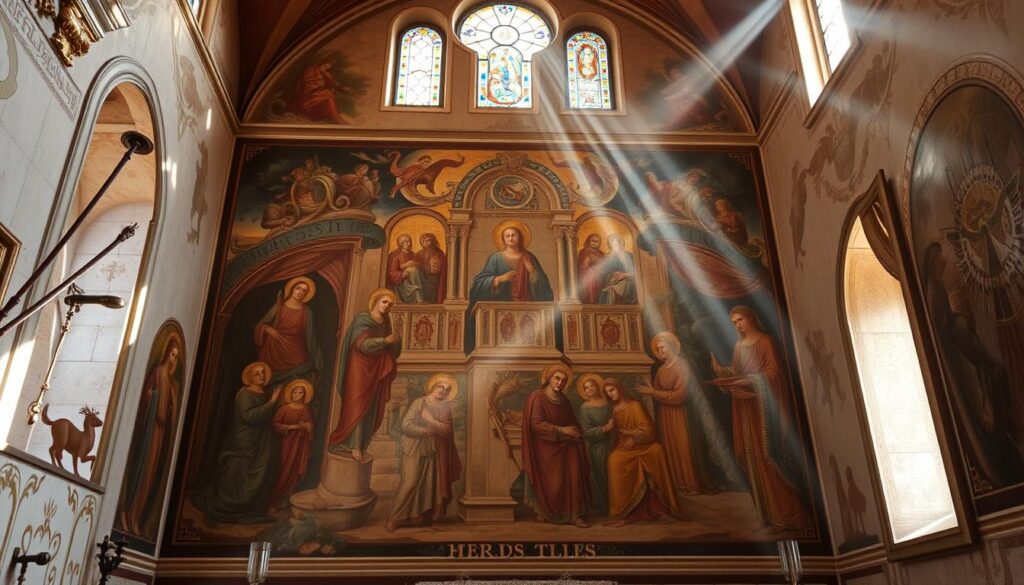
Preserving these paintings means protecting not just images but the rooms that give them meaning. I see the bond of image and architecture every time I enter a chapel where the work still sits on its original wall.
Original settings, materials, and ongoing conservation
Authenticity survives because the panels remain in place. The plaster layers, pigments, and original binders are legible, so viewers can read the makers’ choices across centuries.
I note legal protections that matter. Italy’s Codice dei Beni Culturali e del Paesaggio and local ordinances protect the historic center and the buffer zone around these buildings.
Conservation is collaborative. Padua City Council leads a World Heritage Office that coordinates the Ministry for Cultural Heritage, regional authorities, and the University of Padua under a Memorandum of Understanding.
“Its continued clarity comes from steady research, careful maintenance, and the choice to keep each program where it began.”
The program also corrects past removals: where detachments occurred, reinstallation returned works to their original positions so sequences remain clear.
| Protection | What it secures | Why it matters |
|---|---|---|
| Legal framework | Codice dei Beni Culturali; municipal ordinances | Safeguards buildings and surrounding buffer zone |
| Management | World Heritage Office; MoU partners | Coordinates research, funding, and maintenance |
| Materials care | Plaster, pigments, in situ restoration | Preserves workmanship and visual sequence |
- Result: visitors read the program as the artists intended.
- This stewardship model shows how a world city can protect vulnerable wall painting while keeping sites accessible.
Conclusion
Standing beneath a painted vault at dusk, I make sense of the city’s linked pictorial projects. Plan wisely, and you will find that the padua fresco cycles reward slow looking more than a fast checklist.
I begin with the Scrovegni Chapel and then move into quieter chapels and civic halls. Those visits show how one century of work produced a shared style while keeping distinct workshop voices. The art reads as civic story and devotional practice at once.
Book timed entry, group visits by location, and use the city pass to save time. These steps let you linger and learn without the rush.
Step into the blue vault, follow each cycle scene by scene, and let the colors and figures speak across time.