


I set out to find quiet places where whole programs of art still speak room by room. In Padua I found compact buildings where painted walls and vaults form complete narratives. The city, once nicknamed Urbs Picta, showed me how innovation by Giotto and his followers reshaped public and sacred space.
I visited small churches and civic sites that UNESCO grouped as a single complex of 14th-century masterpieces. I walked under work by Guariento di Arpo, Altichiero da Zevio, and Giusto de’ Menabuoi. Their painted cycles feel like chapters in a larger story about devotion and civic pride.
My list focuses on places I saw firsthand, not on crowded blockbuster attractions. Each entry explains how to read a cycle, why placement matters inside modest buildings, and what makes a site essential for students and travelers of art.
Key Takeaways
- I sought out small churches and civic buildings where intact frescoes tell full narratives.
- Padua’s ensemble, called Urbs Picta, links work by Giotto and later masters.
- UNESCO recognizes these sites as a connected group of 14th-century art.
- Each location preserves chapters of innovation in painting and civic identity.
- The guide shows how to read cycles and why their placement in small spaces matters.
Why I chase secret fresco cycles in small churches
I begin at a church doorway and let the painted panels lead me through life and local history.
I read a cycle like a film strip. I follow consecutive panels to watch a story move across walls. Each scene layers devotion and daily routine so both feel present.
Small spaces slow time. I can stand inches from a painting and see the artist’s decisions: strokes, corrections, and texture in wet plaster. That closeness reveals the work of making art.
“Approaching a chapel, I always move clockwise from the entrance so I don’t miss transitions between panels.”
- Start at the entrance and read sequences clockwise.
- Note gestures and faces to follow emotional arcs.
- Compare how light and architecture change from panel to panel.
| Focus | What I look for | Why it matters |
|---|---|---|
| Figures | Expressions and posture | Show the narrative’s emotional core |
| Light | Highlights and shadowing | Indicate time of day and mood |
| Architecture | Background settings | Place scenes within a town’s identity |
In small chapels I find a way to feel close to the painter’s hand. I see corrections and seams that tell as much about the maker as the story they painted.
Padua’s Urbs Picta: my gateway to hidden fresco masterpieces
Urbs Picta reframed Padua for me. The name signaled a city where painted narratives shape civic life and memory.
I learned that UNESCO inscribed the ensemble on the world heritage list as a single cultural achievement. The inscription groups eight key buildings into four component parts so visitors can plan efficient routes.
UNESCO grouping and what to expect
- Part 1: Scrovegni and Eremitani.
- Part 2: Palazzo della Ragione, Carraresi Palace, the Baptistery and piazzas.
- Part 3: the Basilica of St. Anthony complex.
- Part 4: San Michele.
Why the 14th century mattered
The 14th century was a pivot for narrative depth and convincing illusion. I traced work by leading artists—Giotto, Guariento di Arpo, Altichiero da Zevio, Giusto de’ Menabuoi, Jacopo Avanzi, and Jacopo da Verona—across the site.
“Seeing related panels across buildings helped me spot stylistic links and patron aims.”
Scrovegni Chapel, Padua: the quiet power that shaped the world
Stepping into the Scrovegni Chapel, I felt the room redraw my sense of scale and time.
The chapel was unveiled in 1305 with a sweeping program by Giotto. A star-studded ceiling of lapis lazuli blue set the tone for the painted walls. That lavish color was rarer than gold and came to Padua through Venice.
Blue heavens and the Life of Mary and Jesus unveiled in 1305
I followed the sequence along the walls and watched lives unfold in ordered scenes. Everyday details—laundry at the Annunciation, a potbellied host at Cana—made the sacred feel lived-in. Giotto even painted Halley’s Comet above the Epiphany.
Giotto’s Last Judgment and its ripple through centuries
The back wall holds the Last Judgment, a composition that anchors the chapel’s moral arc. I saw how Giotto’s clarity and human gestures influenced artists for many years. This single masterpiece changed how narrative painting worked in Europe.
A half-hour train ride from Venice to a different kind of awe
I appreciated that Padua lies about a half-hour from Venice by train. A short trip delivered a quieter, focused encounter with history—one that rewards slow looking.
“A ceiling of deep blue seeded with gold stars set the tone for the entire masterpiece.”
- I looked up at the deep blue ceiling and felt the space breathe.
- I moved along the walls so each scene read like a line in a story.
- I lingered on small gestures that make the chapel feel alive after centuries.
Beyond the icons: secret fresco cycles in the Basilica of St. Anthony complex
The Basilica of Saint Anthony stands as a working shrine where art and devotion meet every day.
I moved through the nave and felt how the building serves both as a pilgrimage site and a museum of devotion. It drew more than five million visitors year, a flow that shapes how I timed my visits.
Giotto completed his first commission in Padua here, and I traced that early work to later tastes in nearby chapels. Many painted walls and chapels reflect family gifts or confraternity patronage that defined which saints and episodes were honored.
How I approached a living pilgrimage
I adapted my pace to liturgy and processions. I lingered in side chapels where the frescoes concentrated meaning in quieter corners. Those spots made the large churches feel intimate.
“I learned to arrive early and follow the hours of prayer to find stretches of calm among crowds.”
- I noticed how relics and images worked together to guide devotion.
- I compared panels in chapels to see local styles and priorities.
- I respected worship while reading the painted narratives.
| Aspect | What I saw | Why it mattered |
|---|---|---|
| Scale | Vast nave, small chapels | Allowed intimate viewing within a major shrine |
| Patronage | Family and confraternities | Shaped subjects and placement of images |
| Continuity | Active devotion over centuries | Added living layers to the painted surfaces |
The Baptistery of Padua: Giusto de’ Menabuoi’s celestial color and calm
Inside the Baptistery I felt a calm order, as if the room itself had been planned to slow my breathing.
I entered the small chapel and found painting that wrapped every surface in steady harmony. The program by Giusto de’ Menabuoi dates to the 14th century and reads as a single, continuous cycle.
I watched how color moved from burnished gold and deep blue to softer earth tones. Those shifts balanced solemnity with gentle radiance.
The figures arrange themselves in concentric bands. That layout creates an ordered cosmos and invites slow, centered looking.
I noted how the proportions of the dome and the compact space made the scene feel both grand and intimate. Up close, faces and drapery showed the artist’s hand.
- I compared Giusto’s choices to other artists in Padua to see different approaches within the same century.
- I valued the clear narrative transitions that made the program legible on a first visit.
“An artist turned a compact room into a celestial theater through disciplined composition.”
Palazzo della Ragione and Carraresi Palace: civic fresco cycles that map a city’s life
Walking into the Palazzo della Ragione, I felt law and labor become visible in paint.
The large halls here and in the Carraresi Palace hold 14th‑century programs that translate governance, astrology, and commerce into public imagery.
Altichiero da Zevio and Jacopo Avanzi: style, figures, and space
I watched how Altichiero and Avanzi solved problems of scale. Their figures read clearly from a distance and kept emotional detail up close.
Their approach to space differs from church work. In sacred chapels, painters invited intimate looking. In civic buildings, compositions had to register at public speed.
“In these halls the city’s life is painted as a shared story—labors, laws, and seasons linked across the walls.”
- I contrasted bold, legible gestures with finer, devotional faces in nearby chapels.
- I traced how patrons used imagery to define civic identity in the same century as church programs.
- I left seeing the city itself as a gallery where artistic experiments served public life.
| Location | Function | What to look for |
|---|---|---|
| Palazzo della Ragione | Law court / market | Large narrative panels, clear gestures |
| Carraresi Palace | Ruler’s residence | Heraldry, civic portraiture, thematic programs |
| Public halls | Community gatherings | Scaled compositions for collective viewing |
Eremitani and San Michele: intimate chapels where art meets time
In two modest chapels, I found that age and repair had their own stories to tell.
I entered each small chapel and moved slowly, letting the quiet reshape how I read a wall.
The walls showed both intact sections and ruined fragments. Losses, seams, and restorations become part of the reading.
I studied the painted surface and felt how the medium records its making. The join lines and giornata edges reveal the speed of execution and decisions by the artist.
I watched every scene as if it were a conversation between past makers and present viewers.
These places link neighborhood devotion to the city’s wider visual story. Each chapel anchors a corner of the town to a longer arc of practice and care.
I left with a clearer sense that cycles endure through conservation and through people who keep using these rooms for prayer and memory.
“Time writes itself into paint; the marks of repair are part of what we now read.”
Secret fresco cycles versus the Sistine Chapel: how I read a Last Judgment
I learned to read Last Judgment scenes by comparing Giotto’s compact program in Padua with the vast sweep in Rome. The contrast sharpened how I track hierarchy, gesture, and theological emphasis.
From Giotto’s balanced paradise to Michelangelo’s swirling figures
Giotto’s Last Judgment in the Scrovegni predates Michelangelo’s Sistine Chapel work by about two hundred years. Giotto arranges halos, angels, and saints in a calm, ordered paradise. His composition reads in panels and invites quiet meditation.
Michelangelo studied earlier masters in Florence years later and answered with a storm of muscular figures. The Sistine Chapel wall overwhelms with scale and motion. Both scenes remade Renaissance art across centuries and changed how the world saw narrative painting.
“Learning to read a Last Judgment in a small chapel sharpened my eye for structure, hierarchy, and theological emphasis anywhere.”
| Artist | Location | Approach | Effect on viewer |
|---|---|---|---|
| Giotto | Scrovegni Chapel, Padua | Ordered panels, gold halos, clear hierarchy | Meditative, intimate focus |
| Michelangelo | Sistine Chapel, Rome | Large field, dynamic anatomy, swirling motion | Spectacular, overwhelming scale |
How I plan a fresco-focused day: tickets, timing, and the train
I planned the day around train timetables and timed entry slots to keep my route efficient.
Padova Urbs Picta passes, apps, and crowd-smart routes
I started with the Padova Urbs Picta pass. It covered multiple buildings across each part of the UNESCO-listed site.
I booked the Scrovegni time slot first. Then I built a short list of must-see cycles and a backup plan if a slot closed.
I used the site app to link clusters and maps. The app showed the best way to move between parts while leaving time for breaks.
- I timed visits to avoid peak visitors, choosing early morning and mid-afternoon windows.
- I relied on a half-hour train ride from Venice—Padua sits about 20 km west of the lagoon—so I checked return trains in advance.
- I packed lightly, took a sweater for cool interiors, and respected rules about bags, silence, and no-flash policies.
“Booking the Scrovegni slot first let me shape the rest of the day around shorter walks and fewer waits.”
| Tool | Use | Benefit |
|---|---|---|
| Padova Urbs Picta pass | Entry to multiple buildings | Saves time and makes planning simple |
| Site app | Maps and cluster routes | Shows efficient way between parts |
| Train schedule | Arrival and return options | Maximizes time on site |
Preserving masterpieces: visiting with respect inside small churches
My visits began with the practical question: how can I see these works without harming them?
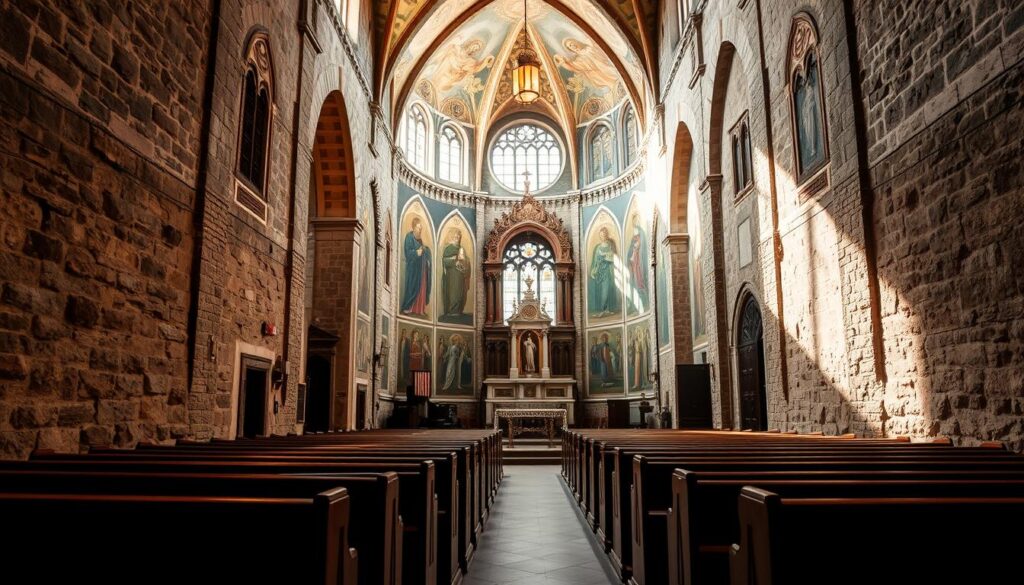
The UNESCO inscription put Padua’s painted programs on the world heritage map, and I treated each chapel as part of a wider heritage list worth protecting.
I kept my voice low and gave space to those at prayer. I accepted timed entries that helped stabilize temperature and humidity for the painted work.
- I respected no‑photo rules and avoided flash to reduce light and heat damage.
- I never touched barriers or walls; even small contact risks pigments and plaster.
- I dressed simply, moved slowly, and let the room’s style and silence set my pace.
I reminded myself that respectful visitors support the conservation that keeps this art alive. When I could, I left a small donation to the caretakers who balance access with preservation.
“Treating each chapel as a world heritage place changed how I moved, looked, and gave back.”
Conclusion
I closed in the Scrovegni Chapel, where a lapis ceiling and a complete program taught me to read frescoes as living narratives. The room tied together what the rest of the urbs picta had shown across eight buildings and four parts of the city.
I kept the Sistine Chapel in mind as a later, larger answer to similar themes. Each Last Judgment I studied revealed how artists balanced order and drama on walls, and how a single cycle can shape civic life.
I thanked the families, communes, and artists whose work across centuries became a network of masterpieces. Take the short train ride from Venice, give yourself time, and stand quietly to let the painting speak.