

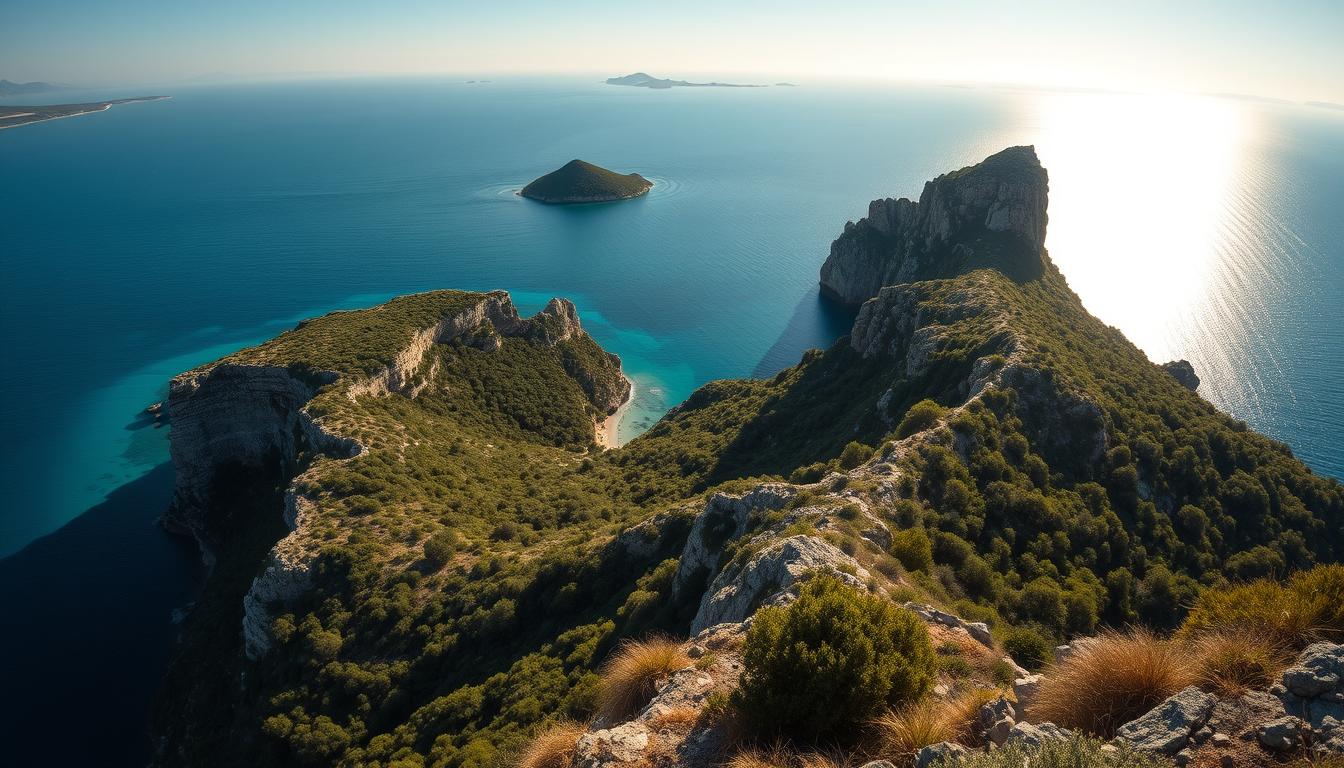
I have always been drawn to places that hold stories deeper than their geography. Pianosa is one such place. This flat landmass, part of the seven-island Tuscan Archipelago, exists in a state of suspended animation. It is a destination defined by its inaccessibility and a haunting beauty that feels both melancholic and profound.
Its modern identity is shaped by an active prison, where a handful of residents live alongside inmates. This reality gives weight to its 19th-century nickname, “Devil’s Island.” Understanding this history transforms the landscape. You see not just sun-bleached stone but the echoes of a past where condemned souls were sent.
Among the multitude of italian islands, Pianosa stands apart. It resists the ease of mass tourism. This isolation has preserved a narrative of isolation and nature’s quiet reclamation. It offers a different kind of satisfaction—the discovery of a place time has held in a unique embrace.
Key Takeaways
- Pianosa is a flat, restricted island within the Tuscan Archipelago National Park.
- Access is highly limited due to an active penitentiary on the island.
- It earned the historical moniker “Devil’s Island” for its use as a penal colony.
- The island represents a rare example of preservation through restricted access.
- It offers a travel experience focused on historical depth rather than conventional tourism.
- Pianosa is one of seven principal islands in the archipelago, each with a distinct character.
Discovering Unknown Italian Islands
Beyond the celebrated shores of Sicily and Capri lies a different Italy, one composed of hundreds of smaller landmasses waiting in the sea. Most travelers never see them. This hidden archipelago offers a distinct kind of beauty, one found in silence and subtlety rather than crowds.
Why Explore Hidden Islands?
I seek these places for the sensation of genuine discovery. It is the feeling of arriving somewhere that feels untouched by the predictable patterns of modern tourism. The rhythm of life here follows the tides and seasons, not the tour bus schedule.
Exploring these secluded spots rewards you with more than just a photograph. You find an authentic connection to a place. The experience becomes uniquely your own, unfiltered by countless reviews.
Secrets of Italy’s Coastal Landscapes
The diversity along the coast is astounding. Some islands are rugged and dramatic, born from volcanic fires. Others are flat and serene, caressed by calm waters. Their shorelines range from pebbled coves to stretches of untouched sand.
This variety means every visit can be different. The rewards for the curious traveler are profound:
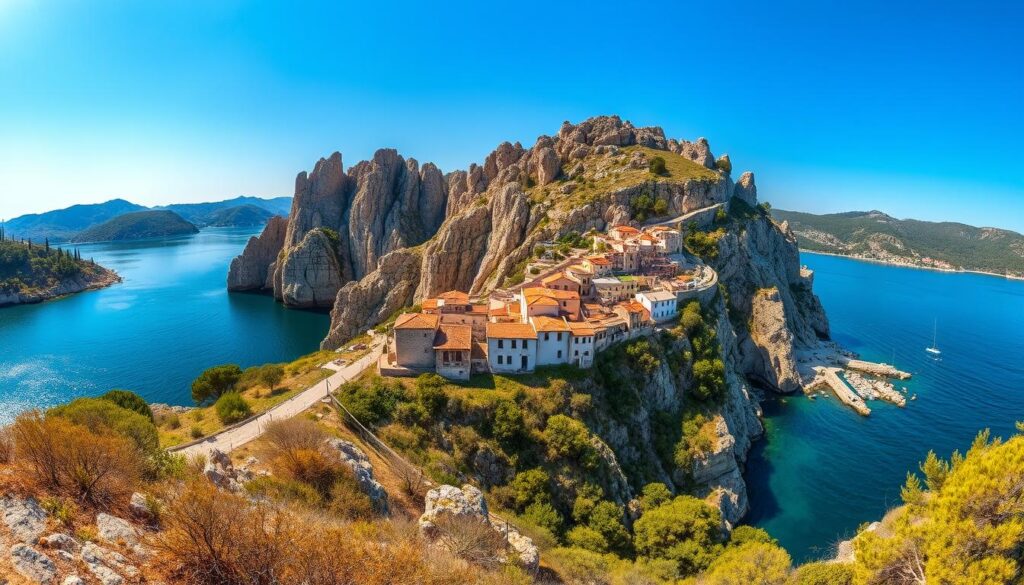
- Vistas of villages clinging to cliffsides.
- Waters that shift through impossible shades of blue.
- A deep sense of peace, far from the summer crowds.
These landscapes hold their secrets close, revealing them only to those who look beyond the obvious.
Pianosa: The Forbidden Island’s Unique Story
Approaching this flat expanse of land, one senses immediately that this is no ordinary destination but a place defined by its boundaries. The island’s low profile against the horizon creates an almost surreal quality, distinguishing it from the mountainous neighbors in the archipelago.
Historical Tales and Prison Legacy
The prison legacy here is not just historical record but living reality. An active penal institution still operates, creating contemporary restrictions atop centuries of incarceration history. This remote place was once deemed ideal for housing society’s most dangerous individuals.
When 19th-century officials dubbed this “Devil’s Island,” the name reflected its true function. Criminals were sent here not for rehabilitation but for removal. The Mediterranean sun beat down on stone buildings that served as tombs for the living.
Its Rich Heritage and Local Mystique
I find the island’s heritage fascinatingly complex. Layers of human suffering and natural beauty exist in uncomfortable proximity. Abandoned prison buildings crumble among wildflowers, creating a landscape haunted by memories.
The local mystique extends beyond prison walls to encompass protected environmental status. This isolation has created an accidental sanctuary where nature reclaims what human institutions abandoned. The way of life proceeds at a pace disconnected from modern Italy.
| Characteristic | Pianosa | Typical Mediterranean Islands |
|---|---|---|
| Accessibility | Highly restricted with special permits | Generally open to tourism |
| Primary Attraction | Historical prison legacy and isolation | Beaches and nightlife |
| Population | Few residents alongside inmates | Tourist-focused communities |
| Landscape | Flat terrain with stone structures | Varied topography with development |
Hidden Gems and Natural Splendors in the Tuscan Archipelago
The true measure of a coastline’s beauty often lies in its resistance to easy discovery. Beyond Elba’s relative accessibility, the archipelago reveals its most spectacular natural splendors to those willing to venture further.
Scenic Beaches, Coves, and Rocky Coastlines
Giglio’s waters achieve an almost impossible blue intensity. Giannutri’s crescent shape earns its nickname “The Jewel” through perfect formation. These are not the manicured beaches of mass tourism.
Instead, you find raw beauty where rocky outcrops frame small crescents of sand. Hidden coves nestle between cliffs, accessible only by boat or challenging trails. The crystal-clear waters reveal a landscape untouched by overdevelopment.
Capraia’s remoteness requires a three-hour ferry journey. This effort rewards travelers with dramatic views and exceptional diving spots. The absence of commercial infrastructure becomes a liberation rather than a deprivation.
| Island | Water Characteristic | Accessibility | Signature Feature |
|---|---|---|---|
| Giglio | Dramatically blue waters | Moderate ferry access | Intense color saturation |
| Giannutri | Turquoise clarity | Limited daily trips | Crescent-shaped perfection |
| Capraia | Deep sea sanctuary | Three-hour ferry required | Cetacean watching spot |
Each visit to these coastal spots feels like discovery anew. The morning sun transforms rocks to gold, while sunset paints the sea in deepening shades. This ever-changing coastline offers a genuine connection to Mediterranean nature at its purest.
Outdoor Adventures and Water Activities
The most memorable moments I’ve discovered in these maritime settings come from immersing myself in the natural elements rather than observing from a distance. Active engagement transforms the landscape from a beautiful backdrop into a dynamic playground.
Snorkeling, Diving, and Sea Caves Exploration
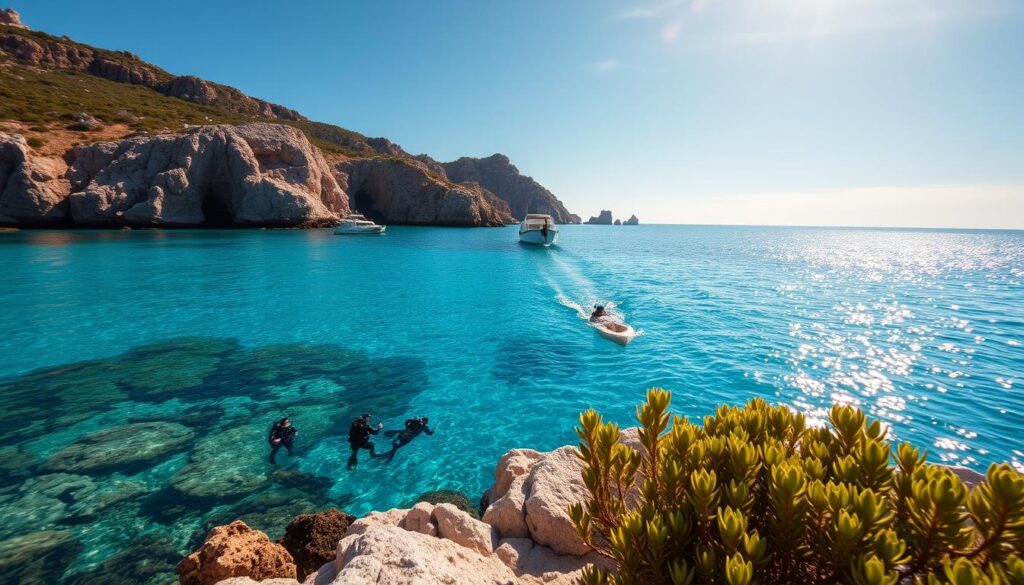
Even beginners find immediate rewards with simple snorkeling in sheltered coves. The water clarity reveals colorful fish dancing around rock formations. For certified divers, dramatic underwater caves and grottos await exploration.
Capraia offers exceptional diving spots, including an underwater city resting 40 meters deep. The Cetacean Sanctuary there provides encounters with dolphins and whales.
Boat Rides and Scenic Trail Hikes
A boat ride along the coastline reveals perspectives inaccessible from land. Renting a small boat allows freedom to pause at hidden coves for swimming.
Inland, scenic trails like Elba’s path to Monte Capanne reward hikers with breathtaking views extending to Corsica. Favignana’s flat terrain makes it a cyclist’s paradise for beach-hopping by bike.
Exploring Turquoise Waters and Sunsets
The turquoise waters transform throughout the day. Morning light illuminates sandy bottoms, while sunset paints the sea in gold and purple hues.
Timing your boat excursion or coastal walk to coincide with these daily transformations creates magical experiences. The ferry journey between destinations becomes part of the adventure itself.
Local Culture, History, and Culinary Delights
What distinguishes these coastal settlements is their living heritage, where history breathes through contemporary daily life. The authentic character emerges not in curated attractions but in the organic patterns of community existence.
Villages, Traditional Houses, and Fisherman Tales
I find the charm of these villages lies in their working authenticity. Fishing nets dry on ancient walls while small gardens overflow from compact spaces. The architecture tells stories of adaptation—thick stone walls that moderate climate extremes, domed roofs collecting precious rainwater.
In Favignana, tuna fishing history permeates local identity. The converted factory museum honors an industry that shaped community rhythm. Restaurants here showcase generations of culinary knowledge through simple preparations that highlight incredible freshness.
The people who serve you actually call this place home. Their stories aren’t folklore but living oral history—knowledge of weather patterns and fish migration passed through generations. This creates a genuine mix where modern life coexists with deep traditions.
Each coastal town possesses its own character. From Levanzo’s quaint village to the brightly colored houses clustering around harbors, these communities maintain rhythms established long before tourism. The charm comes from their beautiful imperfection.
Conclusion
The most profound journeys often begin where conventional tourism ends. Pianosa and similar lesser-known islands in the archipelago offer travel as discovery rather than consumption. The effort required—the special permits, the lengthy ferry ride—transforms the experience into something earned.
This way of traveling reveals the true charm of Italy’s coastal paradise. Dramatic cliffs, hidden coves, and winding trails create a perfect mix of natural beauty and rich history. Traditional villages along the coast maintain authentic character.
Each island in this remarkable sea offers a unique place for reflection. The restricted access preserves what mass tourism destroys. These scattered islands reward the curious traveler with memories that endure.