

After years of exploring Italy’s famous landmarks, I’ve found its deepest magic lies off the beaten path. The true revelations often wait behind unmarked gates, in the quiet, hidden italian gardens that most travelers never see.
These are not simply collections of plants. They are living spaces where art and history intertwine with nature. They tell stories of a centuries-long conversation between human creativity and the landscape.
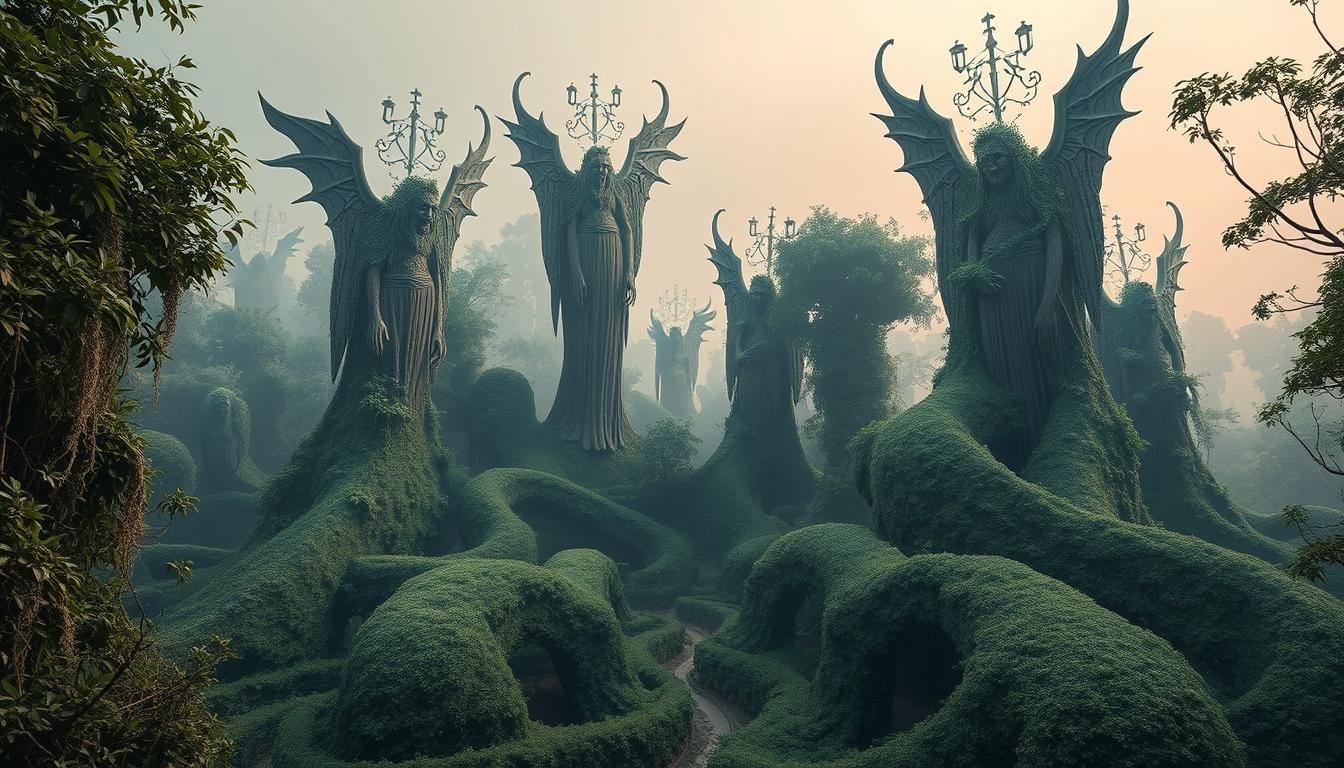
My journey into this world began at the Giardino dei Tarocchi in Tuscany. This place completely changed my idea of what a garden could be. It is a surreal masterpiece that feels like walking through a dream.
Visiting these special places offers a different kind of travel experience. It is an antidote to crowded tourist sites. Here, beauty unfolds slowly, asking for your patience and full attention.
Each garden becomes a unique window into a different part of Italian culture. They show how visionaries have used the land to express their view of the world. This discovery transforms a simple trip into a deeper, more personal engagement with Italy’s soul.
Key Takeaways
- Italy’s most captivating spaces are often its lesser-known, secluded gardens.
- These gardens function as open-air museums, blending horticulture with profound artistic and historical narratives.
- The Giardino dei Tarocchi serves as a prime example of innovative, sculpture-filled garden design.
- Exploring these spaces provides a contemplative alternative to mainstream tourist experiences.
- Each garden reveals unique insights into Italian culture, history, and personal expression.
- Patience and observation are rewarded with a deeper, more meaningful connection to the place.
Discovering Hidden Italian Gardens: An Invitation to a Secret World
While travelers flock to iconic sites, I have always been drawn to the contemplative refuge offered by Italy’s lesser-known gardens. These are not merely pretty places; they are sanctuaries where one can engage with nature and art on a deeply personal level.
What Defines a Hidden Italian Garden?
A true secret garden transcends mere seclusion. It is a deliberate creation, an intentional retreat from the modern world. Its power lies in fostering a direct, sensory connection that mass tourism often obscures.
These gardens are living artifacts. They exist across time, offering a quiet dialogue between past and present. Their beauty is often subtle, revealed to those willing to look beyond the obvious.
The Allure of Secluded Green Spaces in Italy
The appeal is profound. In a bustling city like Rome, where green space constitutes nearly forty percent of the area, these places act as essential lungs. They offer respite to both visitors and residents alike.
This experience democratizes beauty. Unlike ticketed monuments, many welcome you freely. They prioritize the rustle of leaves and the scent of earth over digital validation, preserving a more authentic mode of travel.
Cultural and Historical Tapestry of Italy’s Garden Sanctuaries
Italy’s garden spaces serve as living archives. Each pathway and planting tells a story of cultural evolution. These landscapes preserve more than botanical specimens—they safeguard entire worldviews.
Historical Landmarks and the Legacy of Historic Villas
Walking through Villa della Pergola reveals nineteenth-century British influence. Aristocrats created hybrid landscapes reflecting complex cultural exchanges. The villa’s history demonstrates how these spaces functioned as philosophical statements.
At Giardino di Ninfa, medieval ruins support cascading ivy. Crumbling stone walls from centuries past coexist with nature’s renewal. This temporal layering creates a unique dialogue between eras.
The Role of Gardens in Italian Art and Architecture
These spaces have served as essential settings for artistic creation across centuries. I’ve seen how figures like Carlo Levi found inspiration in places like Alassio. Their works capture Italy’s essential character.
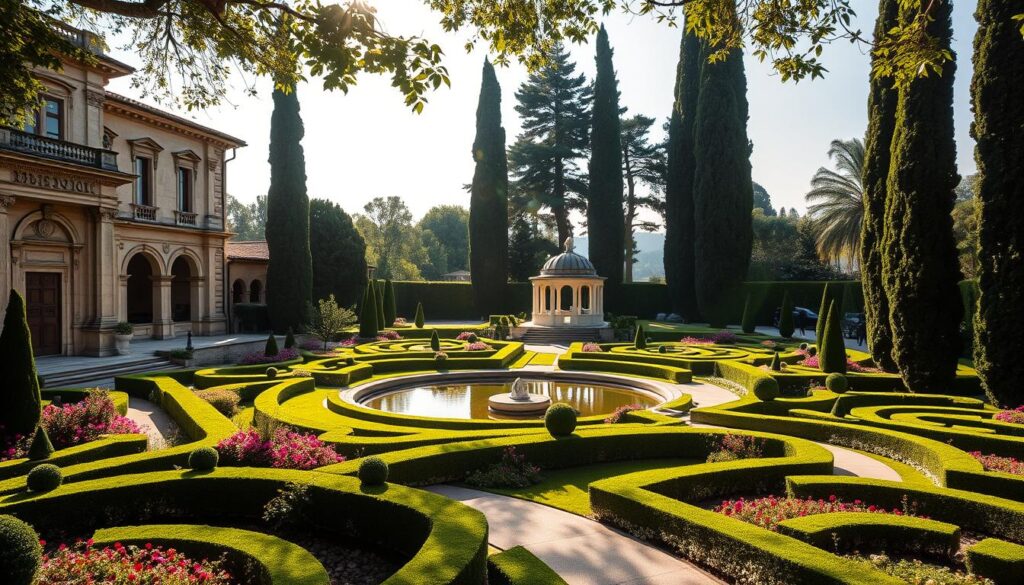
The architecture of historic villas demonstrates sophisticated spatial understanding. Every terrace and wall construction reflects harmonious integration between built and natural environments. This approach makes gardens three-dimensional artworks.
| Time Period | Garden Example | Architectural Feature | Cultural Significance |
|---|---|---|---|
| Medieval | Giardino di Ninfa | Stone walls and towers | Historical preservation through nature |
| 19th Century | Villa della Pergola | British-inspired terraces | Cross-cultural horticultural exchange |
| 1880s | Botanical Garden Chanousia | High-altitude layout | Scientific classification movement |
| 20th Century | Cemetery of Commonwealth | Hadrian’s Wall fragment | International memory and connection |
Nature, Design, and Scenic Beauty in Secret Garden Escapes
What transforms a simple collection of plants into an extraordinary garden is the deliberate interplay between design and natural elements. I’ve walked through spaces where every path and planting feels like a carefully composed symphony.
At Villa della Pergola, twenty-two thousand square meters showcase Europe’s largest Agapanthus collection. Over thirty wisteria varieties create chromatic progressions that shift with the seasons. This demonstrates true horticultural mastery.
Botanical Wonders and Exotic Flora
These spaces serve as living museums of botanical exploration. Castel Trauttmansdorff transports visitors from rice paddies to desert cacti within a single afternoon. The conceptual scope is both ambitious and educational.
Water features create essential microclimates for exotic species. Fountains and ponds at La Mortella allow subtropical trees and rare orchids to flourish. This sophisticated understanding of humidity regulation reflects generations of practice.
Spring reveals these landscapes at their most dramatic. Hundreds of rose varieties burst into bloom while wisteria creates purple waterfalls. Trees that appeared dormant suddenly explode with blossoms.
| Garden | Notable Species | Design Feature | Conservation Role |
|---|---|---|---|
| Villa della Pergola | 30+ wisteria varieties, European Agapanthus collection | Chromatic seasonal progressions | Preserves threatened Mediterranean species |
| Castel Trauttmansdorff | Desert cacti, rice paddies | Themed global botanical geography | Educational habitat recreation |
| La Mortella | Subtropical trees, rare orchids | Water-regulated microclimates | Subtropical species repository |
| Orto Botanico di Palermo | Towering bamboo, giant ficus | Exotic palm collections | Scientific classification preservation |
The specialized collections represent decades of curatorial dedication. Each tells stories of international plant exchanges and patient cultivation. These beautiful spaces serve crucial conservation purposes often invisible to casual visitors.
Must-Visit Hidden Italian Gardens: Tuscany and Beyond
Beyond the iconic cities of Florence and Siena, a different Italy awaits in carefully curated outdoor spaces that blend art with nature. My exploration reveals remarkable diversity across regions, each offering unique perspectives on landscape design.
Giardino dei Tarocchi and Tuscany’s Other Secluded Gems
Villa della Pergola exemplifies coastal elegance. Perched above the Ligurian Sea, its terraces explode with color during spring and early summer. The open-air tea room reflects Anglo-Italian heritage.
Further south, Giardino di Ninfa opens on selected days from spring through fall. Its romantic ruins create an atmosphere unlike any other cultivated space I’ve encountered.
Northern Italy offers extraordinary variety. From Miramare Castle Park’s sea views to Botanical Garden Chanousia’s alpine specimens at 2,170 meters, the region demonstrates how climate shapes design.
| Garden | Location | Best Season | Unique Feature |
|---|---|---|---|
| Villa della Pergola | Alassio (Ligurian Coast) | Spring-Early Summer | Sea-view terraces |
| Giardino di Ninfa | Near Rome | Selected Spring-Fall Days | Medieval ruins integration |
| Miramare Castle Park | Trieste (Northern Italy) | Summer | 22-hectare coastal park |
| Botanical Garden Chanousia | Alps (Northern Italy) | Late Spring | High-altitude alpine flora |
These spaces transform a simple day trip into profound cultural engagement. They reward advance planning with experiences that spontaneous itineraries often miss.
Architectural Marvels and Timeless Landscapes in Italy
The true measure of Italian landscape design reveals itself in how architecture and nature converse across centuries. These spaces demonstrate sophisticated integration where built structures and living environments achieve remarkable harmony.
From Villa della Pergola to Historic Cloisters
I’ve witnessed how terraces transform challenging topography into multi-level compositions. Each level offers distinct spatial character and breathtaking views. This approach turns constraints into opportunities for richer experiences.
At Villa San Michele, stone paths and cypress trees frame the Gulf of Naples. Ancient Roman artifacts create temporal depth that transforms simple views into layered historical meditation. The design enhances without dominating.
Water systems represent engineering marvels beyond decorative fountains. Renaissance designers created gravity-fed features that still operate today. The integration of ruins, as at Giardino di Ninfa, embraces decay as part of beauty.
| Site | Architectural Feature | Design Era | Landscape Integration |
|---|---|---|---|
| Miramare Castle | 22-hectare park with gazebos | Mid-19th Century | Coastal views with structured paths |
| Villa San Michele | Stone paths and Roman artifacts | Early 20th Century | Gulf of Naples vista framing |
| Ospedale Nuovo Trastevere | Medieval cloister | 13th Century | Functional space with hydrangeas |
| Palazzo Barberini | Dual staircases by rivals | 17th Century | Garden extending architectural dialogue |
Even contemporary spaces like the Masone Labyrinth continue this evolution. Here architecture becomes pathway and boundary simultaneously. Italian landscape design maintains its vitality through constant reinterpretation.
Practical Tips for Experiencing Italy’s Hidden Gardens
The most profound encounters I’ve had in Italy’s outdoor spaces came when I surrendered to their natural rhythms rather than imposing my own schedule. This approach transforms a simple visit into a meaningful experience that respects both the nature and culture of these special places.
When to Visit and How to Explore Off the Beaten Path
Timing your travel correctly makes all the difference. I learned that gardens like Giardino di Ninfa open on selected days from spring through fall, requiring advance planning. Spring and early summer reveal Villa della Pergola’s terraces at their most vibrant.
The best way to explore involves slowing down. Rather than rushing through, I dedicate several hours to mindful walking and observation. This allows the space’s deeper qualities to emerge naturally.

Travel, Safety, and Local Cultural Insights
Many of Italy’s finest green areas remain free and open to the public daily. Parks like the Arboretum of Arco offer world-class beauty without cost. Public transportation provides excellent access to most locations.
During summer, spaces like Villa Celimontana host open-air jazz concerts. Understanding that locals use these parks as extensions of living space transforms visits from sightseeing into genuine cultural participation.
Safety considerations are minimal, but standard urban precautions apply. The real reward comes from engaging with these spaces as Italians do—with patience and appreciation for their seasonal character.
Conclusion
These cultivated landscapes offer something increasingly rare in modern travel: the opportunity for genuine, unhurried connection. The gardens I’ve explored represent more than beautiful places—they are living classrooms where one engages with culture through all the senses.
What unites these diverse spaces is their capacity to transform the travel experience. They teach patience and observation, rewarding those willing to move beyond checklist tourism. In a world of rapid consumption, these gardens preserve slower, more meaningful ways of being present.
The true beauty of Italian garden culture lies in its accessibility. Many remarkable places remain open to all, suggesting that profound encounters need not be purchased. They await those ready to wander with curiosity and sit without agenda.
I invite you to discover these spaces on your next journey. Allocate time for garden exploration, understanding that these experiences offer cultural richness equal to any museum. They connect us to deeper rhythms of place and history.