

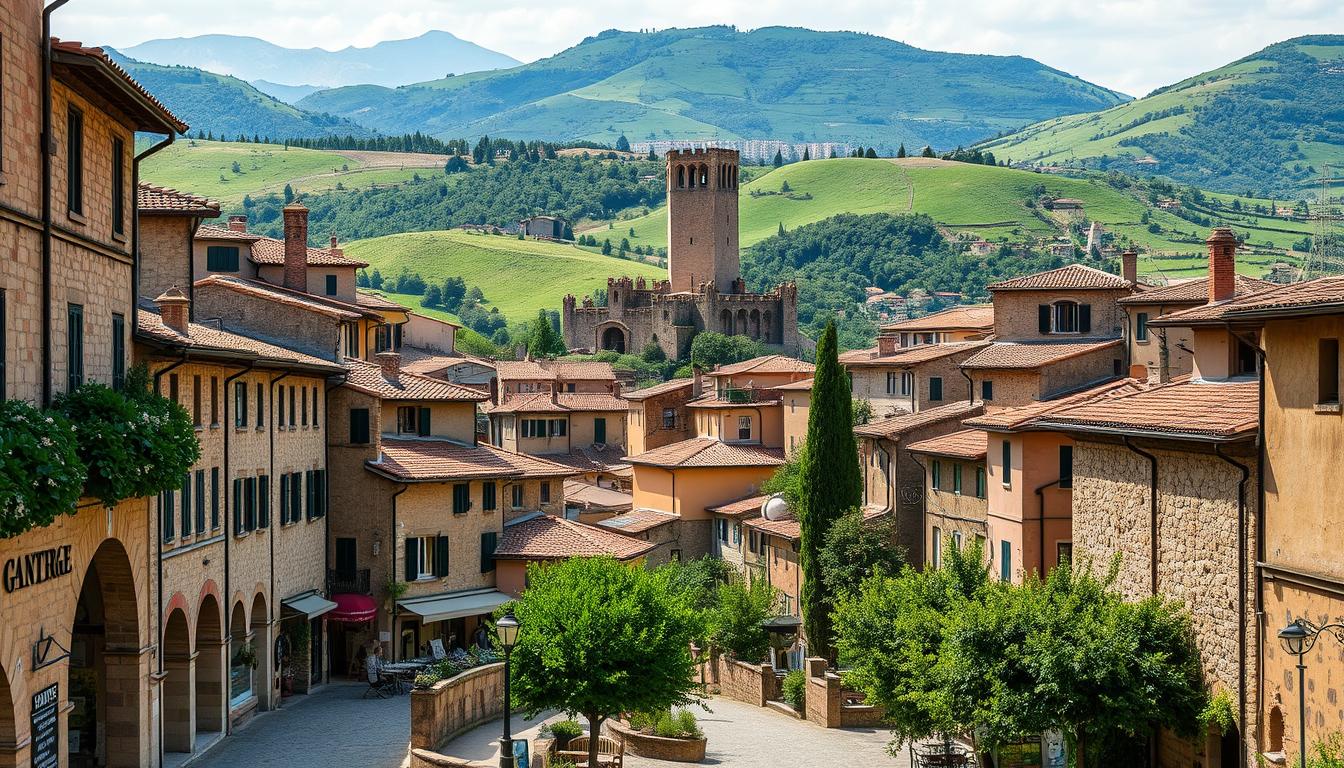
Nestled between the gentle, rolling hills of Emilia-Romagna, Brisighella emerges not as a mere destination, but as a profound encounter with the past. I discovered this remarkable place while seeking the authentic soul of Italy, far from the well-trodden paths. It is an exceptional example among italian medieval towns, where history is not displayed behind glass but felt in the very air you breathe.
The story of this region, and countless other settlements, began in the turbulent era following the fall of Rome. As wealthier families sought refuge in defensible locations, they built fortresses that would become the hearts of new communities. This strategic necessity gave birth to the architectural jewels that now dot the landscape.
What distinguishes Brisighella is its palpable authenticity. Its beauty is not curated for crowds but is a natural result of centuries of life. Walking its quiet lanes, I felt a connection to a world preserved, where every cobblestone and archway tells a story. This is a journey through time, offering an experience that transcends ordinary travel.
Key Takeaways
- Brisighella offers an authentic and less-crowded alternative to more famous Italian destinations.
- The town’s strategic hilltop location is a direct result of historical periods of conflict and invasion.
- Its architecture provides a tangible connection to a past that began shaping the region after the fall of the Western Roman Empire.
- The experience is one of immersive discovery, focusing on culture and living history.
- It represents a prime example of defensive urban planning from the medieval era.
- The surrounding Emilia-Romagna countryside enhances the sense of stepping into another time.
Discovering Brisighella and Its Medieval Charm
Approaching from the valley, the silhouette of Brisighella materializes like a natural extension of the landscape itself. The warm-hued stone buildings rise gradually from the surrounding hills, offering panoramic views that capture Emilia-Romagna’s essential character. This first revelation sets the tone for an experience where human creation and nature exist in perfect harmony.
Overview of Brisighella’s Allure
What distinguishes this place from other medieval towns is its remarkable preservation. The triple crown of landmarks—the fortress, clock tower, and sanctuary—creates a skyline visible from miles away. Its street plan remains intact from centuries past, winding through the settlement with authentic grace.
The quality of light here transforms throughout the day. Morning sun bathes the limestone in golden hues, while evening casts long shadows that emphasize the architecture’s textures. This ever-changing tableau has inspired artists for generations.
Why This Town Shines Among Italian Medieval Towns
Brisighella offers travelers an atmosphere of genuine tranquility. The pace of life feels deliberate, untouched by the crowds that overwhelm more famous destinations. Residents maintain traditions with natural warmth rather than theatrical performance.
The beauty emerges from how structures seem to grow from the hills themselves. Unlike imposed architecture, these buildings feel organic to their setting. This integration creates a sense of timelessness that rewards deeper exploration.
While peers like San Gimignano boast impressive skylines, Brisighella’s claim rests on authenticity and preservation. It offers substance over spectacle, inviting visitors to engage with layered history and cultural continuity.
Historical Evolution and Heritage of Brisighella
To understand Brisighella’s soul, one must look past its beauty and into the defensive logic that dictated its every contour. This is a history written in stone and strategy, a response to the turbulent time following Rome’s collapse.
Medieval Foundations and Defensible Architecture
As waves of new people moved across the land, safety became paramount. Wealthy families sought high ground, building formidable strongholds. The local stone was quarried to create thick walls and towering buildings.
Every narrow lane and steep ascent served a purpose. It was designed to confuse and slow any potential invader. This strategic layout is a masterclass in survival from a distant century.
Influences from Centuries Past
Walking through the town, you see layers of history. The original Romanesque churches were later enhanced with Gothic elements. Each new century added its mark while respecting the old.
The community that formed here was a complete society. Nobles, clergy, merchants, and artisans all lived within the protective walls. This created a resilient character that defines the people to this day.
Stunning Scenic Views and Architectural Wonders
Ascending the winding path toward Brisighella’s crest, I discovered that the journey upward reveals as much beauty as the destination itself. Each step offers new views of the Emilia-Romagna countryside, where vineyards and olive groves create a living tapestry.
Panoramic Hilltop Vistas and Countryside Overlooks
From the hilltop positions, your gaze travels across a landscape unique to this region. The distinctive gessi—selenite rock formations—glow white against the green hills. This creates a panorama that changes character with the shifting light.
The three landmarks crowning the peaks create a dramatic skyline. The fortress, clock tower, and sanctuary each occupy their own elevation. Connecting pathways reward climbers with progressively expanding views.
Charming Stone Structures and Timeless Streets
The local limestone weathers to warm honey and amber tones. Medieval builders worked this stone with remarkable skill. Their buildings possess both massive solidity and delicate carved details.
Via degli Asini represents the town’s most distinctive feature. This covered street with repeated archways once sheltered chalk merchants. Today, walking beneath these ancient vaults feels like a passage through time.
The streets follow natural contours, creating a three-dimensional maze. Every turn reveals new perspectives and hidden gardens. This organic layout makes exploration a continuous discovery.
Exploring Brisighella’s Iconic Streets and Landmarks
My exploration of Brisighella’s most iconic features began with the remarkable Via degli Asini. This elevated street runs for over 200 meters beneath a series of graceful arches. Originally designed to protect merchants transporting gypsum, it now stands as one of Europe’s most photogenic covered passages.
The ascent to Rocca Manfrediana reveals the town’s defensive genius. From this Venetian fortress, comprehensive views unfold across the valley. The strategic importance of this location becomes immediately apparent.
Occupying the middle peak, Torre dell’Orologio marks time as it has for centuries. Hearing its bells creates an auditory connection to the past. Each chime resonates through the stone buildings below.
The Santuario del Monticino crowns the third hilltop. At sunset, the western sky ignites behind the distant Apennines. This sanctuary serves as both spiritual haven and magnificent viewing platform.
The central square forms the heart of the community. From here, narrow streets radiate outward, leading to traditional shops and charming churches. These places maintain the town’s living character.
Small gardens soften the stone landscape with color and fragrance. Residents cultivate flowers and herbs in unlikely corners. This demonstrates how life adapts and beautifies even austere settings.
I recommend patient exploration over checklist completion. Return at different times when light transforms familiar scenes. Allow serendipity to guide your discoveries in this remarkable town.
Italian Medieval Towns: Brisighella as a Hidden Gem
There exists a quiet hierarchy among Italy’s historic settlements, where fame often obscures genuine character. While cities like San Gimignano draw international crowds, I discovered that the true soul of this region resides in places like Brisighella.
Each region developed distinct architectural styles. Tuscan towns boast iconic towers, while Emilia-Romagna’s settlements reveal more subtle charms. The local limestone and strategic hilltop positioning create a unique aesthetic.
What defines a hidden gem? For me, it’s the absence of commercial pressures. In this place, residents outnumber visitors. Traditional life continues uninterrupted.
The advantage becomes clear when you experience genuine discovery. Unlike famous cities, here you engage with history personally. Conversations with locals reveal insights no guidebook contains.
In a world threatened by over-tourism, seeking out lesser-known towns becomes both rewarding and sustainable. Thanks to its relative obscurity, Brisighella maintains its authentic rhythm.
This approach distributes attention across Italy’s remarkable wealth of historic settlements. It preserves the very qualities that make these places worth visiting.
Culture and Local Traditions: Festivals and Artisan Crafts
The true heartbeat of Brisighella reveals itself not in its stone monuments, but in the living traditions that continue to pulse through its streets. During my visit, I discovered how seasonal rhythms and ancestral crafts create a cultural tapestry that connects past and present.
Seasonal Celebrations and Local Festivals
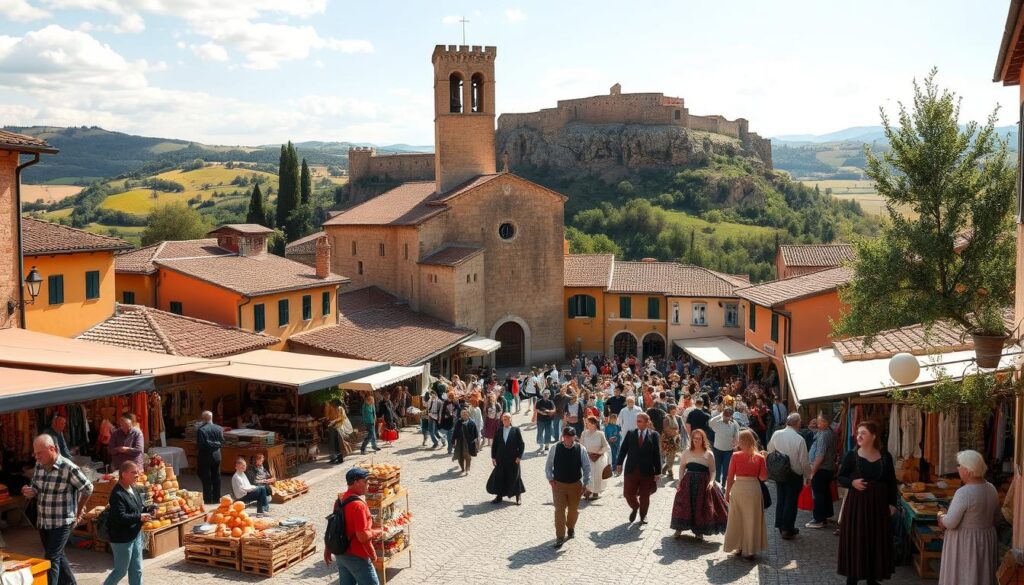
I timed my tour to witness the annual Festa Medievale in June. The entire village transforms into a vibrant recreation of its past. Residents don period costumes while artisans demonstrate centuries-old crafts.
The festival creates an immersive experience where history feels immediate. You hear the clang of blacksmiths’ hammers and smell wood-fired ovens. This celebration demonstrates how community pride animates these ancient streets.
Throughout the year, religious processions wind through the narrow lanes. Churches become living centers where people gather for feast days. These events mark the progression of time with solemn beauty.
Traditional Crafts and Artisan Heritage
Daily life here maintains connections to ancestral practices. Morning markets fill the central square with local producers. Evening brings the passeggiata, when people of all ages stroll through the main street.
I observed artisans practicing trades passed through generations. Olive oil production follows methods unchanged for centuries. Distinctive ceramics reflect the region’s aesthetic heritage.
Food plays a central role in cultural identity. Traditional recipes bring people together for meals that become social events. Seasonal festivals celebrate harvests with genuine warmth.
This balance between tradition and contemporary life gives Brisighella its unique character. Young people embrace modern careers while participating in ancient customs. The past remains a vital presence rather than a museum exhibit.
Savoring the Flavors: Brisighella’s Food and Wine Scene
My journey through Brisighella’s flavors began unexpectedly at a small alimentari tucked beneath ancient arches. The proprietor offered me a taste of local olive oil, its golden-green hue hinting at the landscape that produced it. This moment revealed how cuisine here represents cultural continuity.
The Brisighella Brisighello olive oil carries DOP certification from the Nostrana di Brisighella cultivar. Its delicate fruitiness and subtle almond notes reflect the cooler climate of one of Italy’s most northern olive-growing regions. This exceptional oil forms the foundation of local cooking.
Authentic Italian Cuisine and Deli Delights
Traditional dishes tell stories of generations sustained by this land. I savored passatelli in brodo, where pasta swims in rich broth, and cappelletti stuffed with savory fillings. Each recipe demonstrates peasant wisdom elevated to art.
The weekly market fills the central square with producers offering seasonal treasures. Family-run restaurants in the town maintain direct relationships with these growers. Their menus change with what the area provides naturally.
Local Wine Tastings and Culinary Experiences
Romagna’s wine production centers on indigenous varieties like Sangiovese and Albana. These grapes express the unique terroir of these hills. Family-run wineries welcome visitors for intimate tastings that feel like conversations.
A wine tour through the surrounding hills reveals small producers maintaining multi-generational traditions. Their cellars offer not just beverages but stories of dedication. The experience connects you to the land through its most celebrated liquid.
The optimal culinary exploration combines dining with market visits and perhaps a cooking class. This approach reveals how food and wine here represent cultural expression rather than mere sustenance.
The Harmony of History and Nature in Brisighella
In Brisighella, the distinction between built environment and natural landscape dissolves into a harmonious whole. The stone structures appear to grow from the very hills they occupy, creating a seamless integration that speaks to centuries of thoughtful coexistence.
The surrounding hills are characterized by distinctive gessi—selenite rock formations that glow white against the green terrain. These geological wonders provided the gypsum that became valuable trade material throughout history, influencing both the town’s economy and architectural character.
Walking paths radiate from the settlement into the working countryside. These trails offer spectacular views of cultivated terraces where olive groves and vineyards demonstrate agricultural traditions maintained over time. The beauty visitors admire today results from ongoing human stewardship of this land.
Seasonal transformations continually reshape this landscape’s character. Spring brings wildflower explosions, while autumn reveals the harvest richness that has sustained communities for generations.
Experiencing this harmony directly—whether through hiking or simply pausing at a viewpoint—offers profound satisfaction. You witness how every element occupies its proper place in a composition centuries in the making.
Planning Your Visit: Practical Tips for Travelers
The practical considerations of visiting Brisighella became clear to me as I planned my own journey, revealing that thoughtful preparation significantly enhances the experience. This beautiful settlement rewards those who approach it with intention.
Navigating the Region and Transportation Options
I found that renting a car offers the greatest freedom. The scenic drive from Ravenna takes about an hour, winding through increasingly beautiful countryside.
For those preferring public transport, trains connect to Faenza. From there, a short bus ride completes the trip. This option works well for a day visit, though schedules require planning.
Best Times to Experience Brisighella’s Magic
Spring and early autumn provide ideal conditions. The light is perfect for photography, and crowds are thinner than in summer.
I recommend staying at least one night. This allows you to experience the quiet magic of early mornings and evenings after day-trippers depart.
Comfortable walking shoes are essential for exploring the cobblestone streets and hillside paths. Learning a few basic Italian phrases will enrich your interactions with welcoming locals.
Experiencing the Timeless Charm of Brisighella Today
What struck me most profoundly was not its ancient stones, but the vibrant contemporary life that pulses through them. Brisighella is a living community, not a museum exhibit. Approximately 3,000 residents pursue modern lives as conscious custodians of an extraordinary inheritance.
Walking its streets today, you witness a delicate balance. Children walk to school past centuries-old arches. Merchants open shops that have served generations. This ordinary routine becomes extraordinary against a backdrop of such profound continuity.
Balancing Medieval Heritage with Modern Comfort
The town has skillfully managed tourism, avoiding the extremes of isolation or becoming a theme park. A sustainable number of visitors brings economic benefit without overwhelming local life. The qualities that make this place special remain intact.
Modern amenities are seamlessly integrated. Reliable internet and well-maintained infrastructure coexist with historic settings. Contemporary hotels and restaurants respect the architectural character, proving appreciation for heritage need not sacrifice comfort.
Initiatives support traditional crafts and food production, creating viable economic models. This allows artisans and farmers to continue practices that define the area’s identity. It is a testament to a community valuing its roots while navigating the present.
The challenge for all historic settlements is real: maintaining ancient buildings, providing jobs for youth, and managing visitor pressure. Brisighella offers a valuable lesson in how tradition and modernity can achieve a productive balance.
Conclusion
Leaving Brisighella, I carried with me more than photographs—I carried a renewed understanding of what travel can mean. This small town exemplifies how historic places offer profound connections to continuity and human-scale living.
The true way to experience such towns requires patience. Rushing through checklist visits misses the subtle rewards of lingering conversation and observing daily rhythms. Each discovery comes gradually to those willing to slow their pace.
While this journey focused on one Emilia-Romagna village, the principles apply broadly. Countless similar places dot the Italian landscape, each with unique character. They collectively represent an antidote to modern homogenization.
Thanks to the residents who maintain these living communities, we can still find spaces where history breathes. Brisighella awaits as just one invitation to deeper discovery among Italy’s remarkable historic settlements.