

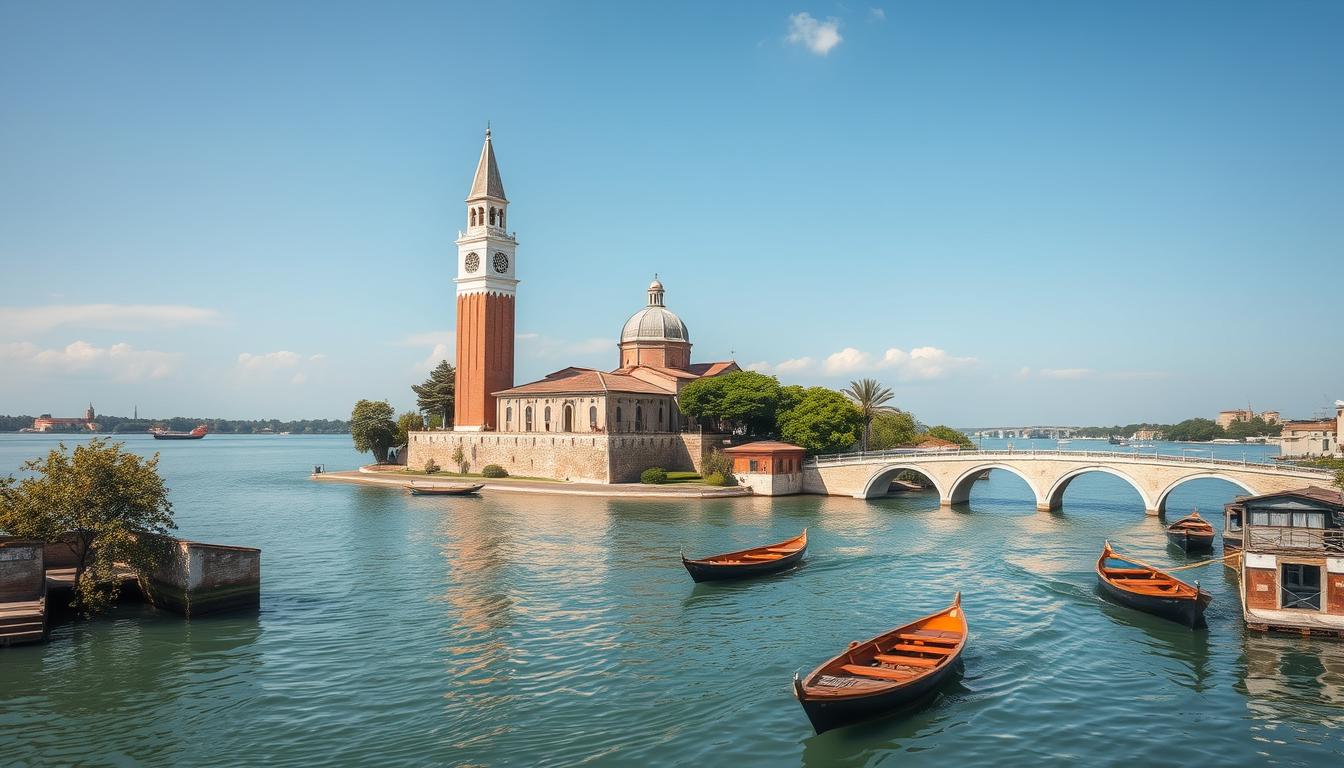
My journey begins on a quiet island that whispers of an era before the famous city existed. This place, Torcello, holds the deep roots of the venetian lagoon‘s history. Walking its paths today, I feel a profound stillness. It is hard to imagine this was once a thriving hub for thousands of people.
The Cathedral of Santa Maria Assunta stands as a powerful witness to this passage of time. Founded in the 7th century, its walls contain breathtaking Byzantine mosaics. The famous Last Judgment scene commands a quiet reverence you cannot find in busier places.
Torcello is not just a historical site. It is the mother of Venice, where people first built a sanctuary from the water and mud. This island offers a unique chance to understand a different side of the region’s soul. It rewards those who seek substance and the quiet weight of history.
Key Takeaways
- Torcello was a major settlement long before Venice became a powerful city.
- The island’s population drastically declined from over 20,000 to just a handful of residents.
- The Cathedral of Santa Maria Assunta dates back to the 7th century.
- Its interior features significant Byzantine art, including a renowned Last Judgment mosaic.
- The Church of Santa Fosca is an 11th-century structure with a unique circular design.
- Visiting Torcello provides a deeper, more contemplative understanding of Venetian origins.
- The island represents a shift from grand commercial centers to a place of quiet historical reflection.
Introduction: Discovering Venice Beyond the Canals
The Venice that most travelers encounter represents only a fraction of the city’s true composition and character. While the historic center captivates with its maze of waterways and iconic architecture, this dense network of 400 footbridges connects what is essentially one part of a much larger archipelago.
Setting the Stage: History, Art, and Serenity
Most visitors content themselves with the well-trodden pathways between St. Mark’s Square and the Rialto Bridge. They experience the city through its most famous views, never realizing that Venice comprises 118 distinct islands. Each possesses its own history and relationship to the water that defines this extraordinary world.
The outlying islands sustain traditions and ways of life that continue with remarkable authenticity. I have found that the most profound travel experiences come from seeking places where history lives in quieter, more intimate ways. Beyond the main canals, one discovers a Venice that exists for itself, not merely for its visitors.
This exploration is not an optional excursion but an essential pilgrimage. It offers the opportunity to understand Venetian culture in its full depth and texture. The serenity found on these islands provides space to breathe and reflect, revealing dimensions of Venice that postcard views cannot capture.
Exploring Secret Venetian Islands in the Venetian Lagoon
The true essence of this floating city extends far beyond its famous landmarks, into the quiet waterways that connect scattered communities. These lesser-known destinations offer a more intimate encounter with Venetian life, where traditions flourish away from the tourist crowds.
Why Venture Off the Beaten Path?
Stepping away from the main tourist routes reveals Venice as a complete ecosystem. The shallow bay spans fifty kilometers, where land and water merge in delicate balance. This environment has sustained human settlement for over a thousand years.
Salt marshes filter the water and protect the shorelines. Tides renew the system twice daily through three strategic inlets. Witnessing this natural rhythm provides deeper understanding of Venetian ingenuity.
Cultural and Natural Delights Await
A boat trip across the lagoon becomes an education in ecological interdependence. Herons hunt in the shallows while eelgrass meadows sway beneath the surface. Centuries-old traditions of fishing and craftsmanship continue in harmony with nature.
I recommend the vaporetto Line 12 from Fondamente Nove for an authentic experience. For greater flexibility, consider a private boat tour. Both options reveal Venice’s true genius: living gracefully within nature’s constraints.
Torcello: Ancient History and Byzantine Treasures
Stepping onto Torcello feels like crossing a threshold into a different century. The profound silence of this place is a stark contrast to the bustling venetian lagoon. Few visitors make the journey to this quiet island, but the reward is an encounter with history in its purest form.
The Cathedral of Santa Maria Assunta and Its Mosaics
The Cathedral of Santa Maria Assunta stands as the heart of Torcello. Founded in the 7th century, its interior holds breathtaking Byzantine art. The mosaic of the Last Judgment on the west wall is a masterpiece.
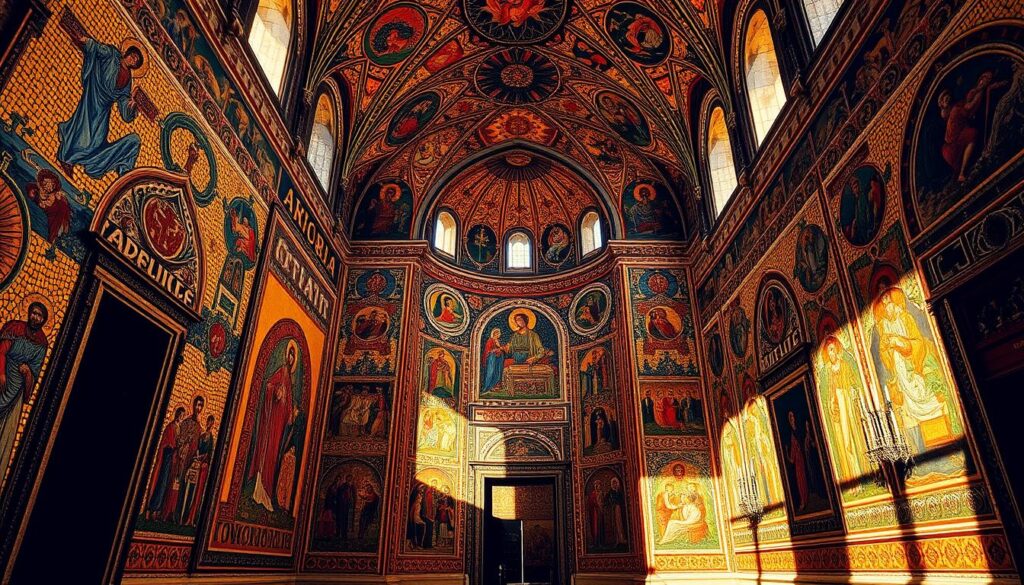
Light plays upon the gold tesserae in a way that feels almost supernatural. Adjacent to the cathedral, the 11th-century church of Santa Fosca offers a circular design for quiet contemplation.
Climbing the bell tower provides sweeping views across the lagoon. You can see the colorful houses of Burano in the distance. This perspective makes the isolation of the island palpable.
Hidden Walks and Scenic Landscapes
Beyond the churches, I found peace on hidden paths through fields and along canals. The landscape feels ancient and untouched.
Today, Torcello is home to only a handful of residents. This makes it one of the most serene places in the lagoon. The legendary “Attila’s Throne” in the square adds a touch of whimsy to the storied views.
Murano: The Timeless Art of Glassmaking
As my boat approaches Murano, I’m struck by how this island has preserved an artistic legacy that spans more than a millennium. The air carries a different energy here—one shaped by fire, skill, and centuries of refinement.
Traditions Rooted in the 13th Century
The defining moment came in the 13th century when Venice’s glass furnaces were relocated here. This pragmatic decision protected the dense city from fire risks while concentrating extraordinary talent.
Murano’s artisans quickly became legendary across Europe. Their techniques were so prized that the Republic forbade them from leaving the island. A powerful guild emerged to protect standards and ensure this tradition passed through generations.
Modern-Day Demonstrations and Local Guilds
Today, witnessing a glass-blowing demonstration feels like stepping back in time. The process has changed little over the centuries. Molten glass transforms into delicate forms through breath and gravity.
This living tradition continues in workshops lining the canals. Murano glass has adorned palaces around the world, proving that beauty born of fire transcends geography.
I recommend taking time to explore beyond main showrooms. Seek smaller ateliers for an intimate tour of this demanding art form. The dedication required to master glass becomes profoundly clear in these quiet spaces.
Burano: A Kaleidoscope of Color and Lace
A sudden burst of color on the horizon signals your arrival at Burano long before your boat docks. This small island announces itself with a visual symphony—raspberry, pistachio, and lemon houses lining the quiet canals.
The tradition behind this vibrant display is deeply practical. Local legend says fishermen painted their houses in bright, distinct colors to find their way home through the dense lagoon fog. What began as a necessity evolved into a proud, joyful aesthetic.
Historic Lace-Making and Vibrant Houses
Burano’s history stretches back to the 6th century, founded by fishermen seeking refuge. Centuries later, in the 1500s, the island earned European fame for a different craft. Its women became masters of needle lace, creating intricate patterns by hand.
This artistry was so prized that lace-makers formed a guild to protect their craft. Their work adorned nobility across the continent, bringing significant prosperity.
Visitors today can witness this meditative process at the Lace Museum or in small ateliers. Authentic, handmade Burano lace is now rare and expensive, a testament to the hundreds of hours required for a single piece.
| Lace Type | Production Method | Characteristic | Accessibility |
|---|---|---|---|
| Needle Lace (Punto in Aria) | Entirely Handmade | Extremely delicate, built stitch-by-stitch without a fabric base | Museum pieces, very rare commissions |
| Bobbin Lace (Merletto a Tombolo) | Handmade with Bobbins | Intricate, geometric patterns, more structured | Found in specialized ateliers |
| Contemporary Lace | Machine-Assisted | Beautiful, inspired by traditional patterns | Common in shops as souvenirs |
Walking across the low bridges, I felt the island’s dual spirit. It is a place of profound artistry and unabashed joy. The colorful houses are not just a backdrop but the heart of a living community.
The experience is complemented by culinary traditions rooted in the lagoon. Dishes like risotto de gò, made with local goby fish, taste of salt air and generations of knowledge.
Lido di Venezia: A Relaxing Beach Escape
The transition from Venice’s intricate waterways to Lido’s open shoreline feels like entering a different world. This slender barrier island separates the historic lagoon from the Adriatic Sea, creating a unique threshold between enclosed history and open horizons.
Sandy Beaches and Film Festival Flair
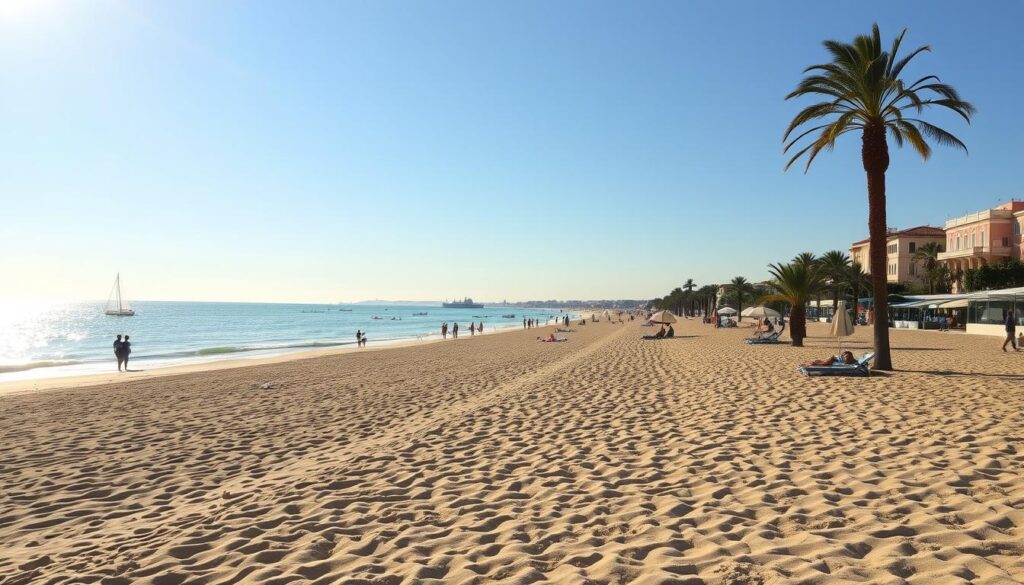
Lido’s eleven-kilometer stretch of sandy beaches offers something remarkable after days exploring stone pavements. The calm, shallow water creates ideal conditions for families seeking gentle swimming. I found the public beach sections particularly inviting for a full day of relaxation.
Every August and September, the Venice International Film Festival transforms the atmosphere. The island becomes a global stage for cinematic celebration. This cultural energy contrasts beautifully with the usual beach tranquility.
Beyond the famous beaches, Lido reveals elegant Liberty-style villas and leafy boulevards. A bicycle ride across the island takes you from lagoon to sea in minutes. The architecture whispers of early twentieth-century glamour when wealthy Venetians first sought summer refuge here.
This time-honored escape remains wonderfully accessible. A short vaporetto ride delivers you to a different rhythm of Venetian life. Lido provides the perfect balance to intense city exploration.
San Michele: Venice’s Peaceful and Historic Cemetery
Approaching San Michele by vaporetto, I sensed an immediate shift from the city’s vibrant energy to a realm of contemplative stillness. This unique island serves as Venice’s primary cemetery, a place where history and remembrance intertwine gracefully.
Art, Remembrance, and Tranquility
The cemetery dates to the early 19th century, when public health concerns prompted the consolidation of burial grounds. Designed as a garden sanctuary, San Michele features pathways lined with cypresses and seasonal flower beds.
Walking through this serene island today, I encountered the final resting places of celebrated figures. Composer Igor Stravinsky, poet Ezra Pound, and philosopher Friedrich Nietzsche’s family lie here among other luminaries.
The 15th-century church on the island houses significant works of art that merit quiet contemplation. These creations affirm life’s beauty even in a place dedicated to mortality.
For visitors, San Michele offers a reflective pause from the bustling city. It forms an essential part of Venetian identity, integrating remembrance into daily lagoon life with profound dignity.
Other Venetian Lagoon Treasures and Hidden Gems
My exploration of Venice’s outer islands uncovered a rhythm of life that has persisted for centuries, largely untouched by tourism. Beyond the famous trio, the venetian lagoon shelters communities where authentic traditions flourish.
Pellestrina and Giudecca: Authentic Local Experiences
Pellestrina’s slender form stretches for kilometers, offering peaceful beaches and fishing villages. Here, you can witness the daily catch and sample seafood straight from the water. The views across the lagoon are breathtaking.
Giudecca provides stunning views of San Marco from across the canal. This residential area feels worlds away from the crowds. The Church of the Redeemer houses remarkable works by Tintoretto.
Sant’Erasmo serves as Venice’s vegetable garden, while San Francesco del Deserto offers spiritual tranquility. San Giorgio Maggiore‘s bell tower provides panoramic views worth the short boat ride.
These lesser-known islands reveal the venetian lagoon‘s true character. They offer an experience that connects you to centuries of lagoon life.
Conclusion
Each island visit revealed a different facet of Venetian identity, creating a mosaic more complete than any single landmark. The venetian lagoon is not just scenery but the living heart of this water-borne civilization.
Today, this fragile ecosystem requires our mindful presence. Restoration projects rebuild salt marshes, while visitors can help by traveling lightly. The lagoon teaches us to move at nature’s pace.
As you return across the water to the main canals, carry this perspective forward. The true Venice exists in the delicate balance between human creation and natural forces. Let the lagoon‘s rhythm guide your understanding.