

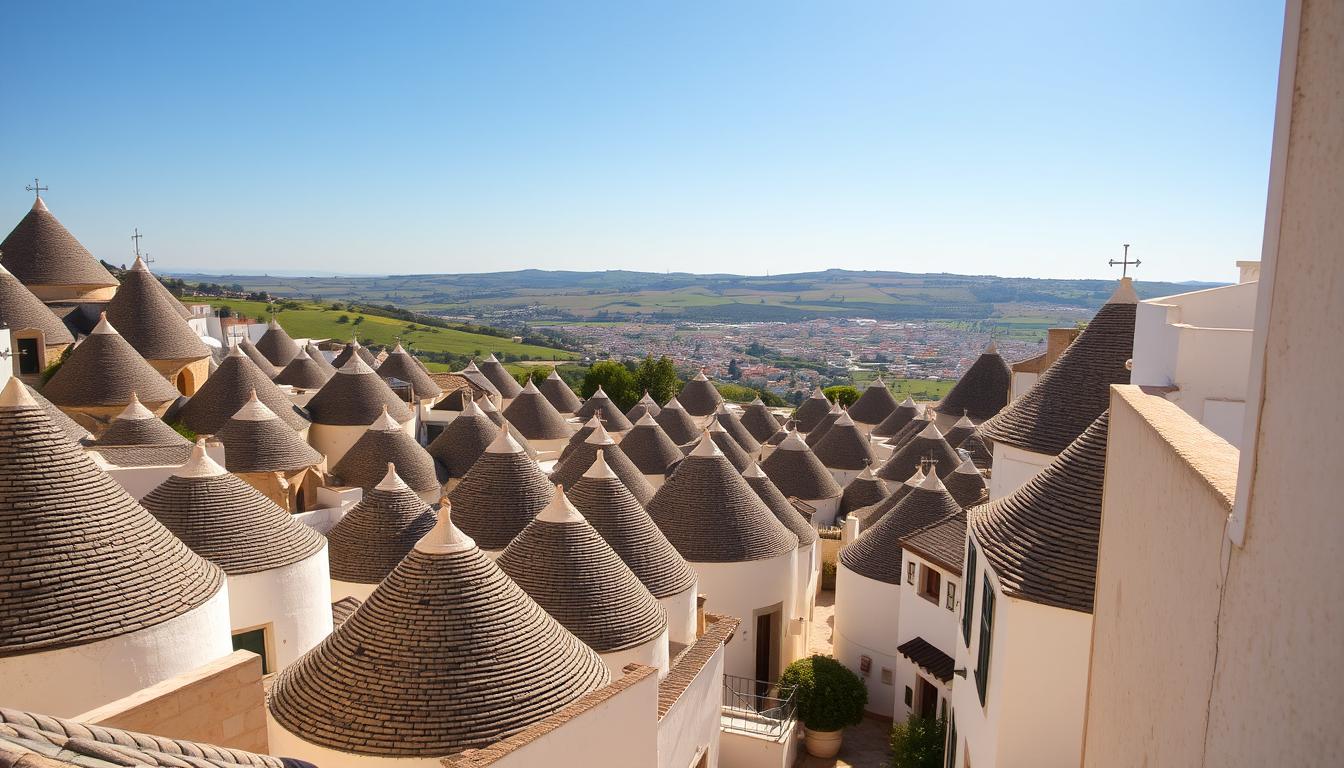
I have wandered through many a historic city where the built environment speaks of a different time. Yet, nothing prepared me for the arresting sight of the trulli scattered across Puglia’s sun-bleached plateau.
These conical stone dwellings represent a unique building tradition. My first encounter in Alberobello felt like stepping into a village from a storybook, yet it was grounded in centuries of pragmatic ingenuity.
The world often celebrates Italy for its grand basilicas. But here in the Itria Valley, a different architectural language speaks. It is one of circular forms, corbelled domes, and symbolic markings that tell stories older than the stones themselves.
I discovered that their beauty lies not just in their picturesque appearance. It resides in the sophisticated engineering and deep cultural history embedded within every carefully placed stone. This article invites you to explore the secret geometry of the trulli with me.
Through direct observation, I learned these structures are not mere relics. They are living testaments to human adaptability and artistic expression, shaped by economic and political realities across time.
Key Takeaways
- The trulli of Alberobello offer a unique and lesser-known example of Italian building traditions.
- Their distinctive conical shape is a marvel of simple yet sophisticated stone engineering.
- This architecture tells a deep cultural history that differs from Italy’s more famous monuments.
- The trulli are a living part of the community, not just historical artifacts.
- Understanding their design reveals a story of human ingenuity and adaptation.
- Exploring the trulli provides a more authentic and surprising travel experience.
Introduction to the Trulli of Alberobello
Beneath the charming conical roofs of Alberobello lies a history of resistance and resourcefulness that transformed practical necessity into enduring cultural heritage. This remarkable town stands as a living museum of human ingenuity.
Origins and Historical Background
The trulli emerged during the 15th century as a clever response to taxation laws. Feudal lords developed these dry-stone structures that could be quickly dismantled when tax collectors approached. This building technique became refined over centuries.
Walking through the Rione Monti district today, I observed how generations of families perfected this method. They stacked limestone without mortar, creating dwellings that have weathered years of change.
Cultural Impact on the Puglia Region
The trulli shaped daily life throughout Puglia. These structures served as homes, workshops, and storage spaces. Their design reflects a deep understanding of local materials and climate.
| Time Period | Primary Function | Construction Features |
|---|---|---|
| 15th-16th Century | Temporary dwellings | Basic dry-stone construction |
| 17th-18th Century | Permanent homes | Refined techniques, symbolic markings |
| Modern Era | Cultural preservation | UNESCO World Heritage site |
The true genius of the trulli lies not in their novelty, but in their timeless adaptation to human needs across generations.
This unique architecture distinguishes the Itria Valley from any other region in the world. It represents an alternative to classical Italian styles, embodying vernacular wisdom that speaks to sustainability.
Unraveling the Secret Geometry
The true revelation of the trulli came when I began to understand the geometric principles underlying their seemingly simple forms. What appears as charming folk architecture reveals itself as a sophisticated exercise in precision and practicality.
Architectural Innovations and Unconventional Designs
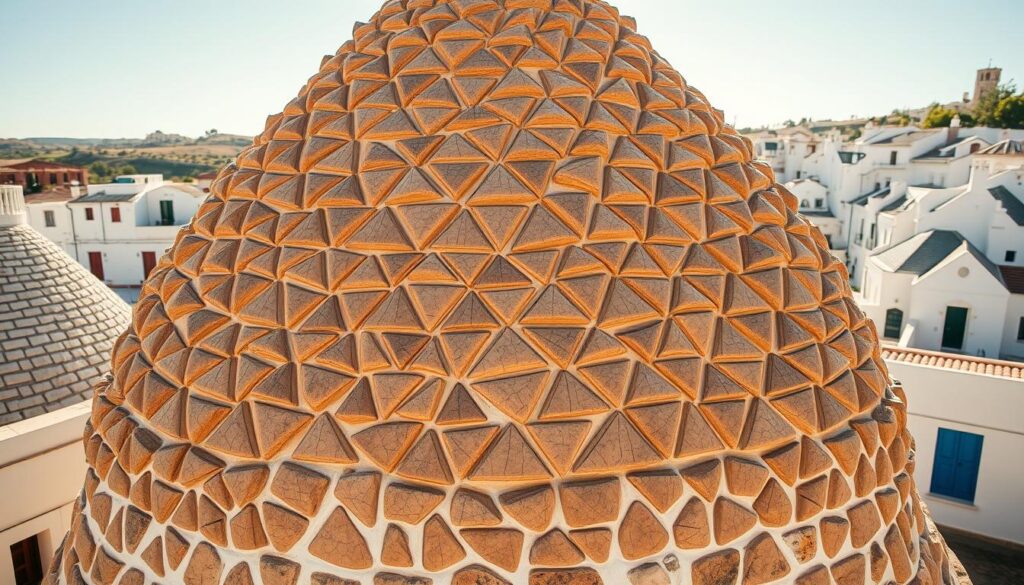
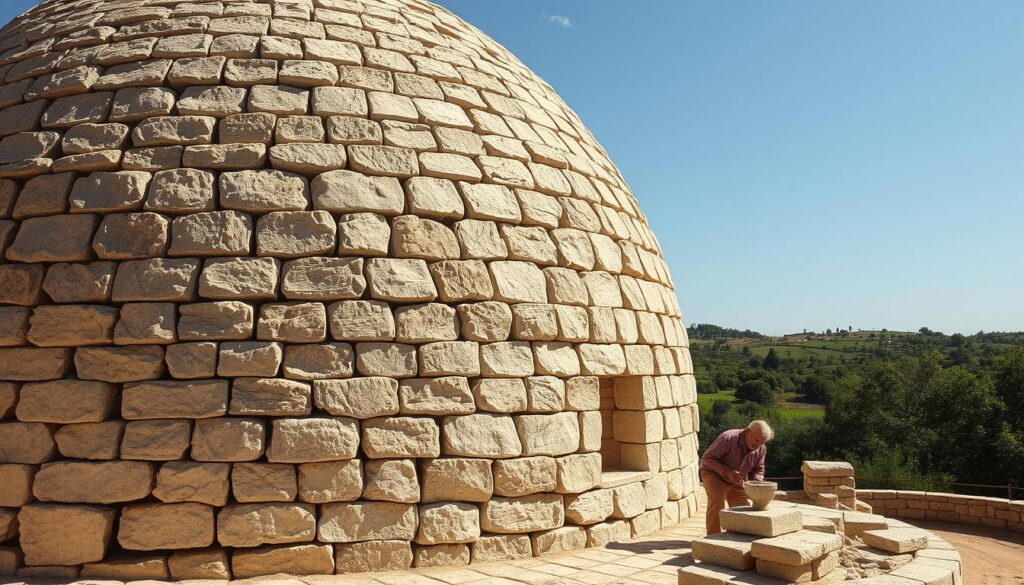
I spent hours studying the corbelled dome construction. Each limestone course slightly overhangs the one below, creating self-supporting structures without internal frameworks. This dry-stone technique represents remarkable vernacular engineering.
The design incorporates sophisticated water management. The conical roof channels rainwater efficiently to collection points. Thick walls and small windows create natural climate control, keeping interiors comfortable year-round.
Symbolic Elements in Trulli Structures
What captivated me most were the mystical symbols whitewashed onto the dark stone roofs. These markings range from Christian crosses to ancient protective emblems. Each symbol tells a story spanning centuries.
The painted pinnacles (pinnacoli) serve as both family identifiers and talismans. This folk tradition connects the trulli to broader Mediterranean cultural practices. The complex interplay of form and meaning makes each trullo a unique work of art.
Hidden Italian Architecture: A Closer Look
In my explorations, I’ve found that Italy’s most compelling architectural stories are often told by buildings that don’t clamor for attention but reward it generously. These structures reveal layers of meaning that emerge only through sustained observation.
Defining the Styles and Characteristics
Rome’s Basilica di San Clemente exemplifies this layered approach. A 12th-century church rises above a 4th-century structure, which itself sits atop a 1st-century Roman house. This vertical journey through time showcases evolving artistic sensibilities.
In Verona, Castelvecchio demonstrates sensitive adaptation. This 14th-century fortress was transformed by architect Carlo Scarpa in the 20th century. His work integrated modern elements with historic walls, creating a dialogue between eras.
Sant’Andrea della Valle in Rome possesses one of the city’s largest domes. Designed by Carlo Maderno, its interior features magnificent frescoes that rival more famous sites. Yet it receives only a fraction of the visitors.
Padua’s Palazzo della Ragione represents medieval civic design at its finest. Its distinctive roof shelters the Salone, a vast hall covered in astrological art. The building served both practical and symbolic functions.
Villa Adriana in Tivoli remains a remarkable temple to ancient Roman engineering. Emperor Hadrian’s 2nd-century complex features innovative marble work across palaces and baths. Its UNESCO status belies its relative obscurity.
What defines these gems is how they reveal their beauty gradually. They demand careful attention rather than quick appreciation.
Art, History, and Modern Interventions
What struck me most about modern architectural interventions in historic Italian spaces was their quiet, respectful conversation with tradition. These contemporary works demonstrate how new design can enhance rather than compete with centuries of accumulated beauty.
Influences of Carlo Scarpa and Tadao Ando
Carlo Scarpa, a Venetian architect of the 20th century, created interventions that feel like whispered conversations with the past. At the Olivetti Store, he transformed a commercial space using floating staircases and intricate marble details.
The play of water and light in his work speaks to Venetian tradition while remaining distinctly modern. Japanese architect Tadao Ando brought a different sensibility to the same city.
His transformation of Punta della Dogana uses polished concrete and natural light to create meditative rooms that frame both art and lagoon views. Both architects understood that true innovation honors context.
Modern Touches that Respect Tradition
These interventions teach us that authentic architecture emerges from understanding a place’s essential character. The rhythm of daily life, the quality of light, and relationship to water shape these structures over time.
Scarpa’s Brion Tomb represents his masterpiece. This private memorial fuses landscape, architecture, and ritual into a profound meditation. Every element invites reflection on life and memory.
| Architect | Approach | Key Element | Historic Integration |
|---|---|---|---|
| Carlo Scarpa | Poetic material dialogue | Water and light interplay | Completes without erasing |
| Tadao Ando | Minimalist sensibility | Meditative spaces | Frames existing beauty |
| Traditional Builders | Vernacular wisdom | Local materials | Evolved over centuries |
The true beauty of these modern touches lies in their thoughtful consideration of materials and emotional experience. They demonstrate how contemporary design can engage deeply with historical buildings.
Surreal Italian Architectural Gems to Explore
Some of Italy’s most profound architectural experiences occur not in famous piazzas but in secluded landscapes where imagination overrules convention. These extraordinary sites transport visitors beyond typical tourist itineraries into realms of personal vision and creative daring.
From Villa Palagonia to La Scarzuola
Villa Palagonia in Bagheria stands as a Baroque fantasy where stone monster guardians watch over halls of mirrors and marble. Construction began in the 18th century, creating a building that feels both majestic and mischievous.
La Scarzuola represents a completely different approach. Architect Tomaso Buzzi built his “ideal city” next to a 13th-century Franciscan convent. This neo-Mannerist complex features seven amphitheaters and stacked structures that challenge conventional design.
Medieval Fortresses and Neo-Mannerist Wonders
Rocchetta Mattei near Bologna showcases a unique fusion of styles built upon medieval remains. The structure combines Moorish elements with art nouveau touches across centuries of work.
Zisa Castle near Palermo demonstrates brilliant 12th-century engineering. Its Norman-Arab interiors feature natural ventilation systems and exquisite muqarnas decoration. The site now houses a Museum of Islamic Art.
These creations share a refusal to conform to expected norms. They represent visions so personal that they continue to captivate visitors generations later.
Blending Ancient Engineering with Contemporary Design
Examining how master builders spanned spaces centuries ago offers surprising lessons for modern architects. The endurance of these stone structures speaks to sophisticated engineering principles developed through generations of practical experience.
Innovative Techniques in Stone and Dome Construction
What fascinates me most is how these methods emerged from deep knowledge of local materials. Builders understood stone characteristics and climate conditions through trial and observation over many years.
The dome represents both an engineering solution and powerful symbol. From the trulli’s corbelled construction to Roman vault systems, each approach demonstrates remarkable ingenuity with available materials.
Contemporary designers study these techniques as viable solutions to modern challenges. The thermal performance and sustainability of pre-industrial methods often surpass today’s complex systems.
The most successful interventions understand the original engineering logic. They work with stone’s inherent properties rather than against centuries of proven performance.
This dialogue between ancient and contemporary reminds us that elegant design arises when practical requirements inform aesthetic aspirations throughout the building process.
Experiencing Hidden Italian Architecture Today
What transforms a simple building visit into a profound cultural experience is the quality of guidance and context one receives along the journey. I’ve learned that seeking out expert-led tours reveals dimensions of meaning that self-guided exploration often misses.
Local Tours, Cultural Insights, and Visitor Tips
Specialized programs like Play Italy offer rare access to spaces designed by masters like Carlo Scarpa. These tours present Venice as a thoughtful, layered city where past and present converse through built form.
At sites like La Scarzuola, owner Marco Solari personally guides visitors through his uncle’s visionary creation. This intimate access reveals how each entrance and pathway contributes to the overall meaning.
The most rewarding architectural discoveries occur when local knowledge illuminates the subtle choices that give buildings their enduring power.
For families and others planning visits, I recommend allocating sufficient time at each site. Patient observation reveals details of marble work and the interplay of water and light that rush visits miss.
| Tour Type | Expertise Level | Access Provided | Ideal For |
|---|---|---|---|
| Owner-Led | Deep personal knowledge | Unique behind-the-scenes | Serious enthusiasts |
| Specialized Programs | Academic and practical | Hard-to-reach sites | Cultural deep divers |
| Local Guides | Community context | Daily life connections | First-time visitors |
Many remarkable buildings exist off main tourist circuits in smaller towns. Advance research and reservations are often required, but the effort rewards with architectural beauty free from crowds.
My own journey through Italy’s architectural treasures has taught me that these structures embody the accumulated life and aspirations of communities across generations. They offer rare opportunities for contemplation and direct encounters with artistic vision.
Conclusion
What continues to resonate with me most profoundly is how Italy’s lesser-known architectural treasures reveal the intimate relationship between form, function, and cultural identity. My journey through these spaces has been a revelation of how beauty emerges from necessity and ingenuity.
The trulli of Alberobello exemplify this principle perfectly. They demonstrate how vernacular design can speak across time, connecting us to the practical wisdom of previous generations. This approach to building creates structures that feel authentically rooted in their place and history.
Today, as we navigate a world of rapid change, these architectural lessons feel more relevant than ever. I encourage you to seek out these meaningful spaces in every city and landscape. The most rewarding discoveries often await where few think to look.