

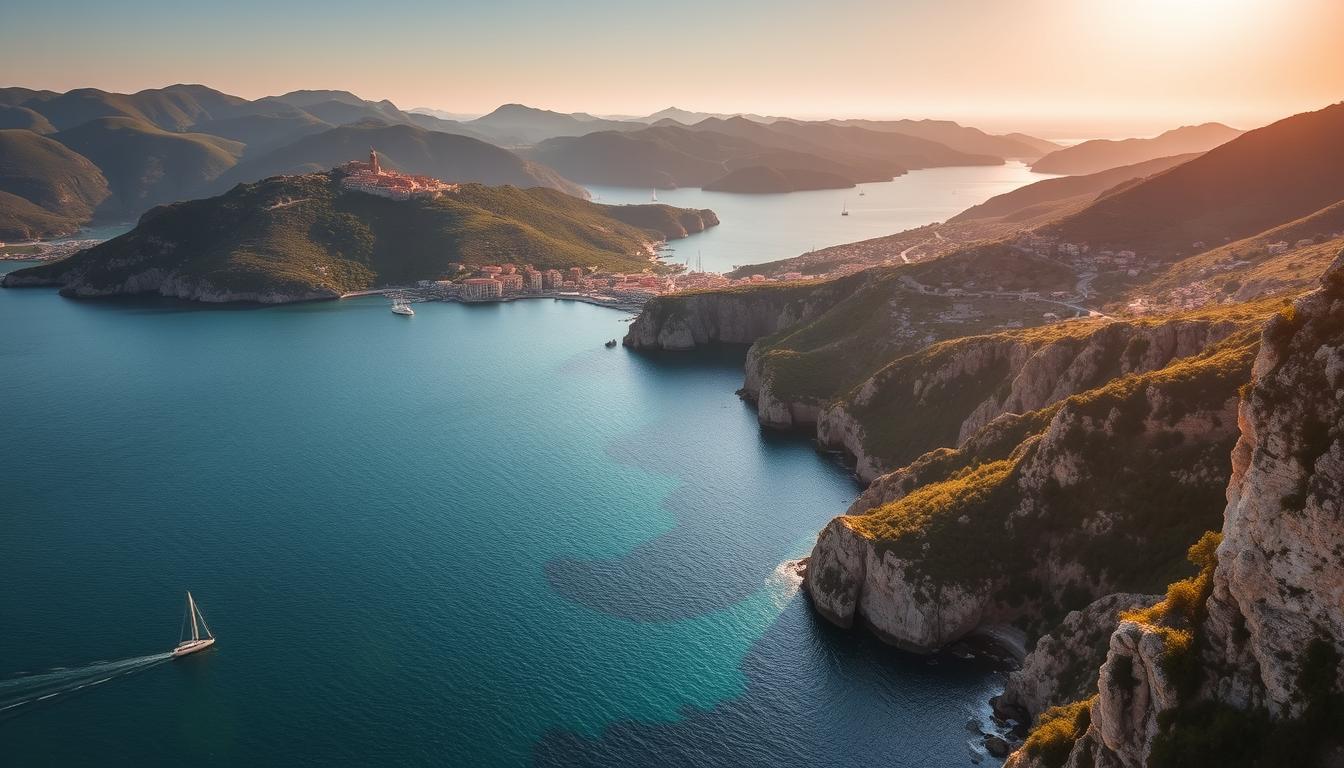
My journey to Argentario began with a deliberate turn away from Tuscany’s celebrated interior. I sought a different travel experience, one defined by the sea. This remarkable place offers a striking contrast to the region’s familiar rolling hills.
The coastline here is a dramatic meeting of stone and the Tyrrhenian Sea. It stands apart from other Mediterranean destinations. The view from a rugged cliff reveals a landscape shaped by centuries of maritime life.
Argentario sits at the heart of Tuscany’s famed “Oil and Wine Road.” It is home to world-class wineries, yet its soul is tied to the water. The way of life in this location feels authentic, unburdened by mass tourism.
Exploring the peninsula’s hidden italian coastlines rewards the curious traveler. It is not about checking things off a list, but about absorbing the quiet rhythm of a culture deeply connected to the sea. Every bit of this discovery felt genuine.
Key Takeaways
- Argentario presents a coastal Tuscany distinct from the well-known pastoral landscapes.
- The peninsula offers a more secluded and authentic Italian travel experience.
- Its geography fosters a unique maritime culture visible in local traditions and cuisine.
- Accessibility from major cities like Florence and Rome makes it a convenient destination.
- The true beauty of the location is found in its cultural integrity and serene atmosphere.
- It rewards exploration with hidden coves and a palpable sense of history.
Discovering Argentario: Tuscany’s Hidden Coastal Paradise
The approach to the peninsula is a geographical marvel. You cross slender sandbars that separate a tranquil lagoon from the open sea. This entrance immediately frames Argentario as a distinct place, a territory apart from the mainland.
I spent my time exploring the main town. Colorful houses with turrets and oriels line the promenade. Their lovely decorations and ceramic tiles create an unmistakable flair. This area feels lived-in, not staged for visitors.
The beach culture here is a revelation. Families gather at traditional stabilimenti balneari. These establishments have served the same communities for generations. It is a genuinely Italian way of enjoying the water.
This location has a rich history as a strategic maritime spot. Watchtowers and fortifications dot the coastline. They speak to centuries of vigilance. The locals continue their daily lives with a refreshing authenticity.
Argentario is one of those rare gems that rewards a thoughtful trip. Its beauty lies in the cumulative effect of small details. It is a part of Tuscany that truly feels like a hidden paradise among Mediterranean destinations.
Top Reasons to Visit Tuscany’s Secret Peninsula
What truly distinguishes Argentario from other Mediterranean destinations is its unique fusion of maritime grandeur and intimate community life. The peninsula rewards visitors with views that transform ordinary moments into memorable experience.
Breathtaking Views and Seaside Charm
From elevated vantage points, the sea unfolds in panoramic splendor. I watched sunlight dance across the water from cliffs overlooking colorful houses.
The architecture here possesses a functional beauty. Buildings cluster around harbors in harmonious arrangements. Their pastel colors create a visual poetry against the rocky coastline.
Authentic Italian Culture and Relaxed Vibes
This fishing village maintains its heritage through daily rhythms. Boats depart at dawn and return with catches that reach local shops within minutes.
The town centers buzz with sophisticated yet unpretentious energy. Families stroll tree-lined streets in the evening. Restaurants serve traditional dishes using seafood caught that same day.
I appreciated how these places balance local life with visitor access. The way of life feels both timeless and warmly welcoming. Argentario remains one of Tuscany’s genuine coastal gems.
Exploring Hidden Italian Coastlines: Must-See Gems and Coastal Towns
Porto Ercole and Porto Santo Stefano emerged as the peninsula’s primary coastal communities. Each town possesses a distinct character shaped by its unique location along the dramatic shoreline.
The beaches here offer remarkable variety. I discovered everything from family-friendly sandy expanses to intimate rocky coves perfect for solitude. The crystal-clear water remains consistently inviting for swimming.
Historic watchtowers dot the coastline, silent witnesses to centuries of maritime history. These structures add depth to the stunning views across the Tyrrhenian sea.
What distinguishes these places is their restrained development. Unlike more commercialized beaches, they maintain authentic charm. The area feels genuinely connected to its maritime roots.
Restaurants along the waterfront showcase this connection beautifully. Their menus feature daily catches alongside local agricultural products. The culinary experience reflects the true spirit of the coast.
| Beach Type | Accessibility | Best For |
|---|---|---|
| Sandy Stabilimenti | Easy access with facilities | Family gatherings and amenities |
| Rocky Coves | Footpaths or boat required | Solitude and natural swimming |
| Coastal Path Beaches | Moderate walking distance | Scenic views and exploration |
I found that the most rewarding spot often revealed itself unexpectedly. Local recommendations led me to discover true hidden gems away from main routes.
The ceramic traditions visible in architecture and shops connect these towns to broader cultural heritage. These artistic details add another layer of discovery to coastal exploration.
Uncovering the Charm of Seaside Villages and Fishing Hamlets
Wandering through the fishing hamlets felt like stepping into a living tapestry of maritime tradition. The early morning hours revealed the true rhythm of these communities. Boats returned with their night’s catch as market stalls began to take shape.
Local Markets and Artisan Shops
I found the local markets to be social institutions as much as commercial spaces. Fishermen sold their daily catch alongside regional agricultural products. The exchange felt genuine, maintaining relationships that spanned generations.
Artisan shops specializing in traditional ceramics demonstrated remarkable continuity. Production techniques dating back centuries were still practiced. These places offered authentic craftsmanship rather than generic souvenirs.
Cultural Traditions and Historical Insights
The villages maintain cultural traditions through annual festivals celebrating patron saints. These events feel meaningful to the locals, not staged for visitors. I observed genuine community participation.
Historical insights emerged from architectural elements and street layouts. Defensive structures and church designs revealed how maritime life shaped this region. The fishing village character persists as a living economic reality.
A Day in the Life Along Argentario’s Towns and Beaches
Watching the daily rhythms unfold along Argentario’s shoreline revealed a pattern of life deeply connected to the sea. My day began as fishing boats returned to harbor, their arrival triggering morning market preparations.
The market stalls took shape within minutes, offering the night’s fresh catch alongside local produce. This early time showed how the town balances local commerce with visitor access.
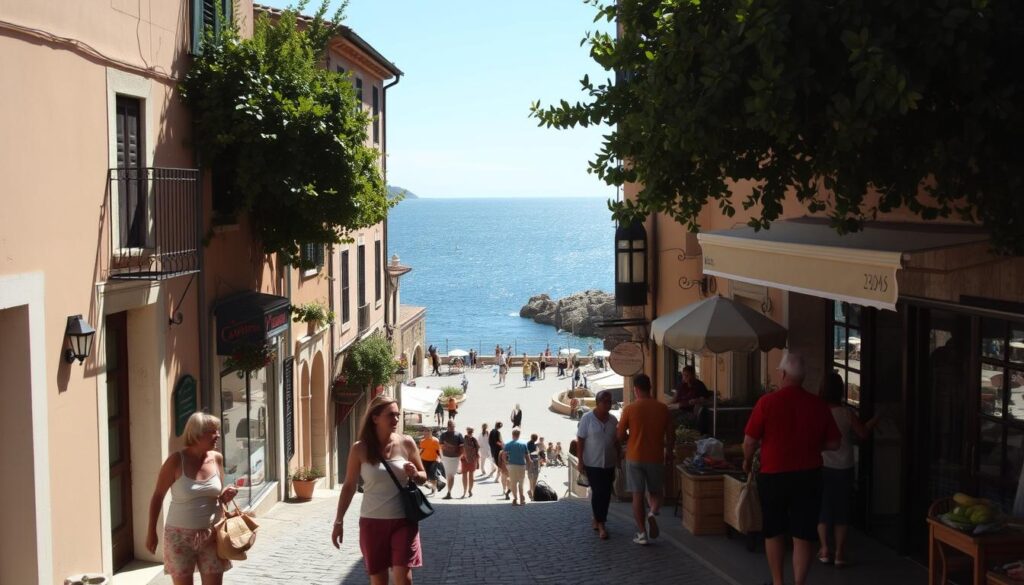
By mid-morning, the focus shifted to the beach. Families claimed their favorite spot while others explored coastal paths. The crystal-clear water remained inviting throughout the day.
Lunch occupied a sacred position in the daily structure. Between 1 and 3 PM, waterfront restaurants filled with people enjoying seafood caught that morning. This multi-hour pause reflected a contemplative approach to nourishment.
The afternoon along these beaches became a study in intentional leisure. Reading, swimming, or simply observing light on water—these things resisted hurried efficiency.
As evening approached, the locals began their traditional passeggiata along the waterfront. This ritual transformed the area into a social theater where community bonds were reinforced.
Dinner commenced after 8 PM, followed by gelato at harbor-side establishments. The entire experience followed Mediterranean patterns emphasizing social connection over schedule.
This way of life along the coast revealed how physical places gain meaning through repeated use. Each part of the day contributed to a cohesive whole.
Historic Ruins and Timeless Traditions by the Sea
I found myself tracing the contours of time along Argentario’s shoreline, where ancient foundations merge seamlessly with modern life. This remarkable integration makes exploring the peninsula’s history feel like a living conversation rather than a museum visit.
Ancient Landmarks and Archaeological Finds
The ruins scattered across this landscape tell a compelling story. From Etruscan artifacts to Roman fish tanks carved into coastal rocks, each site reveals layers of human settlement.
Walking these paths on foot, I encountered medieval watchtowers perched on dramatic cliffs. These strategic positions demonstrated why this place held such importance throughout Mediterranean history.
Modern Touches on Centuries-Old Heritage
What impressed me most was how contemporary communities honor their past. The Spanish Fortress in Porto Santo Stefano stands as a proud part of the town, not an isolated relic.
This thoughtful way of preservation creates an authentic travel experience. Ancient foundations support modern buildings, showing how heritage can be a living home rather than a distant memory.
The small fishing villages maintain traditions rooted in practical needs that have evolved into cultural expressions. Seeing this continuity by the sea felt like witnessing history breathe.
The Allure of the Amalfi Coast and Nearby Hidden Gems
Venturing south from Argentario, I discovered the Amalfi Coast‘s legendary beauty. Mountains plunge dramatically into the Tyrrhenian Sea here. The verticality creates an entirely different coastal experience.
Towns like Positano cling to cliffs with remarkable grace. Narrow streets wind between pastel houses facing the crystalline water. This location feels both theatrical and intimately scaled.
The beaches along this coast offer surprising variety. From organized lidos to secluded coves, each beach has distinct character. The sea remains consistently inviting throughout the day.
| Beach Type | Access Time | Experience |
|---|---|---|
| Sandy Lidos | 5-10 minutes from town centers | Full amenities and family-friendly |
| Rocky Coves | 15-30 minute walks or boat access | Secluded swimming and natural beauty |
| Village Beaches | Immediate access from coastal towns | Local atmosphere and convenience |
Beyond the famous views, I found cultural depth in ceramic workshops and lemon groves. These traditions connect the present to centuries of history. They represent the true gems of this region.
I highly recommend exploring beyond the main towns. Lesser-known villages reveal the Amalfi Coast‘s authentic character. The most memorable discoveries often happen when plans remain flexible.
Savoring Authentic Italian Cuisine by the Shore
Dining along these shores became a revelation in how cuisine can embody a place‘s entire character. The connection between plate and geography felt immediate and profound.
Fresh Seafood and Local Specialties
I discovered that fish consumed within hours of being caught offers a completely different experience. The freshness transforms simple preparations into memorable meals.
Local restaurants showcase regional specialties with remarkable authenticity. Traditional techniques honor both the ingredients and culinary heritage.
The Amalfi Coast‘s unique geography influences every dish. Lemons from surrounding hills brighten seafood pasta and grilled fish.
Wine, Limoncello, and Culinary Traditions
Meals here unfold as leisurely, multi-course affairs. They emphasize social connection as much as nourishment.
Local wines from the Campania region complement coastal cuisine perfectly. The region’s famous limoncello provides a refreshing conclusion.
Even the ceramics used for serving contribute to the overall sensory experience. Hand-painted plates reflect generations of artistic tradition.
This culinary approach makes every meal feel like participating in local culture. It’s a meaningful part of understanding this coastal area.
Family-Friendly Coastal Adventures and Relaxation Spots
Observing families along Argentario’s shoreline revealed how coastal travel adapts beautifully to include younger explorers. The peninsula offers a thoughtful balance between authentic experience and practical amenities.
I noticed how organized lidos create safe environments where parents can relax. These beach clubs provide changing facilities and gradual water entry points. The calm sea conditions at many spots make swimming accessible for all ages.
The coastal towns themselves prove remarkably accommodating. Pedestrian-friendly streets allow children freedom while maintaining safety. Gelato shops and playgrounds integrate seamlessly into the town fabric.
Boat trips to nearby coves became a highlight for families I observed. These excursions combine adventure with the area’s stunning views. The clear water allows for marine life observation that captivates young minds.
I highly recommend choosing dining spots frequented by local families. These places offer flexible meal times and welcoming atmospheres. The entire coast demonstrates how thoughtful design creates ideal family destinations.
Romantic Getaways and Enchanting Sunset Views
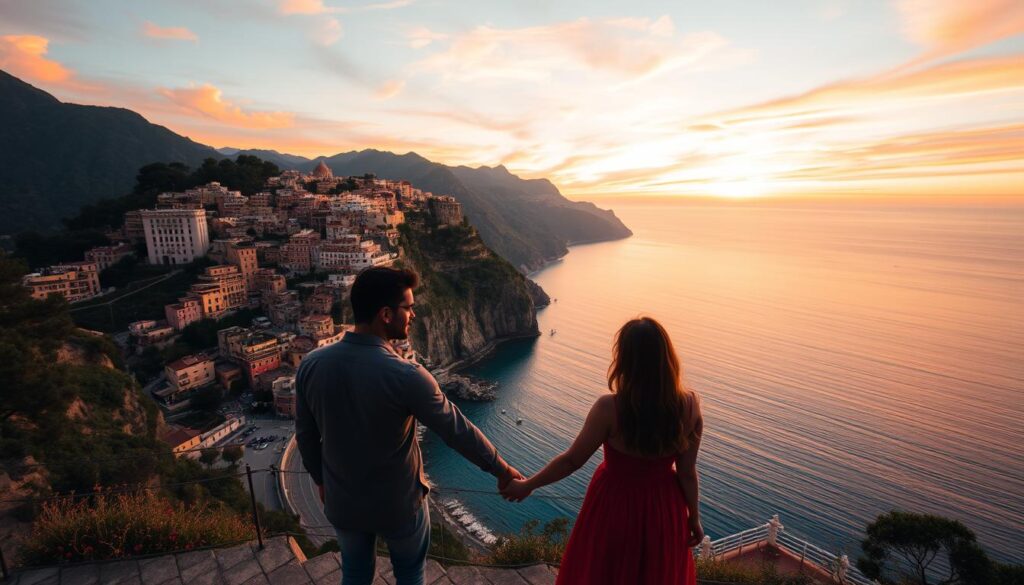
The romance of this coastline reveals itself most powerfully at day’s end, when the setting sun transforms the landscape. I found that the most meaningful connections happened naturally here, without forced atmosphere. The Amalfi Coast particularly excels at creating these moments.
Intimate Dining Overlooking the Sea
The best restaurants understand that romance comes from restraint. I discovered establishments where tables faced the water with just enough separation for privacy. The service was attentive yet unobtrusive.
These spots framed the natural beauty rather than competing with it. Simple preparations of fresh ingredients allowed the view and company to take center stage. Each meal became an experience of shared presence.
Perfect Spots for a Couple’s Retreat
I identified several locations that struck the ideal balance between isolation and accessibility. A secluded beach accessible only by boat offered complete privacy. Yet it remained close enough to town amenities.
This perfect place for couples provided the space to focus entirely on each other. The way light changed throughout the day created constantly evolving views. Even familiar spots felt new at different times.
The romantic potential here emerges from multiple sources. The aesthetic beauty certainly, but also the cultural permission to slow down. This coast encourages prioritizing connection over schedule.
Exploring Quaint Fishing Villages and Local Markets
I discovered that the most authentic fishing villages often lie just beyond the main tourist routes. These places require intentional travel rather than serving as convenient stops. The reward is access to communities where maritime traditions remain living practices.
Exploring these settlements on foot revealed their true character. Early morning became the perfect time to witness daily life unfolding. Fishermen returned with their night’s catch as market stalls took shape within minutes.
The markets operate according to rhythms dictated by the sea. Fresh fish appears alongside regional produce and handmade ceramics. I observed how these spaces function as information exchanges as much as commercial transactions.
Each fishing village has developed distinctive character despite superficial similarities. The locals display a complex combination of pride and pragmatism. They balance traditional ways of life with contemporary realities.
I highly recommend spending time in village squares during different parts of the day. These centers reveal social dynamics unique to small-scale communities. My trip through various villages demonstrated how physical scale shapes interaction.
The artisan products available reflect centuries of regional practice. Traditional crafts adapt while maintaining technical integrity. This spot along the Amalfi Coast offers genuine cultural immersion for thoughtful travelers.
Off the Beaten Path: Discovering Italy’s Hidden Gems
The true discovery of Italy’s coastal regions often begins when you step away from the well-trodden routes. I learned that the most rewarding travel experiences emerge from embracing uncertainty and following paths less documented.
Secret Paths and Lesser-Known Locales
My exploration led me to ancient trails connecting villages along the Amalfi Coast. These paths, worn smooth by generations of locals, revealed perspectives invisible from main roads.
I discovered places like Castelmezzano, dramatically perched against mountain backdrops. Locorotondo’s circular layout and white-washed walls created a unique sense of place. Each town offered its own character.
Experiences Away from Tourist Crowds
The most memorable things during my trip involved effort and timing. Hiking to remote ruins at dawn provided solitude and magical light. Visiting archaeological sites during off-peak hours allowed for contemplation.
I found that these hidden gems reward visitors through cumulative experiences rather than single spectacular sights. The journey between destinations often provided as much insight as the places themselves.
Traveling this way requires flexibility and comfort with ambiguity. Some ventures may disappoint while others exceed expectations. The authentic discoveries create personal resonance that cannot be replicated.
Navigating the Coastline: Essential Travel Tips and Itineraries
My experience traveling along these shores taught me that strategic planning enhances discovery. The way you approach your trip can transform the entire experience.
Best Times to Visit and Local Transport Tips
Timing is everything when exploring the Amalfi Coast. Spring and autumn offer moderate temperatures and smaller crowds. Summer brings intense heat and tourist density.
Local transport requires thoughtful consideration. SITA buses connect coastal towns efficiently. Ferries provide scenic routes but depend on weather conditions.
I found rental cars offer flexibility but create parking challenges. The journey itself becomes part of the adventure when using public transit.
Planning Your Coastal Day Trips
Effective day planning prioritizes quality over quantity. Trying to visit multiple towns in one day often results in shallow experiences.
Some villages are just 10-15 minutes apart, while others require longer journeys. Building margin into your schedule allows for unexpected discoveries.
I highly recommend combining transport modes for optimal exploration. Walk coastal paths between nearby destinations when possible.
Early morning or late afternoon visits help avoid peak crowds. These things make each day more meaningful than checking things off a list.
Experiencing Art, History, and Ceramic Traditions on the Coast
Walking through Vietri sul Mare, I encountered a living gallery where ceramic artistry transforms ordinary buildings into canvases of cultural heritage. This town along the Amalfi Coast represents centuries of artistic continuity that permeates every aspect of daily life.
Local Artisanal Heritage and Ceramics
The ceramics tradition here is more than decorative craft—it’s a language of cultural identity passed through generations. I watched artisans in their workshops maintaining techniques that connect directly to historical practice while allowing for contemporary creativity.
What impressed me was how these ceramics serve both aesthetic and functional purposes throughout the region. From tableware to architectural elements, they embody a philosophy where beauty integrates seamlessly into utility.
Architectural Wonders and Cultural Landmarks
Exploring on foot revealed how the Amalfi Coast‘s architecture tells a layered story of various civilizations. Each village contains architectural wonders that reflect the diverse influences that have shaped this place over time.
I discovered that even a short walk of fifteen minutes could reveal remarkable historical depth. Ancient ruins coexist with medieval structures, creating a site where history feels present rather than distant.
The houses clinging to cliffs demonstrate how architecture adapts to challenging terrain while maintaining aesthetic integrity. This location offers a masterclass in how form follows both function and beauty.
Conclusion
Reflecting on my coastal journey reveals how certain places resist quick consumption. Argentario and the Amalfi Coast offer more than beautiful views. They invite a deeper engagement with culture and landscape.
The true travel experience here unfolds through patience. It is not about checking items off a list. Meaning emerges from understanding how geography shapes daily life.
Each town and beach along this coast possesses its own character. The sea remains a constant, powerful presence. This location rewards those who explore with an open mind.
I found the most valuable discoveries came from slowing down. The way light changes on the water, the rhythm of a fishing town—these subtle moments create lasting impressions. This region deserves exploration on its own authentic terms.