

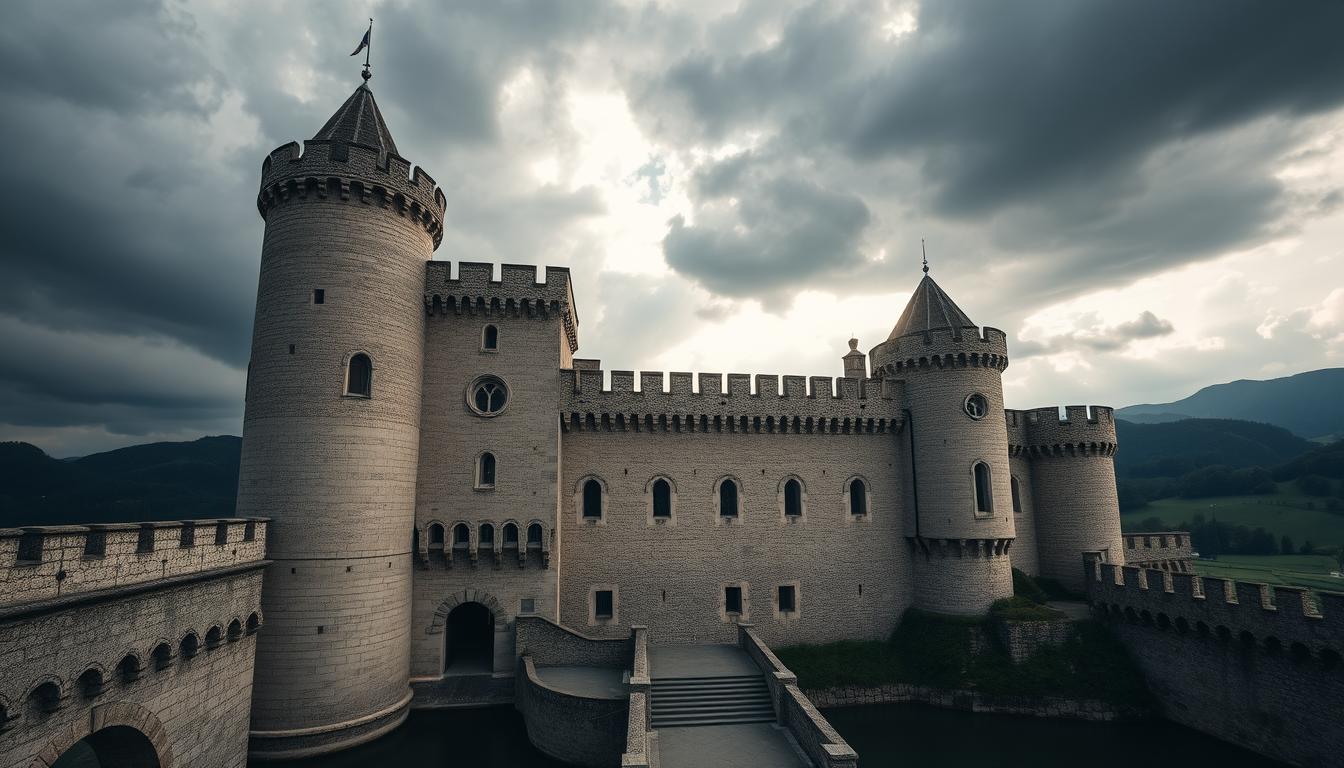
Some structures whisper their stories. The Castello di Fénis does not shout with the scars of battle. Instead, it stands in serene majesty, a perfect picture of medieval aspiration against the Alpine sky. This castle was a statement of power and culture, not just a stronghold.
Built by the Challant family in the 14th century, its double walls and circular towers were designed for prestige. Inside, a courtyard comes alive with frescoes, including the dramatic tale of St. George. It is a place where history feels immediate, preserved in stone and paint.
Exploring such sites moves beyond simple tourism. It becomes a personal journey into the lives that shaped these valleys over many centuries. This approach reveals a deeper Italy, one filled with hidden gems that offer profound cultural insight.
Fénis represents a category of italian castles that served as noble residences. These castles reflect a sophisticated understanding of art and power. They are among the most enchanting forgotten italian castles, waiting for those who seek a more authentic connection to the past.
Key Takeaways
- Castello di Fénis is a premier example of a medieval residential castle, built for prestige rather than warfare.
- Its beautifully preserved interior, especially the frescoed courtyard, offers a direct link to 14th-century life and art.
- The fortress’s architecture and setting provide a unique window into the cultural aspirations of Alpine noble families.
- Visiting such sites allows for a deeper, more personal understanding of Italy’s layered history.
- Exploring beyond main tourist routes reveals lesser-known treasures that provide richer, more intimate experiences.
Introduction to Italy’s Timeless Castles and Fortresses
Scattered across Italy’s diverse landscapes, stone fortifications stand as silent witnesses to centuries of cultural evolution. These structures represent more than military might—they chronicle the peninsula’s complex political tapestry through their very architecture.
Uncovering Italy’s Medieval Heritage
I’ve always been fascinated by how the Middle Ages shaped these defensive wonders. Successive rulers—Lombards, Normans, Swabians—each left distinctive marks on the fortresses dotting the countryside.
This period crystallized castle design into recognizable forms. Regional styles emerged, responding to local topography and specific defensive needs.
Architectural Masterpieces Through the Ages
What strikes me most is the dual nature of these constructions. They served as both impregnable strongholds and luxurious residences for noble families.
The evolution from functional medieval designs to Renaissance elegance reveals changing priorities. Beauty and comfort gradually complemented defensive requirements over time.
The Sleeping Fortress of Fénis: A Medieval Marvel
What strikes me immediately about Fénis is how its architectural poetry speaks louder than any military history. This fortress in the aosta valley reveals a different narrative of power.
Legend and History Intertwined
The castle emerged during the 14th century as the primary residence of the Challant family. Their vision transformed defensive architecture into artistic expression.
Circular tower designs and double walls created more than protection. They projected cultural sophistication across the Alpine landscape.
The interior frescoes tell a vivid story of medieval life. Unlike typical fortifications, this place balanced security with beauty.
| Feature | Fénis Castle | Typical Medieval Castle |
|---|---|---|
| Primary Purpose | Noble Residence & Status | Military Defense |
| Defensive Walls | Double Enclosure | Single Perimeter |
| Artistic Elements | Extensive Frescoes | Minimal Decoration |
| Tower Design | Circular & Decorative | Square & Functional |
“Architecture reveals what a society values most. At Fénis, beauty and culture outweighed pure military might.”
Each century added layers to this aosta valley treasure. The family‘s commitment to art makes this fortress unique among medieval structures.
Walking through the courtyard, I felt the 14th century vision alive today. This castle stands as testament to a different kind of strength.
Exploring Forgotten Italian Castles: Hidden Gems in the Aosta Valley
What captivates me most about these structures is their evolution from purely functional strongholds to expressions of cultural identity. The valley’s strategic position created a fascinating architectural tapestry.
Defensive Architecture and Noble Residences
Cly Castle exemplifies early Valdostan design. Built in 1027 AD, its square tower demonstrates practical medieval defense. The chapel’s 13th century frescoes reveal spiritual dimensions within these walls.
Fort Bard commands attention from its rocky spur. Romans first recognized this location’s strategic value. Napoleon’s destruction and subsequent rebuild show the enduring importance of this gateway.
Castello di Sarre occupies a prominent hill with 11th-century origins. Its transformation into a royal hunting lodge illustrates changing aristocratic priorities. The Savoy family repurposed this space for leisure.
| Feature | Military Fortress | Noble Residence |
|---|---|---|
| Primary Function | Strategic Defense | Family Prestige |
| Architectural Style | Utilitarian & Strong | Elegant & Refined |
| Interior Decoration | Minimal & Functional | Lavish Frescoes |
| Location Strategy | Defensive Advantage | Scenic Beauty |
“The concentration of fortifications here speaks to centuries of competing ambitions and the enduring allure of this Alpine corridor.”
Issogne Castle stands within the town center, built upon Roman foundations. Its Renaissance elegance contrasts with nearby military structures. The frescoes depicting daily life offer intimate glimpses into another century.
Each structure reveals different aspects of regional power and family ambition. From Cly’s early防御 to Issogne’s Renaissance splendor, the progression is remarkable.
Medieval Life and Artistic Splendor in Italian Castles
Stepping into these stone chambers, I feel the palpable tension between artistic brilliance and human confinement. The same walls that protected noble families also witnessed their most private dramas.
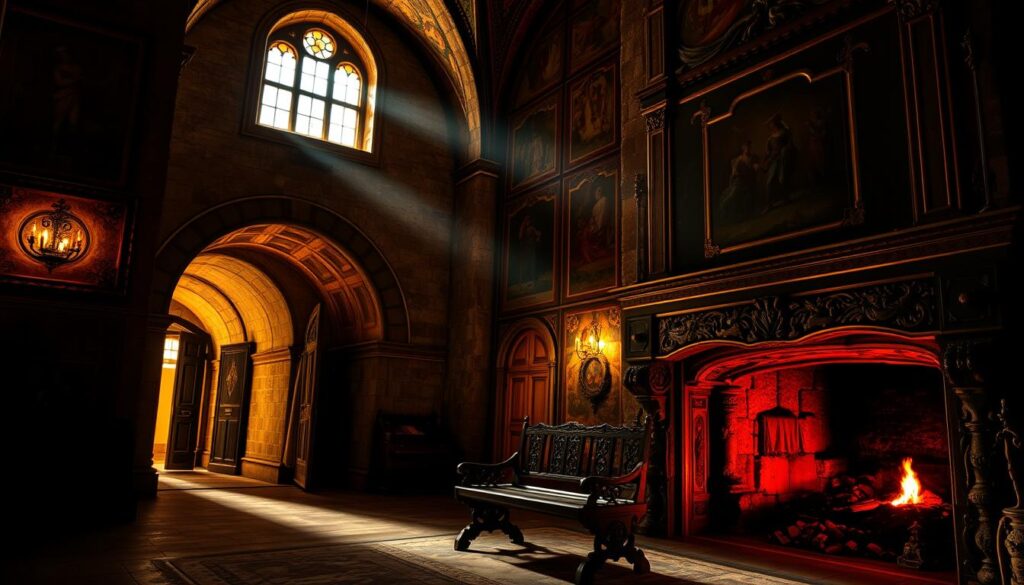
Secret Passages and Rich Frescoes
At Castello Sforzesco, Leonardo da Vinci’s frescoes remained hidden for centuries beneath layers of paint. Their rediscovery reveals how much history lies concealed within these structures.
Michelangelo’s unfinished Pietà Rondanini shows the raw emotion of artistic creation. Such masterpieces transform these spaces into galleries of supreme achievement.
Hidden escape routes like the Passetto di Borgo demonstrate ingenious survival strategies. Noble families engineered secret passages directly into their residence designs.
From Prisons to Palaces: Unexpected Histories
The contrast between opulent halls and grim dungeons reveals castle life‘s dual nature. Golden frescoes often adorned spaces above dark prison cells.
Personal dramas like Parisina Malatesta’s tragic love story at Castello Estense humanize these stone giants. Her execution in the underground cells reminds us of the absolute power exercised within.
Supernatural legends preserve collective memory of tragedy and loss. These ghost stories add mysterious dimensions that continue attracting visitors through the years.
The Strategic Role of Castles in the Aosta Valley
I’ve often contemplated how geography dictates destiny, especially in the Aosta Valley. This Alpine corridor was a vital route connecting Italy to northern Europe. Controlling it meant controlling trade, armies, and ideas.
This necessity bred a dense network of fortifications. Each fortress was a statement of territorial power.
Fortress Defense and Regional Influence
Successive rulers recognized the same strategic locations. The Romans first fortified the rocky spur at Fort Bard. Centuries later, the Savoy family built upon these foundations to secure their rule.
Walls and towers were not just stone and mortar. They were sophisticated systems designed for war. Their positioning on hills and narrows made them nearly impregnable.
During times of conflict, these structures became a crucial refuge. Dramatic historical events, like the Sack of Rome in 1527, saw Castel Sant’Angelo shelter an emperor and hundreds of citizens for months.
Secret passages, like the Passetto di Borgo, reveal a stark truth. Even the most powerful leaders needed an escape route when their fortress was threatened.
| Aspect of Power | External Defense Fortress | Internal Control Fortress |
|---|---|---|
| Primary Objective | Protect against invading armies | Subdue and intimidate local populace |
| Architectural Focus | Impenetrable walls, high towers | Imposing presence within a city |
| Historical Example | Fort Bard guarding the valley pass | Castello Estense built after a rebellion |
“A fortress is both a shield and a proclamation. It defends a territory while announcing who commands it.”
Ultimately, these structures shaped the region’s development. Towns grew in their shadow, and trade routes were defined by their presence. They were the anchors of medieval power in the Alps.
Visitor Insights: Experiencing Italy’s Castles Today
Planning a journey to Italy’s historic fortresses requires more than marking a map; it demands a strategy for engagement. For contemporary visitors, the experience is wonderfully varied, blending deep history with modern accessibility.
Tips for Tourists and Enthusiasts
I’ve learned that timing is everything. An early morning access pass allows you to appreciate a site’s atmosphere before the crowds arrive. Alternatively, an end-of-day visit offers golden light for photography.
Prioritizing quality over quantity ensures a more meaningful connection. Rushing through a dozen sites in a week is less rewarding than savoring a few in depth.
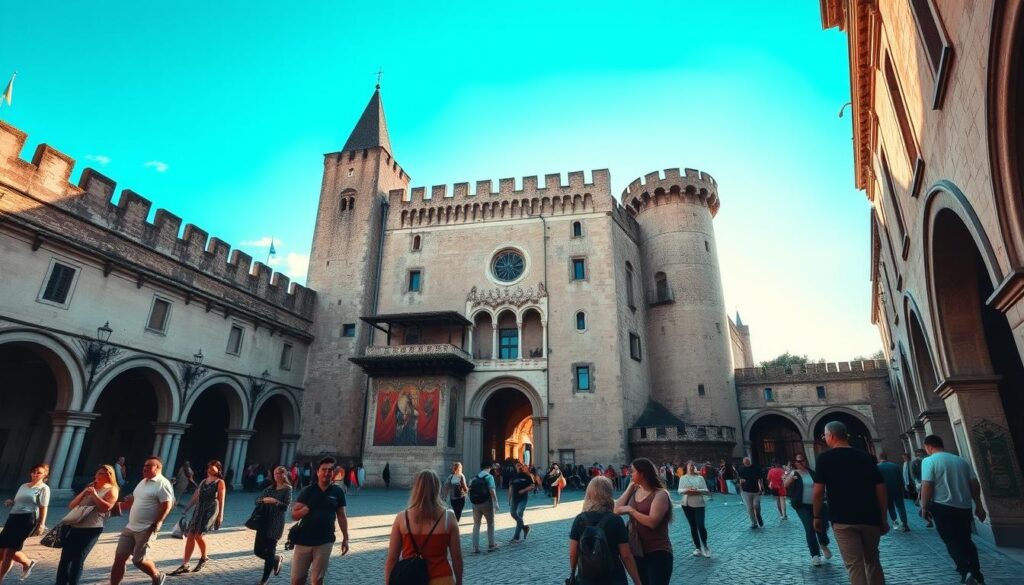
Seasonal planning also enhances a trip. A winter visit to an Alpine castle, for instance, provides a snow-dusted fairytale setting often paired with nearby skiing.
Must-See Landmarks and Hidden Routes
The diversity of experiences available today is remarkable. From the comprehensive museum collections at Castello Sforzesco to the exclusive wine tastings at Castello di Brolio, there is an adventure for every interest.
I find the most memorable moments often come from immersive activities. Walking the crenelated walls at Gradara or descending into the shadowy prisons of Castello Estense creates a visceral link to the past.
Do not overlook the smaller towns. Places like Bard in the Aosta Valley offer intimate encounters with medieval architecture, free from the pressures of mass tourism.
| Site | Primary Experience | Unique Highlight |
|---|---|---|
| Castel Sant’Angelo | Panoramic City Views | Rooftop terrace overlooking Rome |
| Rocca Scaligera | Architectural Exploration | Climb the 47-meter tower for lake vistas |
| Fort Bard | Cultural Museum | Museum of the Alps exhibitions |
| Castello di Brolio | Culinary & Scenic | Chianti Classico wine tastings |
“The true value of a visit lies not in checking a box, but in the quiet moment when history feels present.”
Ultimately, engaging deeply with these spaces—studying a fresco, reading a plaque, simply sitting in a courtyard—is what transforms a tour into a personal discovery. This is the best way to experience the castles italy has preserved.
Conclusion
The true revelation of exploring Italy’s castles lies not in their grandeur but in their intimate conversations with time. From the sleeping fortress of Fénis to the enigmatic Castel del Monte, each structure reveals layers of history waiting to be decoded.
I marvel at how these spaces transformed across centuries. The 15th century saw Castello Sforzesco evolve from fortress to Renaissance residence. Castel Sant’Angelo journeyed from imperial mausoleum to papal refuge. Each adaptation tells a compelling story of survival and reinvention.
These walls preserve more than architecture—they safeguard human life and ambition. Walking through them offers a tangible connection to the past that transcends textbooks. It is an invitation to discover the one Italy that exists beyond the well-trodden paths.
Approach each castle as a living masterpiece. Invest the time to understand its unique narrative. The reward is a deeper appreciation for Italy’s cultural richness and the families who shaped its destiny over many years.