

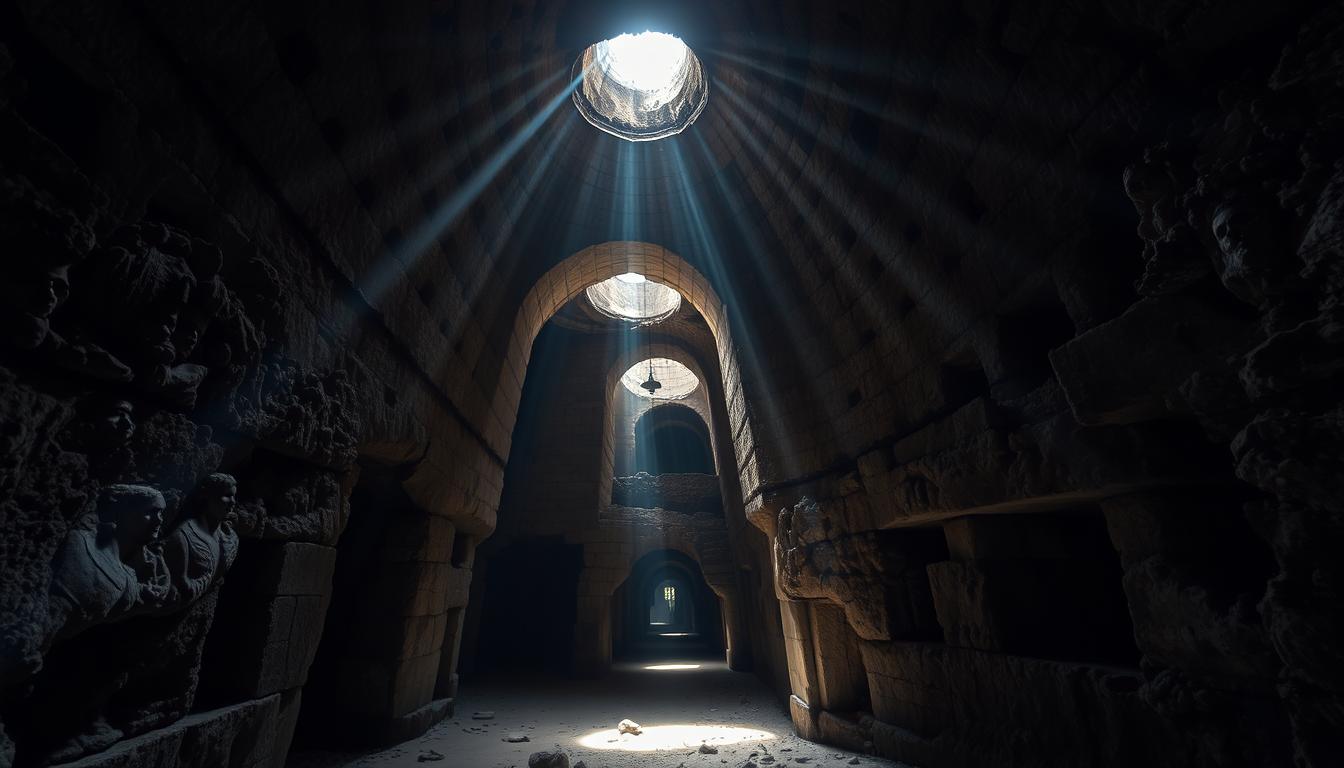
I invite you to go beneath the surface of the eternal city to discover layers of history that most visitors skip. I show how staircases can move you through time, from a medieval chapel to an ancient house, all in a single visit.
I write from the point of view of a traveler who loves how the city compresses centuries into compact, walkable places. My picks mix easy-to-visit spots and guided tours with clear booking tips so you can plan what to see today without wasted transit.
Expect cooler spaces, low ceilings, and calm crowds. I favor places with authentic storytelling, small groups, and memorable highlights like frescoed rooms, glass walkways over mosaics, and crypt chapels that connect you to real people from different eras.
Key Takeaways
- Going below ground adds chapters to the usual Rome travel plan.
- Many attractions sit near the Colosseum and fit into a morning or afternoon.
- A mix of self-guided and guided visits gives flexibility for today’s schedule.
- Bring modest clothing and expect cooler, low-ceiling spaces.
- Highlights include multimedia tours, glass walkways, and preserved homes and baths.
- I choose locations for authenticity, small crowds, and strong storytelling.
Why I chase Rome underground: how I pick truly hidden spots in the Eternal City
My curiosity draws me to places where one step down feels like stepping through time. I use three clear filters to pick locations that reward a short detour.
My criteria: authenticity, access, and a sense of time travel
Authenticity: I favor places that feel lived-in and conserved, not over-produced for visitors.
Access: Tickets or reserved slots must be realistic in price and availability.
Sense of time: The best spots collapse centuries into a single room or stair.
| Filter | What I look for | Why it matters |
|---|---|---|
| Authenticity | Conservation signage, limited modern overlays | Feels like genuine history, not a stage set |
| Access | Bookable slots, small groups | Less waiting, better storytelling |
| Time depth | Layered remains: houses, baths, chapels | Immediate sense of eras stacked together |
What “off the beaten path” means in the Forum-Palatine area
Here it means skipping the big queues and slipping through small doors near the roman forum palatine complex and palatine hill.
Proximity matters: grouping visits in the same area saves walking and gives more time underground. I also watch for modest clothing rules in church-linked places and keep phones silent out of respect for spaces once outside the city walls.
Subterranean Roman sites you can actually visit today
I organize my day to pair a guided house tour with quieter, self-guided corners nearby. That way I use opening times to the fullest and avoid long waits.
I group venues by area and check schedules before I book tour slots. Palazzo Valentini’s Roman houses require a guided visit (Wed–Mon, last tour 18:00), so I reserve that English-language guide early.
I pick early or late windows for the Stadium of Domiziano (open daily 10:00–19:00 with audio guides) to avoid peak visitors. Basilica of San Clemente needs online booking even for unguided entry and works well mid-morning or late afternoon.
- Case Romane del Celio: quieter, Thu–Mon 10:00–16:00.
- Vicus Caprarius under the Trevi Fountain: a compact stop about ancient water storage tied to the Aqua Virgo.
- Colosseum dungeons: expect visible cages and recent graffiti finds on guided routes.
String 2–3 venues with minimal walking, carry a light layer for cool underground temperatures, and leave time for ticket checks. I also build in a coffee or gelato break between stops to reset before the next chapter of underground rome.
Basilica of San Clemente: a multilevel journey from a 12th-century basilica to a 1st-century domus
Descending at San Clemente feels like flipping through a pocket history book, each level a different chapter. I start in the 12th-century church and then follow narrow steps down into an earlier world.
Highlights below ground
First you reach a 4th century basilica where frescoes and mosaics are still visible. The colors survive in sheltered vaults and make the past feel immediate.
Below that I find first-century rooms that read like a domestic domus. One chamber contains a compact Mithraic sanctuary — a small, atmospheric pagan temple with an altar that hints at secret rites held in shadow.
Practical tips for visitors
- Book online today even for unguided entry; slots are required and fill fast.
- Wear modest attire and keep phones silent; this is an active place of worship and fragile archaeology.
- Allow 60–90 minutes. Use the upper church’s apse mosaic as a bright pause before you descend.
- Consider a guided tour for deeper context about the Mithras cult and how early Christian worship adapted older temple spaces.
Listen for the change in sound and feel the cool air as you move down. Walls reveal reused stones and drain channels that whisper about continuity across time in this compact corner of underground rome in the city center.
Case Romane del Celio under Santi Giovanni e Paolo: intimate Roman housing with vivid frescoes
The Case Romane del Celio feels almost like entering a private apartment from another age. The rooms are small, hushed, and painted, so the frescoes read close up and personal.
Originally a cluster of shops and storerooms, the complex became an upper-class domus by the 3rd century. You can read that change in floor levels, reused doorways, and layers of paint.
Why it feels like a private tour of ancient life
I recommend visiting today during the usual Thursday–Monday window (10:00–16:00). The pace is calm enough to study fresco cycles and notice small details without elbow-to-elbow crowds.
- Interpretive panels and a neat display of 2002 excavation finds act as a built-in guide.
- Docents are often happy to answer questions, making the visit feel like a personal tutorial.
- Allow 45–60 minutes to look slowly and then stroll the Celio area afterward.
The basilica above deepens the sense of continuity; this spot echoes the layered feel of basilica san excursions but with a more residential tone. Wear flat shoes and watch for low thresholds and uneven floors.
I bring a pocket notebook to note color palettes and motifs. Slow looking rewards you here — the artistry and scale make the past feel like an intimate corner of the city.
Palazzo Valentini Roman Houses: glass walkways over 4th-century villas and baths
At Palazzo Valentini I walk on glass above actual rooms of two 4th century villas and baths. The palazzo was built top of these layers, a clear example of how the city stacks eras.
The show pairs a guide-led tour with a multimedia sequence that reconstructs walls, mosaics, and furnishings. Projections add virtual décor so mosaics and fresco fragments resolve into whole rooms.
Multimedia that reconstructs walls, mosaics, and daily life
Experience this as a seated, climate-controlled segment after lunch for best focus. You will notice small cues—bath heating channels, thresholds, and drain lines—that help you picture everyday housing at the forum edge.
When to reserve for English-language guided visits
I recommend booking an English-language guide today. Visits run Wednesday–Monday 10:00–19:00 (last tour at 18:00) and capacity is limited.
- Plan 75–90 minutes for the full experience and time in the displays.
- Photos may be restricted during the multimedia show; check on arrival.
- Pair this stop with Trajan’s Column nearby for broader context.
| Feature | What to expect | Why it matters |
|---|---|---|
| Archaeology | Two 4th century villas, baths, part of a road | Shows domestic life and urban layout near the imperial core |
| Presentation | Glass walkways + multimedia reconstructions | Makes fragmentary remains legible to visitors |
| Access | Guided tours Wed–Mon, last at 18:00; book English slots | Limited capacity; guides add essential context |
Stadium of Domiziano beneath Piazza Navona: athletics, arches, and audio guides underground
The Stadium of Domiziano makes you read Piazza Navona like an architectural palimpsest, its long oval hidden just meters below.
I descend at Via di Tor Sanguigna 3 to stand roughly 4.5 meters beneath the square. Built in 85–86, the arena once held about 30,000 people. Excavations in 1936 revealed conserved arches and masonry bands that help date construction to the late first century.
Visitors receive an included audio guide that ties panels to a 3D video. The narration links Greek athletics to Roman spectacles and brings the stands back to life. I recommend arriving near opening or late in the day so the audio storytelling can breathe without big groups.
- Budget 45–60 minutes, including the short 3D video that reanimates entrances and crowd noise.
- Bring a light layer—the space stays cool—and watch your footing on damp floors.
- Photography is usually allowed; be mindful of other visitors when taking wide shots.
| Feature | Detail | Why it matters |
|---|---|---|
| Location | Via di Tor Sanguigna 3, under Piazza Navona | Central area makes it easy to plug into other Centro Storico visits |
| History | Built 85–86; excavated 1936; capacity ~30,000 | Shows large-scale public architecture from the first century |
| Visitor experience | Audio guide + panels + 3D video; open daily 10:00–19:00 | Multimedia context helps you read the plan and link time layers |
After the audio guide, I like to walk a lap around Piazza Navona above ground. The plan relation becomes clear and the façades on Via di Tor Sanguigna reveal details you just saw below.
Vicus Caprarius by the Trevi Fountain: the City of Water and the Aqua Virgo story
Near the roar of the Trevi Fountain, a quiet underground world reveals how water shaped daily life in the city. I descend into Vicus Caprarius to see two surprising spaces: a housing complex later converted into a luxury domus, and a large cistern tied to the aqua virgo that still feeds the fountain today.
From insula to luxury home and a working cistern
Wall lines, floor treatments, and reused doorways are still visible, so you can read the shift from cramped insula to upscale dwelling. The cistern room shows channel traces and water-management features that make the aqueduct system tangible.
I note that these spaces were found only about 16 years ago, a reminder the built top of central Rome keeps yielding surprises. Plan 30–45 minutes and aim for late morning or late afternoon to avoid crowds.
- Study brick stamps and mortar differences; onsite panels help phase the layers.
- Bring a small flashlight to read inscriptions and textures.
- Pair this compact visit with Palazzo Valentini to compare domestic layers across underground rome.
Capuchin Crypt: a bone-built meditation on time and mortality near Via Veneto
The Capuchin Crypt sits quietly under Via Veneto, offering a stark, contemplative contrast to the city above.
Beneath the Church of Our Lady of the Conception of the Capuchins, chapels display the bones of friars arranged as art. The effect is powerful and often intense for younger visitors.
I set expectations plainly: the crypt uses real bones in hourglass, arch, and chandelier motifs meant to evoke the passage of time. This is both an artistic and spiritual statement.
Plan 20–30 minutes for the crypt itself. Move slowly and speak quietly. Remember the space is under an active basilica in the center of the city.
- Gauge comfort for families and sensitive travelers before entering.
- Check photo rules on arrival and follow posted guidance.
- Wear modest attire and bring a light layer; the air is cool below ground.
- Pair the visit with a reflective walk on Via Veneto to process what you’ve seen.
| Feature | What to expect | Visitor note |
|---|---|---|
| Decor | Bones formed into motifs: chandeliers, arches, hourglasses | Artful and solemn; not suitable for all ages |
| Location | Under Church of Our Lady of the Conception, near Via Veneto | Easy to combine with nearby churches and walks |
| Time needed | 20–30 minutes | Longer if you read interpretive texts slowly |
I left feeling that the crypt offers a unique lens on faith and mortality across the century. Step back into the sun and let bright Roman light reset your senses.
Catacombs beyond the city walls: Appian Way corridors that shaped early Christian Rome
I step off the busy Appian Way and feel the air cool as the ground opens into long, quiet corridors. By law these burial networks sit outside the ancient walls, often along main roads, beginning in the 2nd century.
What to expect inside: narrow passages, layered burials, and centuries of devotion
Expect dim light, cool air, and tight lanes lined with loculi and small chambers. The maze-like feel can span many years of use and care.
“It is the hush that stays with me—miles of burials that feel like a long conversation through time.”
- Logistics: catacombs rome lie beyond the city walls; plan travel time out to the Appian Way.
- On a tour: choose one focused on art or one on community history; staff guidance matters in maze-like crypt corridors.
- Practical prep: closed-toe shoes, a light sweater, and readiness for stairs and low headroom. Photography is often restricted.
These spaces pair naturally with a nearby basilica visit, giving a fuller view of worship, burial, and memory in underground rome. For many visitors the quiet reshapes how they see the city above.
Plan your underground Rome trip: routes, guides, and when to book tours
I plan routes that turn long walks into a chain of compact discoveries, from forum ledges to cooled crypts.
My favorite pairings: Roman Forum–Palatine Hill mornings, subterranean afternoons
Start early at the Roman Forum and Palatine Hill to catch softer light and fewer people. After lunch, move to an underground sequence such as basilica san + Case Romane del Celio for frescoed interiors, or Palazzo Valentini + vicus caprarius for multimedia and water history.
Reserve key slots before travel. Book tour seats for Palazzo Valentini and San Clemente first; they sell out. Use the Stadium of Domiziano (open daily 10:00–19:00) and Vicus Caprarius by the Trevi Fountain as flexible anchors if your times shift.
Dress codes, safety, and accessibility in crypts and tunnels
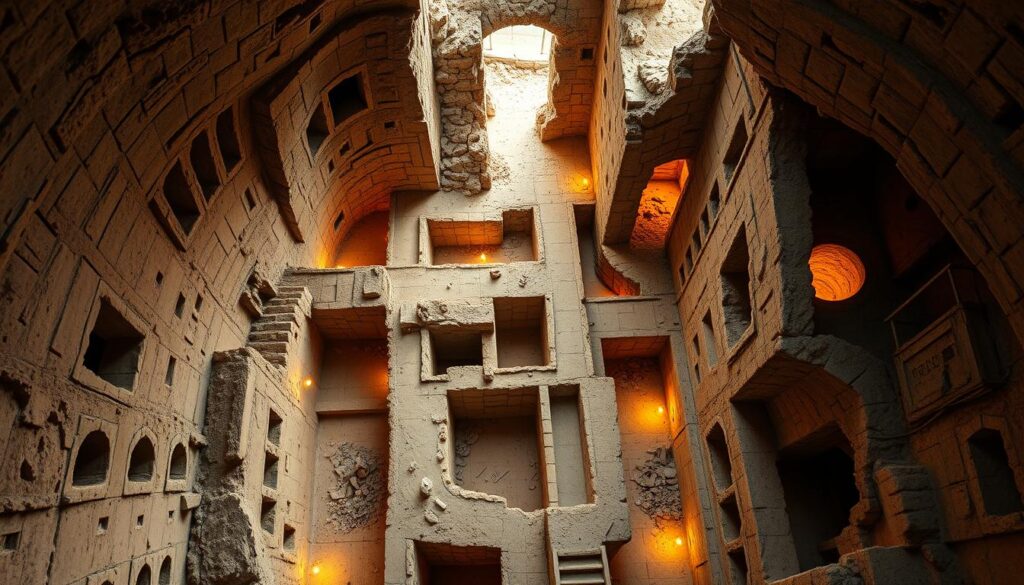
Wear modest attire for church-linked places and bring a light sweater—the underground stays cool. Sturdy shoes are a must: expect low thresholds, uneven floors, and stairs built top of older layers.
Ask about elevators and alternate routes when you book tour tickets. Many venues have limited accessibility and staff can suggest best entry points or quieter times for your visit.
- Cluster sites within a 15-minute walk and pad 15 minutes for queues.
- Carry pre-downloaded tickets and a refillable water bottle.
- Consider the Colosseum dungeons if you have an extra afternoon—it adds a backstage feel with visible cages and graffiti.
Final pack list: light sweater, good shoes, photo-policy awareness, and tickets on your phone. With a bit of planning you can see Rome’s layers without rushing and leave room to savor the eternal city.
Conclusion
A single descent can turn familiar streets into a layered map of lives and labor across centuries.
I invite you to treat the eternal city as a palimpsest: San Clemente, Case Romane, and the glass floors at Palazzo Valentini all reframe what you think you know about Rome.
Go on: follow a route that ends at the catacombs on the Appian Way or pause in a quiet crypt to let the story settle. Vicus Caprarius shows how a city well still guides daily wonder.
Split a Vatican morning at St. Peter Basilica with an afternoon descent, and you will see Rome differently. Choose one route from this list and step down—one staircase can change your journey through the city forever.