

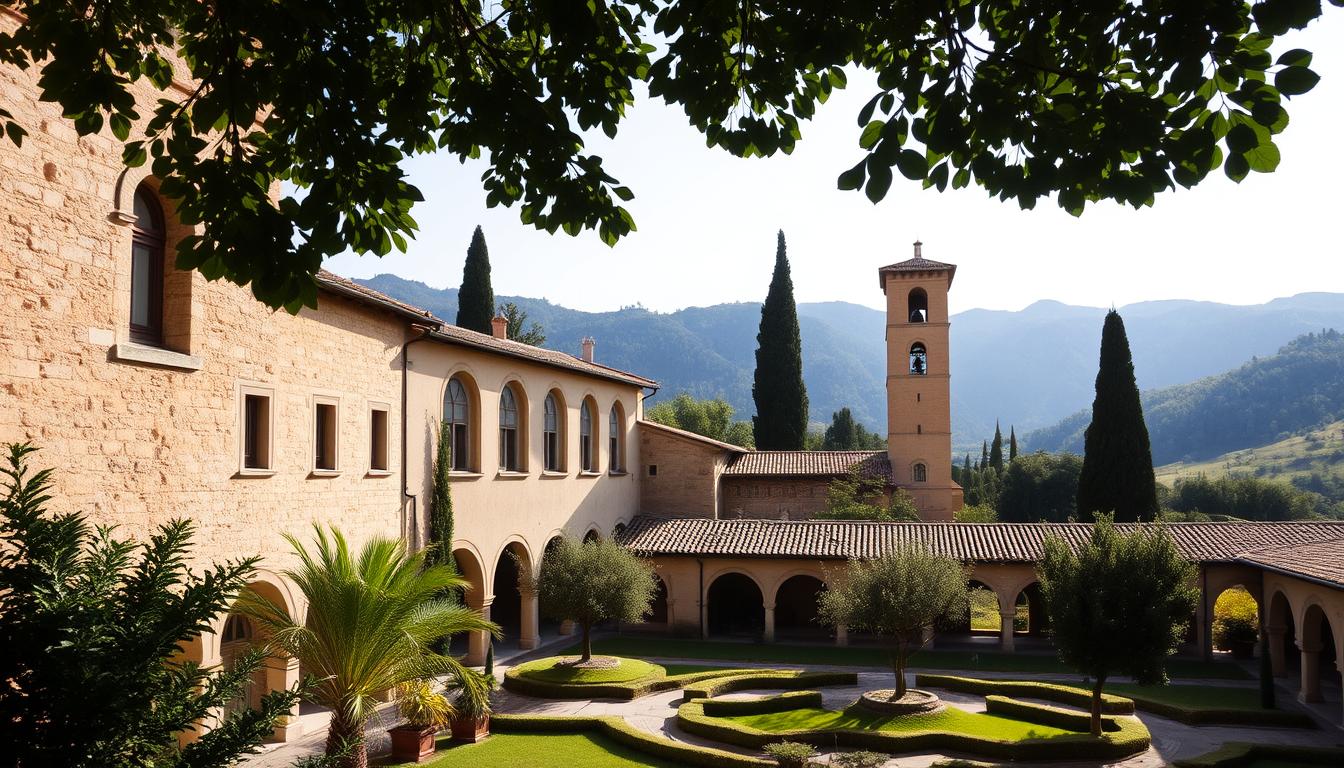
For centuries, the quest for spiritual solitude has shaped landscapes. Since the time of Christ’s wilderness retreat, devout Christians have sought quiet places for prayer. This tradition of reclusion began flourishing in Europe as early as the 3rd century.
I have journeyed through Italy’s famous sites, but the quiet power of its secluded religious communities captivates me most. These are not just buildings; they are sanctuaries of centuries-old devotion. Here, isolation was chosen as a deep engagement with faith.
The Eremo di Camaldoli stands as one of Tuscany’s most profound retreats. It is a place where nature and worship blend into a transcendent experience. Unlike crowded tourist spots, it offers an authentic connection to Italy’s spiritual heart.
This exploration invites you into a world of quiet reflection. It is a journey into landscapes where art, architecture, and silence tell a powerful story.
Key Takeaways
- Christian monastic solitude is an ancient tradition, dating back to the 3rd and 4th centuries.
- Italy’s remote religious communities offer a profound alternative to typical tourist destinations.
- The Eremo di Camaldoli represents a unique blend of wilderness and spiritual practice.
- These sites provide an opportunity for authentic cultural and personal reflection.
- Italy demonstrates a strong commitment to preserving its rich religious heritage.
- Visiting these places transforms a simple trip into a meaningful pilgrimage.
Historical Roots and Spiritual Significance
Persecution often breeds innovation, and the early Christian communities in Italy transformed secrecy into sacred practice. I’ve walked through spaces where worship once happened behind closed doors, feeling the profound shift from hidden devotion to public spiritual life.
Early Christian Monasticism in Italy
The story begins during Rome’s decline. As imperial power weakened, a new form of spiritual life emerged. Devotees sought wilderness solitude, inspired by desert traditions.
These seekers became known as monks, from the Greek “monos” meaning alone. Their daily life focused on prayer and study. Over centuries, this tradition shaped the religious landscape.
| Aspect | Hermit Tradition | Community Life |
|---|---|---|
| Living Arrangement | Solitary cells in wilderness | Shared monastic compounds |
| Primary Focus | Individual contemplation | Collective worship & work |
| Historical Development | 3rd-4th century origins | 5th century evolution |
| Cultural Impact | Personal spiritual models | Knowledge preservation centers |
“In silence and solitude, the soul finds its true voice.”
Evolution from Solitary Hermits to Community-Based Retreats
Italian monks gradually moved toward community living. Unlike Irish traditions of strict solitude, they recognized the strength of shared spiritual life.
This shift created the first monastery communities. These places became centers of learning where scribes preserved ancient texts with incredible patience. Their work saved countless stories from being lost to time.
Walking through these sites today, I’m struck by the continuity they represent. The same stones that sheltered early devotees now welcome modern seekers.
Hidden Italian Monasteries: Spiritual Retreats and Secluded Sanctuaries
Remote locations were deliberately chosen by spiritual seekers who understood that true contemplation flourishes in landscapes that command reverence. These sites represent a profound dialogue between human devotion and natural grandeur.
Treasured Legends and Miraculous Stories
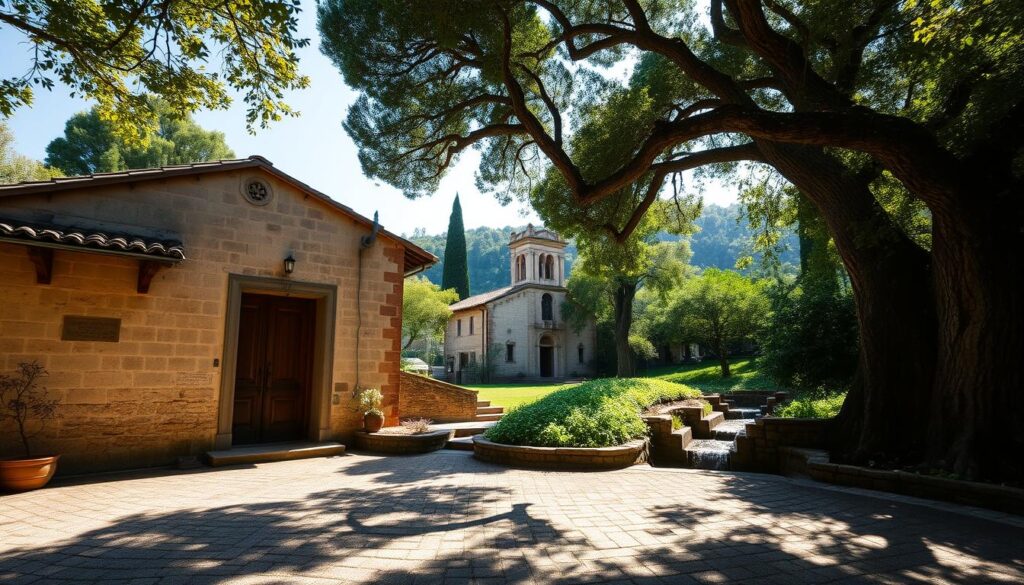
The Eremo di San Bartolomeo in Legio exemplifies this intentional isolation. Perched 600 meters high in the Majella massif, this 13th-century hermitage sheltered Peter Angelerio da Morrone before his unexpected papacy.
I’ve climbed its irregular staircases carved into mountainside stone. Each step reveals the commitment required for such separation from worldly concerns. The sanctuary’s protected location has preserved it through centuries.
Preservation of Sacred Art and Frescoes
What continues to astonish me is how these places safeguard artistic treasures. At Bismantova, 15th-century frescoes maintained by a solitary priest speak to enduring devotional traditions.
The Hermitage of San Cataldo reveals Byzantine art concealed beneath plaster until wartime destruction accidentally uncovered extraordinary beauty. This preservation transforms catastrophe into resurrection.
For contemporary visitors, these sites offer genuine silence where stories embedded in walls can speak across time. The view from each location amplifies rather than diminishes the sense of divine presence.
Art, Architecture, and Nature Intertwined
Walking through these monastic complexes, I’m struck by how architecture becomes a physical manifestation of prayer. Each corridor and courtyard feels designed to guide both body and spirit toward contemplation.
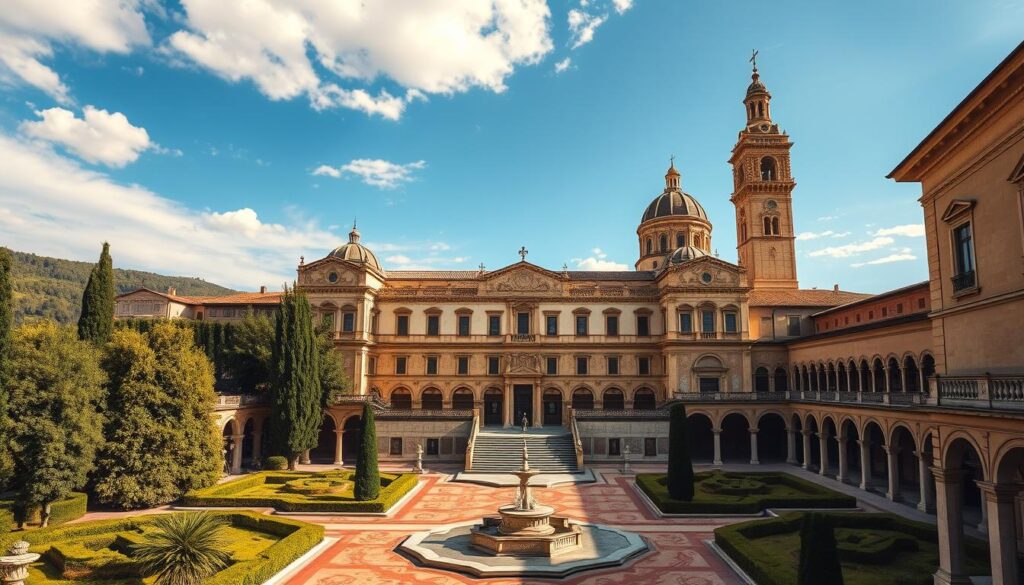
The Certosa di Padula exemplifies this sacred geometry. Its vast spaces unfold like a meditation in marble, where Baroque elegance meets functional devotion.
Baroque Elegance Meets Byzantine Masterpieces
This magnificent monastery reveals how different artistic traditions served the same spiritual purpose. The Carthusian order created a complete world within its walls.
What I love about Padula is its living history. The same stone that sheltered monks for centuries now welcomes visitors seeking beauty.
| Architectural Style | Spiritual Expression | Notable Features |
|---|---|---|
| Byzantine Tradition | Theological symbolism through icons | Frescoes with profound symbolic density |
| Baroque Craftsmanship | Divine mystery through human skill | Gilded altars, carved wood, elaborate frescoes |
| Romanesque Solidarity | Endurance and permanence of faith | Thick walls, rounded arches, massive stone |
The art within these sacred spaces tells a complex story. From the library’s preserved volumes to the chapel frescoes, every element speaks of patience and devotion.
Today, this UNESCO monument continues its spiritual mission through cultural events. The annual Notte Certosina transforms the sanctuary into a candlelit stage, blending ancient tradition with contemporary creativity.
Monastic Hospitality: Overnight Stays and Transformative Experiences
The true measure of a spiritual sanctuary lies not in its isolation but in its capacity to welcome strangers as sacred guests. This ancient Benedictine tradition transforms historical monuments into living bridges between past devotion and present seeking.
I’ve discovered that overnight stays within these sacred spaces offer portals into rhythms that have sustained communities for centuries. The experience transcends typical travel, becoming a journey into contemplative life.
Historic Abbeys and Welcoming Convents
The Abbey of Farfa exemplifies this sacred hospitality. This national monument near Rome, where Charlemagne stayed before his coronation, continues its Benedictine mission today.
Visitors can choose between six rooms within the monks’ secluded area or eight external guest rooms. All stays operate on a free, donation-based system, maintaining the order’s principle of open doors.
| Monastic Stay | Experience Focus | Booking Process |
|---|---|---|
| Abbey of Farfa | Historical immersion & Benedictine rhythm | Email: farfenprior@libero.it |
| La Verna Monastery | Franciscan pilgrimage & natural setting | Email: santuarioverna@gmail.com |
| Monte Oliveto Maggiore | Renaissance art & Gregorian chant | Direct community contact |
Modern Amenities in Ancient Settings
What strikes me is how these sacred spaces balance historical authenticity with contemporary comfort. The rooms range from simple monastic cells to more private accommodations.
Each location offers unique amenities while preserving the essential character of simplicity. This thoughtful approach ensures the transformative potential of the stay remains focused on spiritual rhythm rather than luxury.
For travellers seeking meaningful experiences, these monastic stays provide rare access to living traditions. The practical information for booking maintains a personal dimension often lost in commercial hospitality.
Conclusion
In our era of constant digital noise, the profound silence of these sacred spaces offers a rare antidote to modern distraction. They demand we shed contemporary urgency and move at rhythms carved from centuries of contemplation.
What I’ve discovered through years of visiting is their dual nature as both museum and living sanctuary. They preserve stories connecting us to Europe’s spiritual complexity while offering counterpoints to superficial travel.
The Eremo di Camaldoli and sister retreats continue their ancient mission: providing refuge, inspiration, and silence for those willing to listen. They remain profoundly authentic in an age of algorithmic curation.
For discerning travelers seeking meaningful engagement, these Italian spiritual monasteries invite participation in traditions of hospitality and reverence that have endured through centuries. They teach us about living meaningfully in any age.