


I gather these places—Guadalupe, Lourdes, Knock, Fátima, and Champion—to show why people still travel to witness lives changed by reported Marian apparitions. I write as an observer who respects church process while keeping practical travel and devotional needs in view.
I summarize how a few sites stand out for the number of witnesses, enduring devotion, and carefully examined healings that drew pilgrims for years.
The Catholic church has long asked the local bishop to investigate each case, and the 2024 norms from the Dicastery for the Doctrine of the Faith clarify modern review and the phrase nihil obstat.
My aim is informational and devotional: to help you plan meaningful visits while explaining what “worthy of belief” means for the church and for personal faith.
Key Takeaways
- I focus on five approved sites with strong historical accounts and ongoing devotion.
- The church’s review moved from bishop-led inquiries to clearer 2024 Vatican norms.
- Each place offers distinct signs: a tilma image, a spring, a silent night, a sun event, and a fire-linked account.
- This guide is practical—dates, approvals, and visitor tips come later in the article.
- I honor believers’ testimony while keeping facts and church judgments clear.
Why these five sites still move me: how I chose the saint apparitions “worth the trip”
I chose sites where careful documentation, a positive judgment from the bishop, and lasting spiritual fruit meet in a single place.
Each destination must pass ecclesial review and offer pastoral guidance so devotion stays rooted in Gospel life. I looked for clear records, consistent witness accounts, and medical or historical checks where needed.
Practical travel matters to me. I favored shrines U.S. pilgrims can visit within reasonable time, whether for a day at a basilica or a longer retreat. I also wanted places where people report conversions, renewed prayer, and deeper parish involvement.
Finally, I avoided sites that add new doctrine and focused on messages whose words align with core Catholic teaching: penance, prayer, peace, and conversion. That balance keeps private revelation as a help, not a replacement, for public faith.
| Site | Bishop Approval | Documentation | Pilgrim Time | Pastoral Guidance |
|---|---|---|---|---|
| Guadalupe | Positive | Tilma image, historical records | Day to multi-day | Clear liturgical support |
| Lourdes | Positive | Medical bureau reviews | One day to week | Baths, sacramental focus |
| Knock | Positive | Eyewitness testimony (1879) | Short pilgrimage | Parish-centered devotion |
| Fátima | Positive | Extensive witness records | Day to multi-day | Rosary, First Saturdays |
| Champion | Positive | Diocesan study | Regional visit | Shrine liturgies |
Understanding apparitions: how the Catholic Church discerns “worthy of belief”
My lens is simple: public revelation binds all Christians, while private reports invite discernment and pastoral care.
Public revelation vs. private revelation: what I keep in mind
Public Revelation is the unchanging deposit of faith in Scripture and Tradition. It closed with the apostles and binds every member of the catholic church.
Private revelation includes reported supernatural messages and may be judged “worthy of belief” without obliging the faithful. I expect any claimed apparition to never add to or contradict the Gospel. Instead, it should call to prayer, penance, and conversion.
From bishop to Vatican: approvals, veneration, and the role of the local ordinary
Since the Council of Trent the initial inquiry rests with the bishop of the area. He gathers testimony, reviews the moral integrity of witnesses, and consults theologians and medical experts as needed.
| Stage | Responsible | Key criteria |
|---|---|---|
| Initial review | Bishop | Credible witnesses; doctrinal soundness |
| Diocesan study | Commission | Medical reports; psychological assessment |
| Higher review | Dicastery/Vatican | Long-term spiritual fruits; coherence with faith |
I watch for positive signs: consistent words, spiritual fruit among the faithful, and the absence of profit-seeking or division. I also respect that the church often acts slowly, weighing evidence over years so devotion stays healthy and Christ-centered.
The 2024 norms that guide my discernment
New guidelines issued in 2024 shape how I read investigations and decide which sites merit a visit. On May 18, 2024, the Dicastery for the Doctrine of the Faith required that any bishop-led inquiry be submitted to Rome before public release. That step adds consistency and pastoral care over time.
The six possible conclusions
- Nihil obstat — devotion may be encouraged.
- Prae oculis habeatur — keep under watch.
- Curatur — permitted with specific safeguards.
- Sub mandato — limited liturgical use under direction.
- Prohibetur et obstruatur — public devotion restricted.
- Declaratio de non supernaturalitate — judged not to be supernatural.
Why “nihil obstat” matters now
“Nihil obstat” signals that nothing in the content hinders devotion. It stops short of calling an event truly supernatural, a declaration reserved to the pope. That shift reduces pressure on witnesses and focuses pastors on care rather than sensational claims.
“The norms help protect the faithful and keep devotion rooted in sound teaching.”
| Conclusion | Practical effect | Pastoral note |
|---|---|---|
| Nihil obstat | Encourage prayer | Does not impose belief |
| Curatur / Sub mandato | Managed devotion | Corrects misuse |
| Declaratio de non supernaturalitate | Restrict public claims | Protects against error |
Our Lady of Lourdes, France: spring water, penance, and certified healings
I visit Lourdes because its story pairs a simple encounter with decades of faithful care and medical review.
What happened in 1858: “I am the Immaculate Conception”
In 1858 a 14-year-old named Bernadette met the virgin mary at a rocky spot. She heard the words “I am the Immaculate Conception.”
The spring and the Lourdes Medical Bureau
The discovery of a spring led many to wash in the water and seek healing. Since 1862 the church has certified more than sixty cures as extraordinary.
The Lourdes Medical Bureau, founded in 1883, evaluates reported recoveries with strict methods. This steady review gives the site both pastoral support and scientific attention.
How I plan a prayerful visit
My day begins with quiet prayer at the grotto and Mass. I aim to arrive early to avoid crowds, spend several days if I can, and join the evening candlelight procession at night when possible.
| Feature | Why it matters | Practical tip |
|---|---|---|
| Feast day Feb 11 | Peak devotion | Book ahead |
| Baths and grotto | Focus for prayer and penance | Bring a towel; follow volunteers’ guidance |
| Medical Bureau | Careful cure review | Report recoveries through shrine office |
“A woman’s simple ‘yes’ at a humble spot still invites conversion and healing.”
The bishop’s early approval and ongoing pastoral leadership keep Lourdes a living place of encounter for pilgrims seeking both spiritual comfort and truth.
Fátima, Portugal: the Miracle of the Sun and a call to prayer and conversion
I find Fátima remarkable for how a powerful public sign in 1917 became a steady call to prayer and conversion that still shapes pilgrims’ lives.
1917 messages: penance, peace, the Immaculate Heart
In 1917 the virgin mary reportedly spoke to three shepherd children, urging prayer, penance, and devotion to the Immaculate Heart.
Those simple demands—rosary, sacrifices, and a turning of heart—have framed Fátima’s pastoral life for years.
October 13 “sign”: what tens of thousands reported seeing
October 13 is famous as the day of the “Miracle of the Sun,” a sign many people described witnessing in 1917.
Reports say roughly seventy thousand people saw an extraordinary display that day, making this apparition one of the most widely observed in modern history.
Pilgrim life now: rosary, First Saturdays, and the shepherd children’s legacy
My pilgrim rhythm here includes Mass, the rosary, evening processions that can extend into the night, and visits to the children’s homes.
I follow the First Saturdays devotion as a personal practice, joining the sanctuary’s rhythm of confession and adoration instead of the baths or spring found elsewhere.
Local approval came within years under Bishop José Alves Correia da Silva, and popes since have shown strong pastoral support—most famously John Paul II’s public gratitude after 1981.
“Fátima’s message keeps calling the faithful to conversion and peace in every time and place.”
| Feature | Why it matters | Practical tip |
|---|---|---|
| October 13 | Historic public sign witnessed by many | Plan ahead for crowds or choose quieter anniversaries |
| First Saturdays | Ongoing devotion to the Immaculate Heart | Attend confession and Mass if possible |
| Processions | Communal prayer into the night | Bring a light jacket; expect long walking |
Knock, Ireland: a silent night vision of peace and presence
One of the quietest yet most compelling places I have visited sits in County Mayo, where a single evening of light changed a parish’s rhythm.
The event in 1879 drew about fifteen witnesses—men, women, and children—who stood before a luminous tableau featuring the virgin mary, Joseph, St. John, a Lamb on an altar, and angels. The vision lasted roughly an hour and a half.
An hour and a half of light: Mary, Joseph, St. John, the Lamb, and angels
The absence of speech makes Knock unique. No verbal message was recorded, yet the silence brought a strong sense of peace and presence.
What makes Knock unique among such events
I value how the parish quickly listened, investigated, and received approval in 1879. Over the years the witness accounts stayed consistent and pastoral care matured around the site.
“The silence invites contemplation; Scripture and liturgy shape how the scene is read.”
| Feature | Why it matters | Practical tip |
|---|---|---|
| Feast Aug 17 | Seasonal focus for pilgrims | Book lodging early |
| Evening atmosphere | Enhances prayerful silence | Arrive at dusk |
| On-site chapels | Support for confession and Mass | Check schedule before your day |
| Inclusive witnesses | Grounded testimony | Attend guided talks |
Practical note: I find arriving in the evening helps me enter a contemplative posture and appreciate how the scene affirms Eucharistic faith through the Lamb on the altar.
Our Lady of Guadalupe, Mexico City: the tilma image that changed a continent
Guadalupe for me reads as a meeting between a people and their mother. A simple sign on a cloak sparked devotion that shaped culture, faith, and family life across the Americas.
December 1531: roses in winter and an image on Juan Diego’s cloak
In December 1531 the virgin mary asked Juan Diego to bring proof to the bishop. Roses bloomed in winter and, when he opened his tilma, an image appeared on the cloth as a confirming sign.
Why millions still go: family, faith, and the Basilica’s living history
The basilica displays the tilma on a moving walkway so pilgrims can see the image without crowding the spot. The complex holds vast crowds while offering quiet corners for prayer, confession, and catechesis.
- Historic approval: recognized in 1555 and celebrated each Dec 12.
- Pastoral life: Masses, catechesis, and sacramental care support pilgrims of all backgrounds.
- Why it matters: the lady’s image gave dignity and hope to men and women, binding generations in shared devotion.
“Guadalupe remains a touchstone for conversion and renewal of culture and heart.”
Our Lady of Champion, Wisconsin: America’s approved marian apparition
What began in 1859 as a simple call to catechesis now anchors pilgrims across the United States. Adele Brise reported meeting a beautiful woman who said she was the Queen of Heaven and urged her to teach the children their faith.
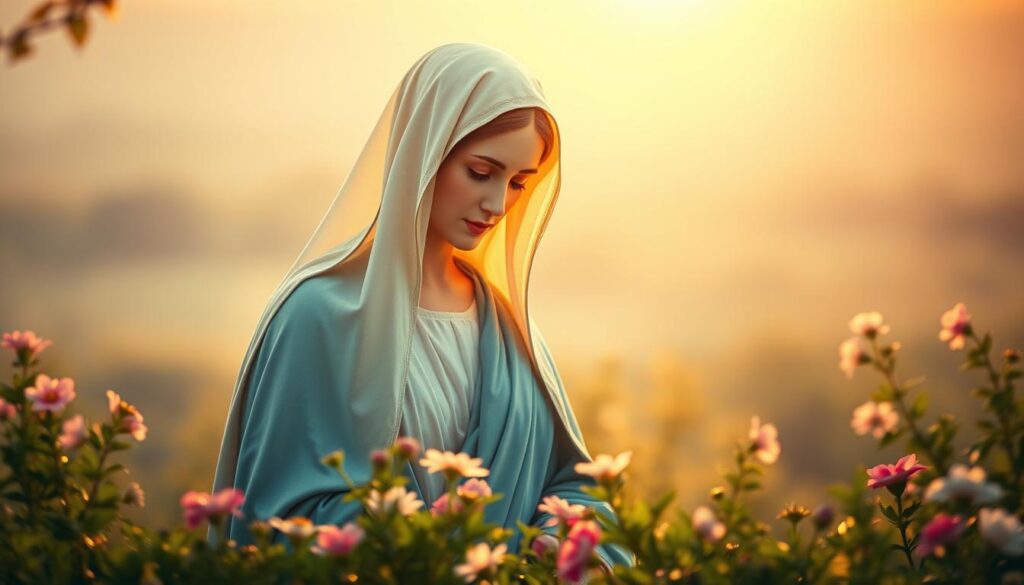
“I am the Queen of Heaven”: catechism, prayer, and mission
The woman’s charge was plain: catechize children, pray, and build a life turned to Christ. Over the years the parish kept that mission alive through catechesis, confession, Mass, and the rosary.
The shrine today: pilgrims, prayers, and the Great Peshtigo Fire story
Bishop David Ricken approved the site on Dec 8, 2010. In April 2023 the place became the National Shrine of Our Lady of Champion. Shrine staff tell how people found refuge in prayer during the Great Peshtigo fire, a story that deepened many visitors’ faith.
I recommend bringing children to hear the story and spending quiet time at the exact spot between the trees where the encounter occurred. Check schedules around Dec 8, dress for Midwest weather, and plan for Confession and Mass.
“A homegrown witness can draw a nation nearer to Christ through Mary’s maternal care.”
Common threads I notice across marian apparitions
I notice a common thread: each encounter asks people to pray, to repent, and to live mercy toward others.
Prayer, penance, and mercy: the heart of Mary’s messages
Across sites I visit, the virgin mary calls the faithful back to the sacraments. Short prayers and concrete acts of penance appear again and again.
That pattern nudges me to bring shrine habits—rosary, confession, works of mercy—into ordinary days. The request is pastoral, not doctrinal innovation.
Light, signs, and healings: how the faithful test and retain what is good
Light, a public sign, or water-linked healings often open attention. But the church asks that any sign be tested by doctrine and by steady spiritual fruit.
| Common element | Example | What I look for |
|---|---|---|
| Prayer & penance | Rosary, First Saturdays | Return to sacraments and charity |
| Signs of light | Fátima’s sun; Knock’s tableau | Leads to lasting peace and faith |
| Healings & water | Lourdes springs | Medically vetted cases, humble fruit |
“Test everything; retain what is good.” — 1 Thessalonians 5:21
Saint apparitions local miracles: what “worthy of belief” means for me
My yardstick for any reported vision is whether it leads to steady prayer, confession, and charity. That test keeps my attention on spiritual health rather than on spectacle.
Worthy belief for me means the catholic church finds nothing contrary to faith or morals and permits public devotion. It does not force assent; it invites prudence and personal discernment.
I accept that belief here is voluntary. My core faith rests on Christ, the sacraments, and the community of the church, not on private revelations.
I also look for practical signs: confession rates rising, Eucharistic devotion deepening, more parish service, and lasting vocations. These fruits help confirm a site’s pastoral value.
I respect those who do not feel drawn to such claims. The church offers many paths to holiness, and approved devotion should deepen—not replace—regular parish life.
“Worthy of belief helps me love the Lord more faithfully within the safe harbor of the church.”
Planning a pilgrimage from the United States
Choosing dates and daily rhythms makes the difference between sightseeing and true pilgrimage. I plan so liturgies, confession times, and personal prayer fit with travel realities.
When to go: feast days and quieter times
Feast days (Guadalupe Dec 12, Lourdes Feb 11, Fátima May 13/Oct 13, Knock Aug 17, Champion Dec 8) offer major liturgies and full schedules.
If I want a quieter visit, I book off-peak dates and early mornings. That gives time for processions and confession lines without crowds.
Respectful practices on site: Mass, confession, and the rosary
I budget extra days for Mass, confession, and structured prayers. I carry a simple plan for prayers: rosary, acts of reparation, and thanksgiving.
Practical notes: allow time for water logistics at Lourdes, expect slow flow at Guadalupe’s basilica, and pace visits for children and family comfort.
“I bring a rhythm of prayer and leave space to let the experience shape my daily life.”
| Focus | Why | Practical tip |
|---|---|---|
| Feast day | Full liturgy | Book early |
| Off-peak | Quieter prayer | Arrive at dawn |
| Family pace | Comfort for children | Schedule rest breaks |
Beyond the famous five: approved sites that enrich my itinerary
My itinerary grows richer when I include smaller sanctuaries where faithful practice deepened over years. These places add context and steady pastoral care to any pilgrimage.
La Salette, France: tears over Sunday and the Holy Name
At La Salette (1846), the lady wept over neglect of Sunday worship and careless use of God’s name. The message pressed people toward reverent worship and lasting peace.
Pontmain, France: “But pray, my children” during wartime
In 1871 a brief apparition brought calm in a tense moment. The simple line, “But pray, my children,” comforted families and helped halt panic as armies drew near.
Gietrzwałd, Poland: the rosary in the local tongue
Gietrzwałd (1877) encouraged daily rosary in the vernacular and blessed a spring linked to healings. I plan days there to walk the shrine and pause at the water source.
Laus, France: years of welcome and the sacrament of penance
Laus hosted very long visits to Benoîte Rencurel from 1664–1718. Over the years the place became known for confession, conversion, and sustained pastoral programs.
- Bishop approvals followed careful study in each case.
- I balance my schedule so I spend full days at one or two of these sites.
- Each place complements the famous five by emphasizing worship, prayer, and pastoral care.
“These shrines expand both the map and the heart of pilgrimage.”
How bishops weigh signs and safeguards against error
When an account stirs a prayed-for place, I watch how the bishop and team frame what happened. The process serves the faithful and the wider area.
I note twofold criteria used by the catholic church. Positive signs include credibility, doctrinal soundness, and lasting spiritual fruits. Negative signs include profit-seeking, division, or psychological concerns.
In practice the bishop assembles testimonies, consults medical and theological experts, and protects people from haste. Men and women investigators add balanced reports so pastoral leaders see the full picture.
The 2024 norms now require submission to Rome and offer outcomes from encouragement to sub mandato or prohibetur et obstruatur. These tools help correct misuse and, at times, restrict public devotion as an act of care.
I look for clear diocesan statements before I join a site’s devotion. Approval never makes a private claim into doctrine; it simply says the church finds no obstacle to prayer.
“Transparent decisions build trust and protect the faithful.”
| Criterion | Positive sign | Practical outcome |
|---|---|---|
| Doctrinal soundness | Consistent with Scripture | Encourage devotion |
| Credibility of witnesses | Stable, corroborated account | Allow guided veneration |
| Harm or division | Profit motive or scandal | Limit or prohibit public claims |
| Pastoral fruit | Confession, charity, vocations | Endorse with pastoral safeguards |
Living the message at home: prayer, family, and parish life
Home is where pilgrimage bears fruit, shaping our family rhythm and parish service.
I bring a simple rule back from every visit: if an apparition’s message does not deepen my prayer and parish life, I shift my focus to what nourishes faith.
I weave the rosary and brief prayers into daily routines. Children join in age-appropriate ways so devotion becomes part of family life, not an extra task.
I root private practices in the sacraments. Sunday Mass, frequent confession, and Eucharistic devotion guide how I live the shrine’s call. That keeps Marian devotion rightly centered on Christ.
I ask our mother to intercede for conversion while I work in parish service, catechesis, and hospitality. Those practices show grace in people around me.
“Let pilgrimage be a school of conversion that continues quietly at home.”
| Practice | Why it matters | Practical step |
|---|---|---|
| Daily prayer | Forms steady spiritual habit | Short family rosary each evening |
| Sacraments | Ground devotion in church life | Prioritize Sunday Mass and confession |
| Parish service | Turns devotion into charity | Join a hospitality or catechetical team |
| Discernment | Protects against error | Follow diocesan guidance on apparitions |
I speak about such encounters with humility. I share fruits, invite people to what helps them grow, and trust pastoral wisdom over sensation.
What I read and reference before I travel
The first thing I read are authoritative sources: diocesan reports, Vatican norms, and shrine histories. This gives me factual context and helps shape realistic expectations for pilgrimage.
Church documents I consult include the 1978 Normae Congregationis and the 2024 DDF norms so I understand formal outcomes like nihil obstat. I then read the diocesan statement for each site to confirm status and pastoral guidance.
Practical sources I use
- I study shrine websites for current schedules, confession times, and special processions.
- I review primary accounts and the published history the bishop’s office provides, noting verification methods.
- I double-check feast dates, crowd rules, and travel logistics from official pages to avoid surprises.
- I note recommended prayers or devotional words the shrine suggests and pack Scripture and approved devotions.
I keep a small journal to record my own account of graces and insights. That practice helps me place any apparition reports in a balanced, well-documented personal record.
Conclusion
,
In the end, what endures for me is prayer that deepens parish life and daily charity.
I am grateful for how the virgin mary’s maternal care shines through approved marian apparitions without taking the place of Christ. Careful church review and the 2024 norms protect our worship and help sustain worthy belief.
I urge you to choose the right time and day for travel, leave room for silence and liturgy, and carry simple practices home: the rosary, confession, and Eucharist. These small habits let pilgrimage change ordinary life.
I invite you to discern, plan, and go—trusting that honest devotion and measured discernment lead to deeper faith and unity in the church.