

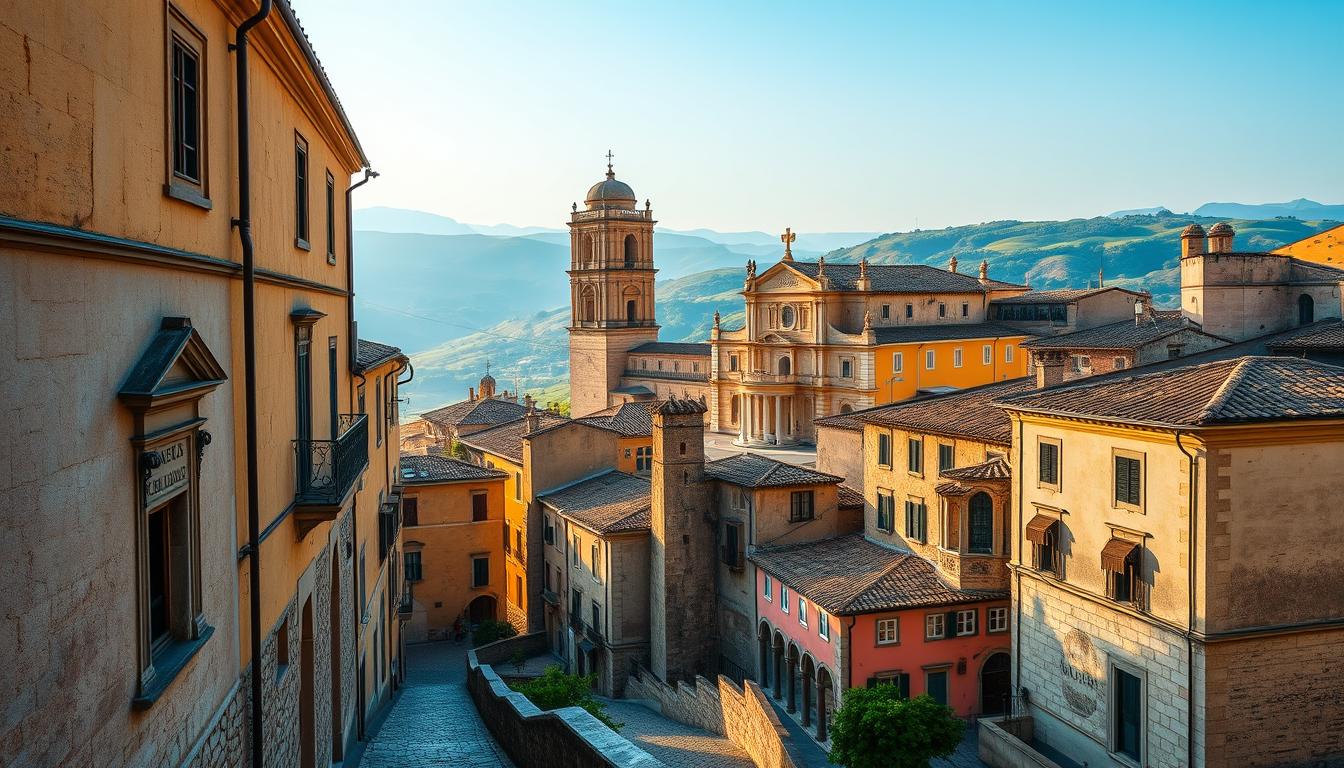
I travel through Val di Noto with a simple plan: walk slowly, look closely, and stop where the food calls me. I trace routes across golden limestone centres and black-lava streets, noting how light turns facades into theatre.
I describe small baroque towns as living sets — grand staircases, scenographic squares, and busy balconies that feel like staged art. I point to exact streets and cafés where I pause, so your day can flow from sight to snack without fuss.
My aim is practical: show you a slow-travel loop that links headline sights and quiet corners. I explain how materials, food, and faith shape each centre, and how to choose stops when time is tight.
Expect clear walking routes, trusted places to eat, and a sense of how this cultural mix makes the region one of the world’s most textured destinations.
Key Takeaways
- I share exact walking routes through Val Noto and nearby centres.
- You’ll learn where to eat local specialties while you explore.
- I highlight visual cues that reveal the region’s art and craft.
- Materials like white limestone and lava shape the mood and light.
- This guide mixes headline sights with off-the-map corners for slow travel.
How the 1693 earthquake forged today’s Baroque beauty in Val di Noto
A single winter night in 1693 rewrote the map of Val Noto and forced a bold architectural restart. The 1693 earthquake killed tens of thousands and levelled forty-five settlements; minutes later a tsunami swept coastal towns like Catania and Siracusa.
Under Spanish rule, rebuilding began in the early 18th century with a clear idea: order, drama, and public stagecraft. I see that plan in long axial streets, monumental stairways, and church façades that direct your walk.
Catania’s city centre mixes white limestone with Etna lava to form striking black-and-white patterns. Siracusa layers ancient Greek columns into its cathedral walls, and Noto refines urban drama with palaces like Palazzo Nicolaci and Palazzo Ducezio.
Read the façades as a script: terraces frame viewpoints, balconies carve shadow, and carved corbels reward a slow gaze. Together these towns became a unified cultural landscape and now form part of a celebrated unesco world heritage.
- Why it matters: the scale of loss explains the unity and daring of the later design.
- Where to start: Siracusa’s cathedral walls or Noto’s cathedral stairs give you the clearest sense of that reinvention.
Sicilian baroque villages I love for slow walks and memorable meals
Each town rewards a small, deliberate loop that unfolds like a short story.
Noto’s golden streets and cathedral steps for a late-afternoon stroll
I time my walk for the warm light. I climb the limestone staircase to the cathedral and pause at Palazzo Nicolaci to watch carved angels. An evening gelato feels right here in val noto.
Ragusa Ibla’s lanes opening onto San Giorgio’s sweeping square
I let narrow lanes lead me until they burst into San Giorgio’s theatrical square. I take a caffè where views make the architecture read like staged art.
Modica, Scicli, Buccheri, Siracusa: quick cues
In Modica I pair church hopping with a bar of traditional chocolate from Antica Dolceria Bonajuto. Scicli reveals filmic corners around each quiet corner. In Buccheri I climb to Sant’Antonio Abate, breathe mountain air, and taste local olive oil. In Siracusa the cathedral walls show the past tucked into later buildings—layers you can read as you walk.
Quick start spots and tastes:
| Town | Best Start | Taste |
|---|---|---|
| Noto | Cathedral steps | Gelato |
| Ragusa Ibla | Lower lanes | Caffè |
| Modica | Main square | Chocolate |
| Scicli / Buccheri | Historic center / Stair approach | Local olive oil |
Walking Catania’s black-and-white Baroque: my city route and bites
Catania’s heart beats in high contrast: black lava and pale stone meet in a compact centre I like to walk. I move from the main square and let details—fonts, cornices, and street life—set the pace.
Piazza del Duomo to the Fish Market: Elephant Fountain, Sant’Agata, Amenano
I start at Piazza del Duomo, circling the Elephant Fountain talisman before ducking to the Amenano fountain. Within minutes the market’s calls pull me toward the roaring fish market and quick bites.
I slip into the Cathedral of Sant’Agata to pause at Vincenzo Bellini’s tomb, then look back to read how the black-and-white architecture frames the square.
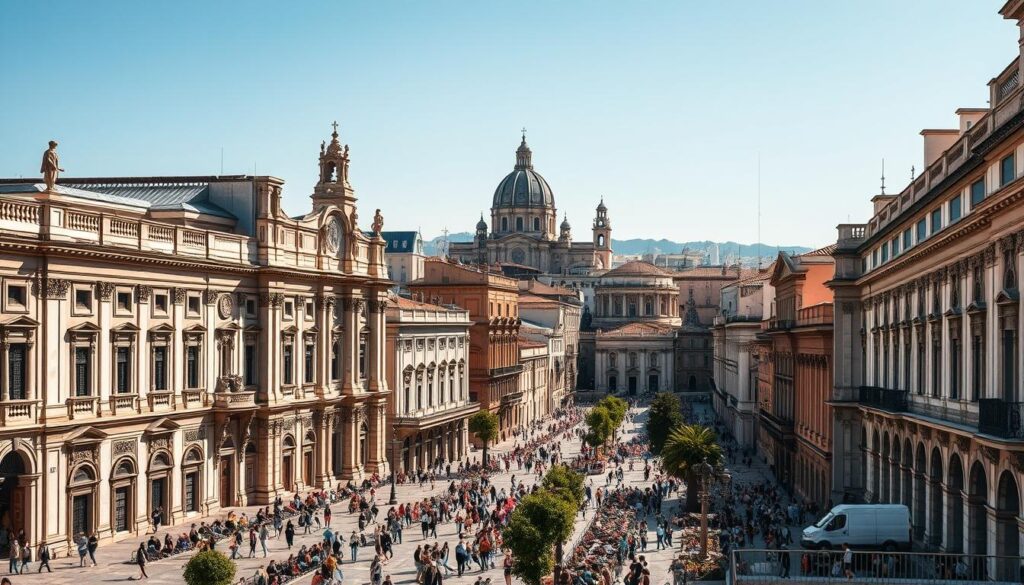
Via dei Crociferi and San Nicolò: a 200-meter Baroque corridor
I trace Via dei Crociferi, a 200-meter run of churches and convent façades that feels like an open-air gallery of art and faith. Nearby, the Benedictine Monastery of san nicolò rises in scale and texture, where lava stone meets limestone.
Where I refuel near the center: arancini and lava-stone ambiance
For eats I grab arancini that mimic Etna’s silhouette and sit where the streets let you watch local rhythms. Small cues—church bells, cloistered breezes—help me slow down in a busy urban core.
- I keep the loop tidy so the big buildings pair with street-level scenes.
- I time this walk for early morning or late day light; shadows on dark stone are softer then.
Ragusa Ibla and Modica: churches, streets, and chocolate traditions
From a sunlit overlook I step down into Ragusa Ibla, timing the reveal of the cathedral so the square arrives like a scene. I chart a gentle ascent that runs from the viewpoint to the Cathedral of San Giorgio. The procession of lanes leads you to that broad, late-Baroque composition.
Pause for façades and interior decorations. Look for carved corbels, frescoed vaults, and the light that falls across the altar. Sit on a bench in the square and let the calm wash over you; it is an easy way to feel the town’s layered beauty.
In Modica the streets bring you from imposing churches to a living chocolate tradition. Modica chocolate preserves a grainy, aromatic method adapted during Spanish rule from Aztec practice. That texture and flavor stand apart from industrial bars and tell a bit of the town’s history.
I end my short loop at Antica Dolceria Bonajuto. Start with a classic 70% bar or try a citrus-spiced variety. My pacing tip: a small square of chocolate, a quick espresso, then a slow few steps to the next viewpoint. The taste is a moment of the past and a small lesson in how local craft shaped this corner of the world.
Buccheri and the Iblei mountains: little-known baroque towns, big flavors
On clear mornings I climb toward Buccheri to watch light hit lava and sandstone. The town wears its geology in the texture of buildings and the terraces that face Mount Etna.
Churches of Sant’Antonio Abate and Santa Maria Maddalena up the stairs
I climb the monumental steps to Sant’Antonio Abate for that top-of-the-stairs view. Then I slip into Santa Maria Maddalena to study the Antonello Gagini marble with a quiet pause.
Walking to the neviere: snow pits, forests, and Etna lore
A short forest path leads to dome-like neviere. Imagine ice hauled from these pits to make granita, even sent off the island. The easiest sites sit at the Ferla entrance and by the Chiesetta del Crocifisso.
Eating well in Buccheri: U’ Locale to saffron suppers at Lo Zafferaneto
U’ Locale serves wild herbs, foraged mushrooms, and Etna white beans. Lo Zafferaneto turns saffron into ricotta, panna cotta, and workshops you can join.
“Saffron ricotta, a drizzle of award-winning olive oil, and the mountain air — that taste stays with you.”
When and how I go: spring rites, fall light, and the Catania connection
I visit for Passiu Santu or the May festival, or in September for soft light. By car it’s about 1 hour 15 minutes from Catania; by bus via Ferla it’s near 2 hours 15.
| Place | Highlight | Travel time from Catania |
|---|---|---|
| Buccheri | Sant’Antonio Abate, Santa Maria Maddalena | 1 hr 15 min by car |
| Neviere (Ferla) | Forest snow pits | About 5–10 minutes from town entrance |
| Lo Zafferaneto | Saffron workshops & dinners | Same day visit recommended |
Planning your Val di Noto circuit: connecting towns, times, and tastes
The circuit I use balances headline sights with less-crowded lanes and good food. I build days that thread Noto, Ragusa, Modica, Scicli, Siracusa, and Catania into a logical loop.
I group towns by mood so you move from golden terraces to black-and-white streets, to upland calm near Buccheri. This helps you time visits to catch soft evening light on façades and quiet mornings in squares.
Linking UNESCO World Heritage highlights without the crowds
Start early at major sites to avoid tour-bus peaks. Then slip a quieter stop—like Buccheri or Militello in Val Catania—into the midday stretch for calm views and a local lunch.
I pair each town with a taste: market snacks in Catania, chocolate in Modica, saffron dishes near Buccheri, and olive oil tastings when the route dips into valleys. That makes memory as much about flavor as sight.
| Segment | Primary Stop | Alternate / Quiet Pause | Signature Taste |
|---|---|---|---|
| Coast & classics | Siracusa | Ortigia side lanes | Seafood market snack |
| Golden scenography | Noto | Small palazzo courtyards | Gelato near cathedral |
| Upland calm | Buccheri | Neviere walk | Saffron ricotta |
| Black-and-white drama | Catania | Side streets off Piazza del Duomo | Arancini |
| Chocolate & churches | Modica | Quiet espresso bars | Traditional chocolate |
Practical math: allow 45–90 minutes at main highlights, 20–40 minutes for pauses, and 30–60 minutes transit between close towns. I keep one flexible slot per day in case of weather or a tempting trattoria.
Conclusion
I close the day by letting one street tell its story while I taste a local specialty. This is the best way to feel how the 1693 earthquake shaped streets, churches and the life you find there.
Give each town enough time: one city walk, one hill climb, one market snack. Let Noto’s light, Ragusa Ibla’s reveal, and a square of Modica chocolate settle into your memory.
Pause where buildings show their past—Greek columns in Siracusa, black-and-white patterns in Catania, carved decorations that reward patient eyes. Choose one corner, sit, and let the centre tell its own history.
Plan for quiet times of day and a flexible route linking churches with meals. In the end, one simple loop through this area will make the architecture, art and flavor of the century feel entirely yours.